Plicosepalus curviflorus
Plicosepalus curviflorus · Accepted scientific name
Scientific literature: Very Sparse (6 studies) · ★☆☆☆☆
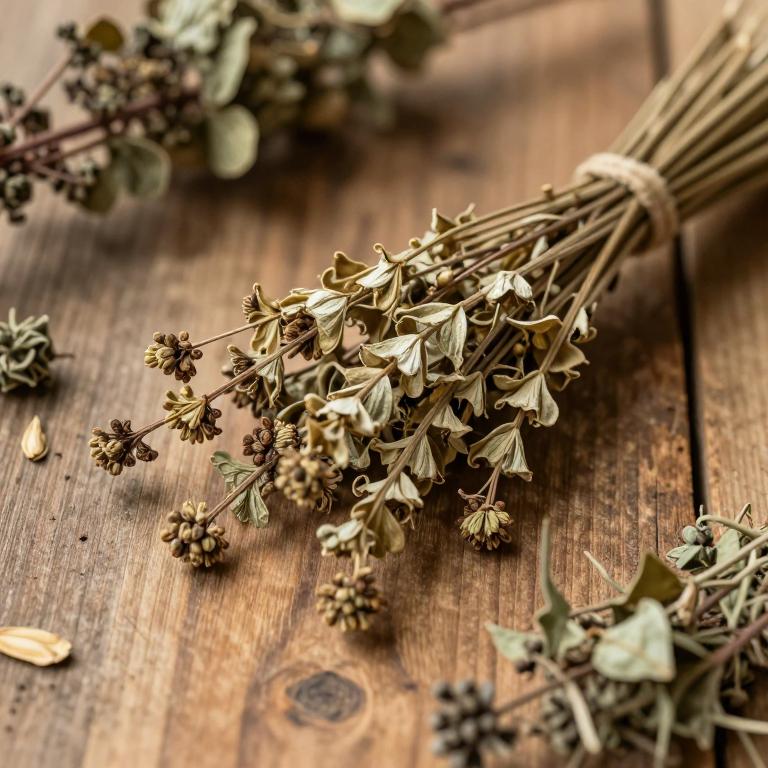
, scientifically known as Plicosepalus curviflorus, is a remarkable parasitic shrub belonging to the Loranthaceae family. Renowned for its unique ecological role, this plant holds significant ethnobotanical importance. Traditional medicine utilizes its leaves and stems to treat various ailments, offering promising potential for modern pharmacological research and therapeutic development.
- Family
- Loranthaceae
- Native range
- Africa
- Parts used
- Stem
- Common names
- Not available
- Scientific synonyms
- Plicosepalus Faurotii · Loranthus Faurotii · 1 more
Names and Synonyms
Scientific Names
Accepted name
Plicosepalus curviflorusSynonyms
- Plicosepalus faurotii
- Loranthus faurotii
- Loranthus curviflorus
Sources: Wikidata, Catalogue of Life
Taxonomical Classification
This plant belongs to the kingdom Plantae and the phylum Streptophyta. It is further classified under the class Equisetopsida and the subclass Magnoliidae, falling within the order Santalales. Finally, it is a member of the family Loranthaceae and is identified under the genus Plicosepalus.
| Rank | Classification |
|---|---|
| Kingdom | Plantae |
| Phylum | Streptophyta |
| Class | Equisetopsida |
| Subclass | Magnoliidae |
| Order | Santalales |
| Family | Loranthaceae |
| Genus | Plicosepalus |
Sources: The World Checklist of Vascular Plants (WCVP)
Distribution
This plant, Plicosepalus curviflorus, exhibits a specific distribution across several regions of the African continent. In Northern Africa, its presence is recorded within the borders of Egypt. The species can also be found in West-Central Tropical Africa, specifically in the DR Congo. Furthermore, it inhabits parts of Northeast Tropical Africa, including Djibouti and Eritrea. Finally, its range extends into the mountainous landscapes of Ethiopia.
| Region | Area |
|---|---|
| Northern Africa | Egypt |
| West-Central Tropical Africa | DR Congo |
| Northeast Tropical Africa | Djibouti |
| Northeast Tropical Africa | Eritrea |
| Northeast Tropical Africa | Ethiopia |
| Northeast Tropical Africa | Somalia |
| Northeast Tropical Africa | Sudan-South Sudan |
| East Tropical Africa | Kenya |
| East Tropical Africa | Tanzania |
| East Tropical Africa | Uganda |
Sources: The World Checklist of Vascular Plants (WCVP)
Botanical Identification
Life history
The life history of Plicosepalus curviflorus is characterized by a perennial lifecycle, allowing the plant to persist across multiple growing seasons. In terms of its structural growth strategy, it is classified as a chamaephyte, a life form where the permanent shoot system is located close to the ground, typically with buds situated just above the soil surface or protected by leaf litter. This chamaephyte designation applies to both its primary and secondary life form classifications, indicating a specialized survival mechanism suited to its specific ecological niche.
- Life form :
- chamaephyte
- Lifecycle :
- perennial
Morphology
The morphology of Plicosepalus curviflorus is characterized by its distinct growth habit and structural composition. It is a woody plant, possessing a firm, lignified framework that supports its physiological functions. In terms of its ecological positioning and life strategy, the species exhibits a complex relationship with its substrate, manifesting as a terrestrial organism that can function across various epiphytic spectrums; it is categorized by its ability to exist as a holoepiphyte, hemiepiphyte, primary hemiepiphyte, secondary hemiepiphyte, or a facultative epiphyte, while maintaining its terrestrial capacity. Furthermore, regarding its nutritional dependency, the plant is classified as an independent organism, meaning it does not function as an obligatory or facultative parasite, but rather maintains its own metabolic independence.
- Epiphyte :
- terrestrial
- Parasite :
- independent
- Woodiness :
- woody
Sources: Global Inventory of Floras and Traits (GIFT)
Plant Parts
Plicosepalus curviflorus has 1 reported plant parts identified across 1 scientific publications and several other databases that are studied for medicinal purposes. The most consistently reported plant part include stem.
| Plant part | Supporting sources | Consensus |
|---|---|---|
| Stem | 1 supporting sources | ★☆☆☆☆ |
Stem
- Journal of ethnopharmacology
Chemicals
Plicosepalus curviflorus has 2 reported phytochemicals identified across 1 scientific publications and several other databases. The most consistently reported chemicals include (-)-Catechin, quercetin.
| Chemical | Supporting sources | Consensus |
|---|---|---|
| (-)-Catechin | 1 supporting sources | ★☆☆☆☆ |
| quercetin | 1 supporting sources | ★☆☆☆☆ |
(-)-Catechin
- Journal of analytical methods in chemistry
quercetin
- Journal of analytical methods in chemistry
Activities
Plicosepalus curviflorus has 3 reported activities identified across 1 scientific publications and several other databases. The most consistently reported activities include Antimicrobial, Antioxidant, Cytotoxic.
| Activity | Supporting sources | Consensus |
|---|---|---|
| Antimicrobial | 1 supporting sources | ★☆☆☆☆ |
| Antioxidant | 1 supporting sources | ★☆☆☆☆ |
| Cytotoxic | 1 supporting sources | ★☆☆☆☆ |
Antimicrobial
- Journal of analytical methods in chemistry
Antioxidant
- Journal of analytical methods in chemistry
Cytotoxic
- Journal of analytical methods in chemistry
Preparations
Plicosepalus curviflorus has 1 reported preparations identified across 1 scientific publications and several other databases. The most consistently reported preparations include extracts.
| Preparation | Supporting sources | Consensus |
|---|---|---|
| Extracts | 1 supporting sources | ★☆☆☆☆ |
Extracts
- Scientific reports