Pleopeltis polylepis
Pleopeltis polylepis · Accepted scientific name
Scientific literature: Very Sparse (9 studies) · ★☆☆☆☆
, scientifically known as Pleopeltis polylepis, is a remarkable medicinal plant valued for its diverse therapeutic properties. Renowned in traditional healing practices, this species offers significant pharmacological potential. Exploring its bioactive compounds provides vital insights into developing natural remedies for various ailments, highlighting its importance in ethnobotanical research and wellness.
- Family
- Polypodiaceae
- Native range
- Northern America
- Parts used
- Not available
- Common names
- Not available
- Scientific synonyms
- Phlebodium Polylepis · Polypodium Polylepis
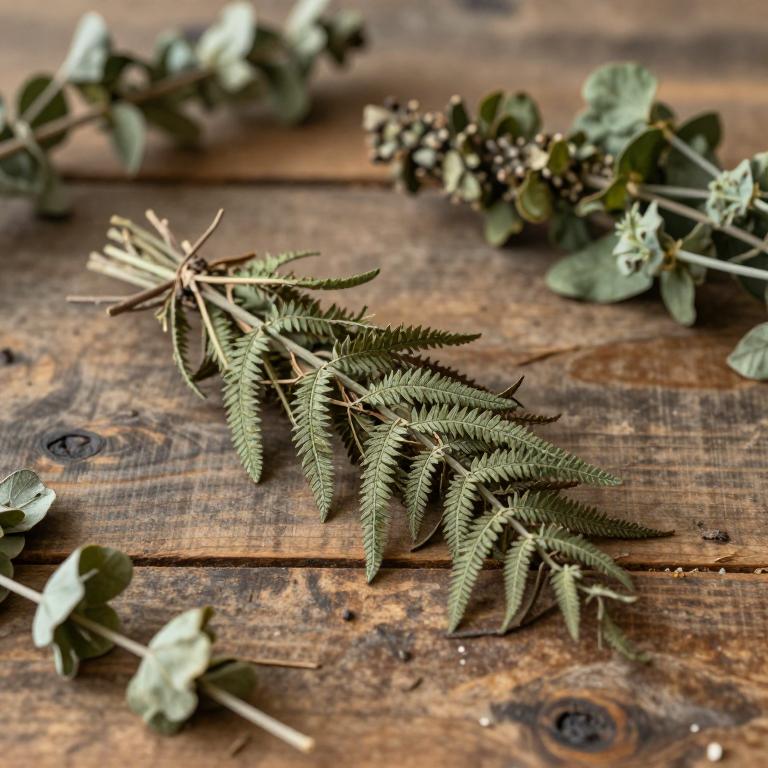
Names and Synonyms
Scientific Names
Accepted name
Pleopeltis polylepisSynonyms
- Phlebodium polylepis
- Polypodium polylepis
Regional and Traditional Names
Spanish:
- Lengua de ciervo
Sources: Wikidata, Catalogue of Life
Taxonomical Classification
This plant belongs to the kingdom Plantae and the phylum Streptophyta. It is classified under the class Equisetopsida and the subclass Polypodiinae within the order Polypodiales. Belonging to the family Polypodiaceae, it is specifically identified by the genus Pleopeltis.
| Rank | Classification |
|---|---|
| Kingdom | Plantae |
| Phylum | Streptophyta |
| Class | Equisetopsida |
| Subclass | Polypodiinae |
| Order | Polypodiales |
| Family | Polypodiaceae |
| Genus | Pleopeltis |
Sources: The World Checklist of Vascular Plants (WCVP)
Distribution
This plant exhibits a broad distribution across several key regions of North America. In the South-Central United States, it can be found specifically within the state of Texas. Its presence extends significantly into Mexico, where it is common throughout the central regions. Furthermore, the species inhabits the northeastern and northwestern territories of Mexico. Finally, it is also widely distributed across the coastal areas of the Mexican Gulf.
| Region | Area |
|---|---|
| South-Central U.S.A. | Texas |
| Mexico | Mexico Central |
| Mexico | Mexico Northeast |
| Mexico | Mexico Gulf |
| Mexico | Mexico Northwest |
| Mexico | Mexico Southwest |
| Mexico | Mexico Southeast |
| Central America | El Salvador |
| Central America | Guatemala |
| Central America | Honduras |
Sources: The World Checklist of Vascular Plants (WCVP)
Botanical Identification
Life history
The life history of Pleopeltis polylepis is characterized by a perennial lifecycle, allowing the plant to persist through multiple growing seasons rather than completing its development within a single year. As a perennial species, it maintains its biological presence over an extended duration, often developing robust structures that enable it to survive periods of dormancy or environmental stress. This long-term survival strategy facilitates continuous growth and repeated reproductive cycles, contributing to its establishment within its specific ecological niche.
- Lifecycle :
- perennial
Morphology
The morphology of Pleopeltis polylepis is characterized by its growth form as a non-woody herb and forb, exhibiting a structure that is fundamentally independent rather than parasitic. This plant functions as an obligatory epiphyte, relying on other structures for support while maintaining its own metabolic autonomy. While it thrives in specific niches, its habitat range spans across aquatic, semiaquatic, and terrestrial environments. Furthermore, it does not act as a climber; instead, it is categorized as a self-supporting organism within its ecological framework.
- Aquatic :
- terrestrial
- Climber :
- self-supporting
- Epiphyte :
- obligatory
- Growth form :
- herb
- Growth form :
- forb
- Parasite :
- independent
- Woodiness :
- non-woody
Sources: Global Inventory of Floras and Traits (GIFT)
Activities
Pleopeltis polylepis has 2 reported activities identified across 0 scientific publications and several other databases. The most consistently reported activities include Antimicrobial, Cytotoxic.
| Activity | Supporting sources | Consensus |
|---|---|---|
| Antimicrobial | 1 supporting sources | ★☆☆☆☆ |
| Cytotoxic | 1 supporting sources | ★☆☆☆☆ |
Antimicrobial
- Journal of ethnopharmacology
Cytotoxic
- Journal of ethnopharmacology
Conditions
Pleopeltis polylepis has 6 reported investigations on conditions identified across 0 scientific publications and several other databases. The most consistently reported conditions include bleeding, chest pain, cough, fever, pertussis.
| Condition | Supporting sources | Consensus |
|---|---|---|
| Bleeding | 1 supporting sources | ★☆☆☆☆ |
| Chest pain | 1 supporting sources | ★☆☆☆☆ |
| Cough | 1 supporting sources | ★☆☆☆☆ |
| Fever | 1 supporting sources | ★☆☆☆☆ |
| Pertussis | 1 supporting sources | ★☆☆☆☆ |
| Typhoid | 1 supporting sources | ★☆☆☆☆ |
Bleeding
- Journal of ethnopharmacology
Chest pain
- Journal of ethnopharmacology
Cough
- Journal of ethnopharmacology
Fever
- Journal of ethnopharmacology
Pertussis
- Journal of ethnopharmacology
Typhoid
- Journal of ethnopharmacology