Plectrocarpa sarmientoi
Plectrocarpa sarmientoi · Accepted scientific name
Scientific literature: Very Sparse (5 studies) · ★☆☆☆☆
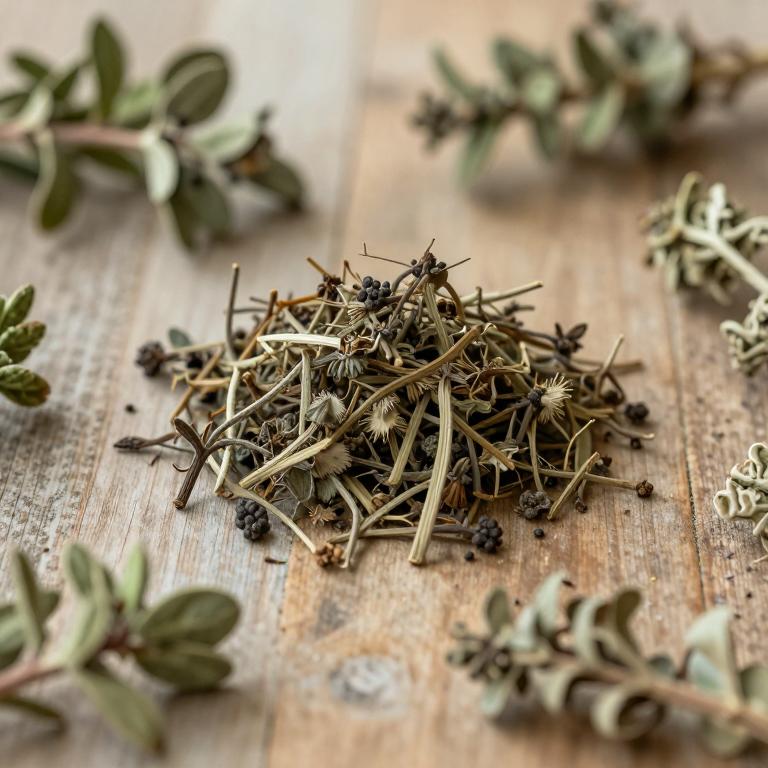
Plectrocarpa sarmientoi, scientifically known as Plectrocarpa sarmientoi, is a rare medicinal plant distinguished by its unique botanical characteristics. Often found in specific ecological niches, it holds significant potential in traditional healing practices. Research continues to explore its bioactive compounds and therapeutic applications for diverse pharmacological developments and wellness.
- Family
- Zygophyllaceae
- Native range
- Southern America
- Parts used
- Not available
- Common names
- Not available
- Scientific synonyms
- Gonopterodendron Sarmientoi · Bulnesia Gancedoi · 1 more
Names and Synonyms
Scientific Names
Accepted name
Plectrocarpa sarmientoiSynonyms
- Gonopterodendron sarmientoi
- Bulnesia gancedoi
- Bulnesia sarmientoi
Sources: Wikidata
Taxonomical Classification
This plant, Plectrocarpa sarmientoi, belongs to the kingdom Plantae and the phylum Streptophyta. Within the class Equisetopsida and subclass Magnoliidae, it is classified under the order Zygophyllales. Finally, it is a member of the family Zygophyllaceae and the genus Plectrocarpa.
| Rank | Classification |
|---|---|
| Kingdom | Plantae |
| Phylum | Streptophyta |
| Class | Equisetopsida |
| Subclass | Magnoliidae |
| Order | Zygophyllales |
| Family | Zygophyllaceae |
| Genus | Plectrocarpa |
Sources: The World Checklist of Vascular Plants (WCVP)
Distribution
This plant exhibits a broad geographical distribution across several regions of South America. In Western South America, its presence is specifically noted within Bolivia. Its range extends into Brazil, where it can be found in the West-Central region. Within Southern South America, the species is distributed across the Northeast and Northwest territories of Argentina. Finally, the plant is also documented as growing in Paraguay.
| Region | Area |
|---|---|
| Western South America | Bolivia |
| Brazil | Brazil West-Central |
| Southern South America | Argentina Northeast |
| Southern South America | Argentina Northwest |
| Southern South America | Paraguay |
Sources: The World Checklist of Vascular Plants (WCVP)
Botanical Identification
Ecology
The ecology of Plectrocarpa sarmientoi is characterized by its occurrence within the Floresta Estacional Decidual habitat, where it thrives in specific environmental conditions. This species occupies a defined vertical distribution, ranging from an elevation of 0 m AMSL up to a maximum altitude of 200 m AMSL.
- Elevational range max:
- 200 m AMSL
- Elevational range min:
- 0 m AMSL
- Habitat :
- Floresta Estacional Decidual
Life history
The life history of Plectrocarpa sarmientoi is characterized by a perennial lifecycle, allowing the plant to persist through multiple growing seasons. It is classified as a phanerophyte, specifically exhibiting the growth habit of a nanophanerophyte, which indicates that its perennating buds are located above the soil surface at a low height. Furthermore, the species follows a deciduous pattern, shedding its foliage during specific seasonal periods.
- Deciduousness :
- deciduous
- Life form :
- phanerophyte
- Lifecycle :
- perennial
Morphology
The morphology of Plectrancpa sarmientoi is characterized by its growth form as a woody tree. It is a terrestrial species that functions as an independent organism, lacking any parasitic tendencies. In terms of its structural habit, it is a self-supporting plant rather than a climber or a liana. While the recorded plant height reaches a maximum of 10 meters, the mean height of the species is documented at 18 meters. Additionally, it is classified as a terrestrial entity rather than an epiphyte or an aquatic plant.
- Aquatic :
- terrestrial
- Climber :
- self-supporting
- Epiphyte :
- terrestrial
- Growth form :
- tree
- Parasite :
- independent
- Plant height max:
- 10 m
- Plant height mean:
- 18 m
- Woodiness :
- woody
Physiology
The physiology of Plectrocarpa sarmientoi is characterized by a C3 photosynthetic pathway, meaning it utilizes the Calvin cycle to fix carbon dioxide through the enzyme Rubisco without the specialized anatomical adaptations found in C4 or CAM plants. This metabolic strategy typically involves opening stomata during the day to facilitate gas exchange, which influences its water-use efficiency and environmental niche. Furthermore, regarding its nutrient acquisition capabilities, the species is not a nitrogen fixer, lacking the symbiotic relationship with nitrogen-fixing bacteria required to convert atmospheric nitrogen into bioavailable forms.
- Nitrogen fixer :
- no
- Photosynthetic pathway :
- C3
Sources: Global Inventory of Floras and Traits (GIFT)
Chemicals
Plectrocarpa sarmientoi has 3 reported phytochemicals identified across 0 scientific publications and several other databases. The most consistently reported chemicals include (-)-Guaiol, 2-Undecanone, Guaiol.
| Chemical | Supporting sources | Consensus |
|---|---|---|
| (-)-Guaiol | 1 supporting sources | ★☆☆☆☆ |
| 2-Undecanone | 1 supporting sources | ★☆☆☆☆ |
| Guaiol | 1 supporting sources | ★☆☆☆☆ |
(-)-Guaiol
- Molecules (Basel, Switzerland)
2-Undecanone
- BMC complementary and alternative medicine
Guaiol
- BMC complementary and alternative medicine
Activities
Plectrocarpa sarmientoi has 1 reported activities identified across 0 scientific publications and several other databases. The most consistently reported activities include Analgesic.
| Activity | Supporting sources | Consensus |
|---|---|---|
| Analgesic | 1 supporting sources | ★☆☆☆☆ |
Analgesic
- Molecules (Basel, Switzerland)
Preparations
Plectrocarpa sarmientoi has 3 reported preparations identified across 0 scientific publications and several other databases. The most consistently reported preparations include BS supercritical fluid extract (BSE), EO, methanolic extracts.
| Preparation | Supporting sources | Consensus |
|---|---|---|
| Bs supercritical fluid extract (bse) | 1 supporting sources | ★☆☆☆☆ |
| Eo | 1 supporting sources | ★☆☆☆☆ |
| Methanolic extracts | 1 supporting sources | ★☆☆☆☆ |
Bs supercritical fluid extract (bse)
- Molecules (Basel, Switzerland)
Eo
- BMC complementary and alternative medicine
Methanolic extracts
- Phytomedicine : international journal of phytotherapy and phytopharmacology