spurflowers
Plectranthus · Accepted scientific name
Scientific literature: Very Sparse (19 studies) · ★☆☆☆☆
Spurflowers, scientifically known as Plectranthus, is a diverse genus of flowering plants within the Lamiaceae family. Renowned for their ornamental beauty and medicinal potential, many species offer therapeutic properties. Often used in traditional healing to treat inflammation and skin ailments, these versatile plants bridge botanical beauty and wellness.
- Family
- Lamiaceae
- Native range
- Europe
- Parts used
- Not available
- Common names
- Spurflowers
- Scientific synonyms
- Germanea
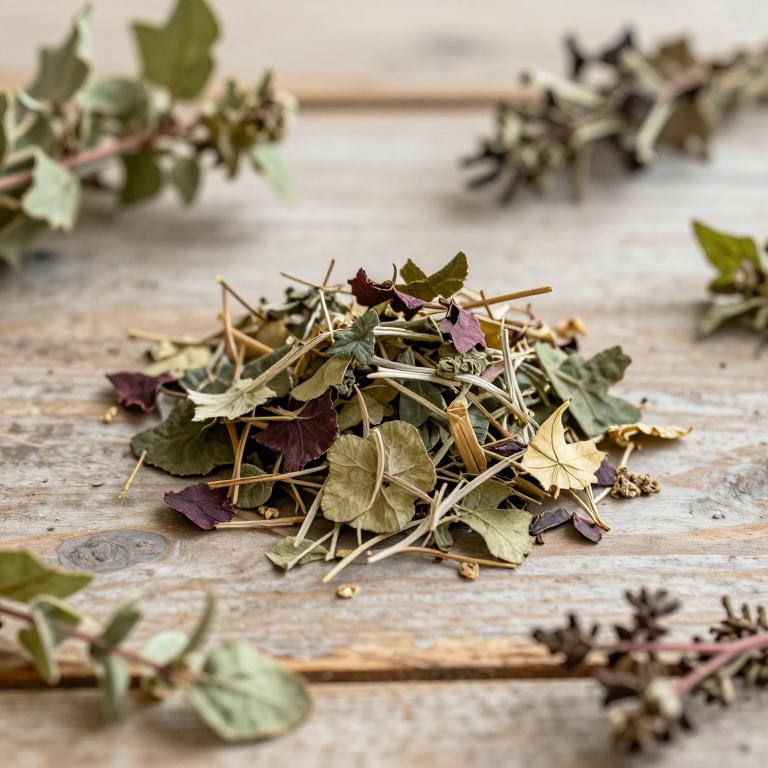
Names and Synonyms
Common Names
- spurflowers
Scientific Names
Accepted name
PlectranthusSynonyms
- Germanea
Regional and Traditional Names
Spanish:
- Burnatastrum
- Neomuellera
- Holostylon
- Germanea
- Capitanya
- Neohyptis
- Fabirama
- Ascocarydion
- Saccostoma
- Englerastrum
- Briquetastrum
- Perrierastrum
- Mitsa
- Majana
- Isodictyophorus
- Leocus
- Plantas del dinero
German:
- Harfensträucher
- Harfenstrauch
- Harfensträucher
Sources: Wikidata, Catalogue of Life
Taxonomical Classification
This plant belongs to the kingdom Plantae and is classified under the phylum Streptophyta and class Equisetopsida. Within the subclass Magnoliidae, it falls under the order Lamiales and the family Lamiaceae. Finally, its taxonomic identity is defined by the genus Plectranthus.
| Rank | Classification |
|---|---|
| Kingdom | Plantae |
| Phylum | Streptophyta |
| Class | Equisetopsida |
| Subclass | Magnoliidae |
| Order | Lamiales |
| Family | Lamiaceae |
| Genus | Plectranthus |
Sources: The World Checklist of Vascular Plants (WCVP)
Distribution
This plant exhibits a diverse geographical distribution spanning several continents and distinct climatic zones. In Middle Europe, its presence can be recorded specifically in Germany. Its range extends to the Macaronesian islands, where it is found in Madeira. Within West-Central Tropical Africa, the species inhabits regions such as Cameroon and the DR Congo. Finally, its distribution reaches Northeast Tropical Africa, specifically within Ethiopia.
| Region | Area |
|---|---|
| Middle Europe | Germany |
| Macaronesia | Madeira |
| West-Central Tropical Africa | Cameroon |
| West-Central Tropical Africa | DR Congo |
| Northeast Tropical Africa | Ethiopia |
| East Tropical Africa | Kenya |
| East Tropical Africa | Tanzania |
| South Tropical Africa | Angola |
| South Tropical Africa | Malawi |
| South Tropical Africa | Mozambique |
Sources: The World Checklist of Vascular Plants (WCVP)
Activities
Plectranthus has 1 reported activities identified across 0 scientific publications and several other databases. The most consistently reported activities include Analgesic.
| Activity | Supporting sources | Consensus |
|---|---|---|
| Analgesic | 2 supporting sources | ★☆☆☆☆ |
Analgesic
- Planta medica
- Molecules (Basel, Switzerland)
Conditions
Plectranthus has 17 reported investigations on conditions identified across 0 scientific publications and several other databases. The most consistently reported conditions include abdominal pain, abscess, asthma, bronchitis, chest pain.
| Condition | Supporting sources | Consensus |
|---|---|---|
| Abdominal pain | 1 supporting sources | ★☆☆☆☆ |
| Abscess | 1 supporting sources | ★☆☆☆☆ |
| Asthma | 1 supporting sources | ★☆☆☆☆ |
| Bronchitis | 1 supporting sources | ★☆☆☆☆ |
| Chest pain | 1 supporting sources | ★☆☆☆☆ |
| Colic | 1 supporting sources | ★☆☆☆☆ |
| Fever | 1 supporting sources | ★☆☆☆☆ |
| Headache | 1 supporting sources | ★☆☆☆☆ |
| Heartburn | 1 supporting sources | ★☆☆☆☆ |
| Hepatitis | 1 supporting sources | ★☆☆☆☆ |
Abdominal pain
- Molecules (Basel, Switzerland)
Abscess
- Molecules (Basel, Switzerland)
Asthma
- Molecules (Basel, Switzerland)
Bronchitis
- Molecules (Basel, Switzerland)
Chest pain
- Molecules (Basel, Switzerland)
Colic
- Molecules (Basel, Switzerland)
Fever
- Molecules (Basel, Switzerland)
Headache
- Molecules (Basel, Switzerland)
Heartburn
- Molecules (Basel, Switzerland)
Hepatitis
- Molecules (Basel, Switzerland)