Dwarf Spurflower
Plectranthus strigosus · Accepted scientific name
Scientific literature: Very Sparse (8 studies) · ★☆☆☆☆
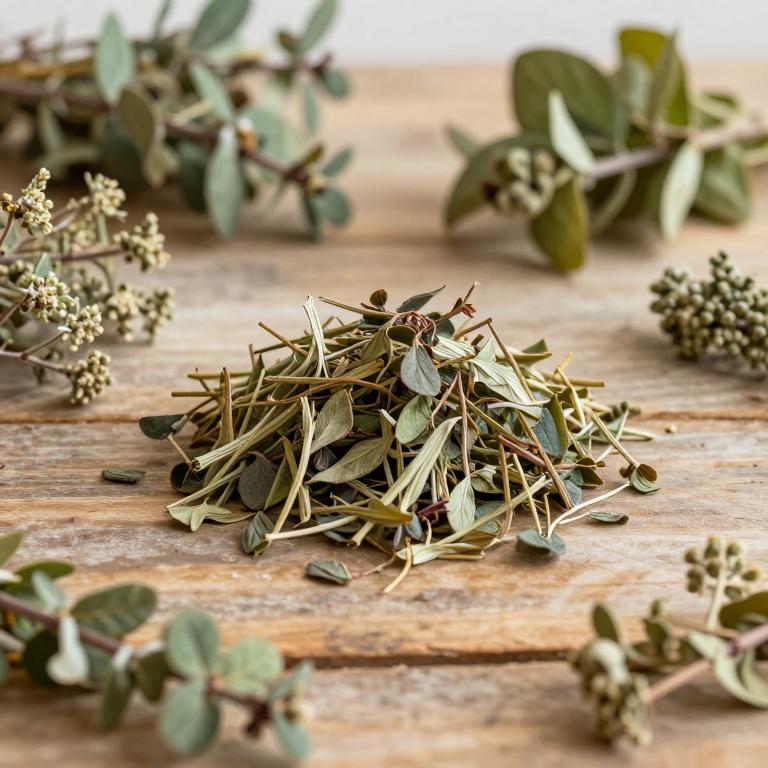
Dwarf Spurflower, scientifically known as Plectranthus strigosus, is a versatile medicinal herb native to Southern Africa. Renowned for its succulent leaves and hairy texture, this plant is traditionally used to treat ailments ranging from digestive issues to skin irritations, offering significant therapeutic potential in holistic and herbal medicine.
- Family
- Lamiaceae
- Native range
- Africa
- Parts used
- Not available
- Common names
- Dwarf Spurflower
- Scientific synonyms
- Plectranthus Kuntzeanus
Names and Synonyms
Common Names
- Dwarf Spurflower
Scientific Names
Accepted name
Plectranthus strigosusSynonyms
- Plectranthus kuntzeanus
Sources: Wikidata, Catalogue of Life
Taxonomical Classification
This plant belongs to the kingdom Plantae and is classified under the phylum Streptophyta within the class Equisetopsida. Following its placement in the subclass Magnoliidae and the order Lamiales, it is further categorized into the family Lamiaceae. Finally, its specific taxonomic identification is completed within the genus Plectranthus.
| Rank | Classification |
|---|---|
| Kingdom | Plantae |
| Phylum | Streptophyta |
| Class | Equisetopsida |
| Subclass | Magnoliidae |
| Order | Lamiales |
| Family | Lamiaceae |
| Genus | Plectranthus |
Sources: The World Checklist of Vascular Plants (WCVP)
Distribution
This plant is native to the southern region of the African continent. Specifically, its natural habitat is concentrated within the Cape Provinces. This localized distribution indicates that it thrives in the unique ecological conditions found in these areas. Because of this specific range, the species is considered an endemic part of the South African flora. Consequently, its presence is most frequently documented throughout these particular coastal and inland provinces.
| Region | Area |
|---|---|
| Southern Africa | Cape Provinces |
Sources: The World Checklist of Vascular Plants (WCVP)
Botanical Identification
Ecology
The ecology of Plectranthus strigosus is characterized by its ability to inhabit a broad altitudinal gradient, allowing it to persist across diverse topographical landscapes. This species demonstrates significant environmental plasticity, thriving in habitats ranging from low-lying areas at an elevation of 15 m AMSL to higher-altitude terrains reaching a maximum of 1280 m AMSL. This wide elevational range suggests that the plant is capable of adapting to varying temperature regimes, atmospheric pressures, and moisture availability found between sea level and montane environments. Such ecological breadth enables it to occupy various niches within its distribution, potentially ranging from coastal or lowland scrublands to more temperate, elevated slopes.
- Elevational range max:
- 1280 m AMSL
- Elevational range min:
- 15 m AMSL
Life history
The life history of Plectranthus strigosus is characterized by its existence as a perennial plant, allowing it to persist through multiple growing seasons. In terms of its structural growth strategy, it is classified as a chamaephyte, a life form where the permanent organs are located close to the soil surface, often protected by a layer of leaf litter or ground cover. This chamaphyte designation indicates its ability to maintain its vital structures near the ground level, contributing to its resilience and survival patterns within its natural habitat.
- Life form :
- chamaephyte
- Lifecycle :
- perennial
Morphology
The morphology of Plectranthus strigosus is characterized by a non-woody, herbaceous growth form, functioning as both a herb and a forb. It is a self-supporting plant rather than a climber, maintaining an upright or spreading structure without the need for external support. In terms of its ecological niche and habit, the species is terrestrial, lacking any epiphytic or parasitic tendencies, and operates as an independent organism. While its habitat can vary, its physiological classification encompasses aquatic, semiaquatic, and terrestrial capabilities, allowing it to adapt to diverse moisture levels in its environment.
- Aquatic :
- terrestrial
- Climber :
- self-supporting
- Epiphyte :
- terrestrial
- Growth form :
- herb
- Parasite :
- independent
- Woodiness :
- non-woody
Reproduction
Reproduction in Plectranthus strigosus is characterized by the production of minute seeds that exhibit significant variability in mass. The seed mass within a population is highly diverse, ranging from a minimum of 0.000024 g to a maximum of 0.00081 g. When considering the overall distribution of these reproductive units, the mean seed mass is recorded at 0.000417 g, indicating that while the species produces very small seeds, there is a measurable range of investment in individual seed size during the reproductive cycle.
- Seed mass max:
- 0.00081 g
- Seed mass mean:
- 0.000417 g
- Seed mass min:
- 2.4e-05 g
Sources: Global Inventory of Floras and Traits (GIFT)
Chemicals
Plectranthus strigosus has 1 reported phytochemicals identified across 0 scientific publications and several other databases. The most consistently reported chemicals include Parvifloron D.
| Chemical | Supporting sources | Consensus |
|---|---|---|
| Parvifloron D | 1 supporting sources | ★☆☆☆☆ |
Parvifloron D
- Biomolecules
Activities
Plectranthus strigosus has 4 reported activities identified across 0 scientific publications and several other databases. The most consistently reported activities include Antibacterial, Anticancer, Antimicrobial, Cytotoxic.
| Activity | Supporting sources | Consensus |
|---|---|---|
| Antibacterial | 1 supporting sources | ★☆☆☆☆ |
| Anticancer | 1 supporting sources | ★☆☆☆☆ |
| Antimicrobial | 1 supporting sources | ★☆☆☆☆ |
| Cytotoxic | 1 supporting sources | ★☆☆☆☆ |
Antibacterial
- Biomolecules
Anticancer
- Biomolecules
Antimicrobial
- Biomolecules
Cytotoxic
- Biomolecules
Conditions
Plectranthus strigosus has 2 reported investigations on conditions identified across 0 scientific publications and several other databases. The most consistently reported conditions include bacterial infections, cancer.
| Condition | Supporting sources | Consensus |
|---|---|---|
| Bacterial infections | 1 supporting sources | ★☆☆☆☆ |
| Cancer | 1 supporting sources | ★☆☆☆☆ |
Bacterial infections
- Biomolecules
Cancer
- Biomolecules