Platypodium elegans
Platypodium elegans · Accepted scientific name
Scientific literature: Very Sparse (1 studies) · ★☆☆☆☆
Platypodium elegans, scientifically known as Platypodium elegans, is a significant medicinal plant valued for its diverse therapeutic potential. Traditionally used in various herbal practices, this species is studied for its bioactive compounds. Understanding its phytochemical properties is essential for exploring its role in developing modern natural remedies.
- Family
- Fabaceae
- Native range
- Southern America
- Parts used
- Not available
- Common names
- Not available
- Scientific synonyms
- Callisemaea Elegans
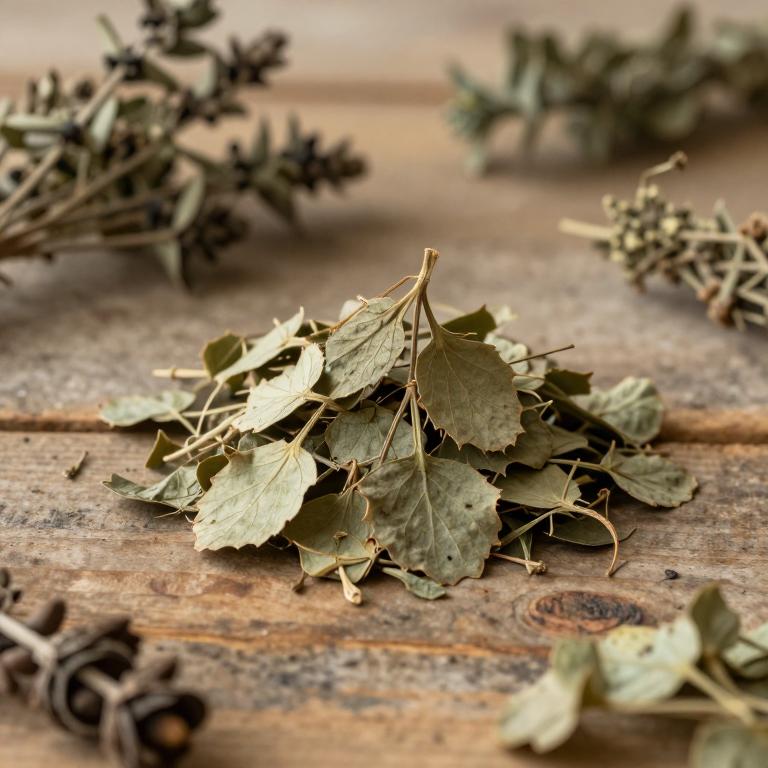
Names and Synonyms
Scientific Names
Accepted name
Platypodium elegansSynonyms
- Callisemaea elegans
Regional and Traditional Names
Spanish:
- Lomo de Caimán
Sources: Wikidata, Catalogue of Life
Taxonomical Classification
This plant belongs to the kingdom Plantae and is classified under the phylum Streptophyta within the class Equisetopsida. It is further organized into the subclass Magnoliidae and the order Fabales. Finally, it is a member of the family Fabaceae and falls under the genus Platypodium.
| Rank | Classification |
|---|---|
| Kingdom | Plantae |
| Phylum | Streptophyta |
| Class | Equisetopsida |
| Subclass | Magnoliidae |
| Order | Fabales |
| Family | Fabaceae |
| Genus | Platypodium |
Sources: The World Checklist of Vascular Plants (WCVP)
Distribution
This plant exhibits a diverse geographical range spanning several regions of the Americas. In Central America, its presence is specifically noted within the country of Panamá. Moving into Northern South America, it can be found growing in Venezuela. The species also extends into Western South America, occupying territories in both Colombia and Bolivia. Finally, its distribution includes the West-Central region of Brazil.
| Region | Area |
|---|---|
| Central America | Panamá |
| Northern South America | Venezuela |
| Western South America | Bolivia |
| Western South America | Colombia |
| Brazil | Brazil West-Central |
| Brazil | Brazil Northeast |
| Brazil | Brazil Southeast |
| Brazil | Brazil North |
| Brazil | Brazil South |
| Southern South America | Paraguay |
Sources: The World Checklist of Vascular Plants (WCVP)
Botanical Identification
Ecology
The ecology of Platypodium elegans is defined by its adaptation to the unique environmental conditions of the Cerrado biome. This plant thrives across a broad altitudinal gradient, occupying diverse topographical niches that range from sea level up to a maximum elevation of 1000 m AMSL. By inhabiting these varied elevations within the Cerrado, the species demonstrates a capacity to navigate the specific soil compositions and seasonal moisture patterns characteristic of this tropical savanna ecosystem.
- Elevational range max:
- 1000 m AMSL
- Elevational range min:
- 0 m AMSL
- Habitat :
- Cerrado
Life history
The life history of Platypodium elegans is characterized by its status as a perennial species, allowing it to persist in its environment over multiple growing seasons. As a long-lived woody plant, its lifecycle involves an initial establishment phase followed by sustained vegetative growth and periodic reproductive cycles. This perennial nature enables the plant to build significant biomass and develop a robust structural framework, which supports its long-term survival and ability to withstand seasonal environmental fluctuations. Throughout its extended lifespan, the plant undergoes continuous physiological processes to maintain its biological functions, ensuring its presence within its native ecosystem across successive years.
- Lifecycle :
- perennial
Morphology
The morphology of Platypodium elegans is characterized by its robust growth form as a woody tree, which typically attains a mean height of 15 m, though it can reach a maximum height of up to 35 m. This species is strictly terrestrial in its habitat, neither aquatic nor semiaquatic, and functions as an independent organism rather than a parasite. In terms of its structural support, it is a self-supporting plant, lacking the climbing habits of lianas or vines, and it does not exhibit epiphytic behavior, maintaining a terrestrial existence.
- Aquatic :
- terrestrial
- Climber :
- self-supporting
- Epiphyte :
- terrestrial
- Growth form :
- tree
- Parasite :
- independent
- Plant height max:
- 35 m
- Plant height mean:
- 15 m
- Woodiness :
- woody
Physiology
The physiology of Platypodium elegans is characterized by a C3 photosynthetic pathway, which dictates its carbon fixation processes and energy conversion efficiency. The plant exhibits a highly consistent leaf dry matter content (LDMC), with mean, minimum, and maximum values all recorded at 386 mg/g, indicating a stable structural density within its foliar tissues. Additionally, this species functions as a nitrogen fixer, possessing the physiological capacity to convert atmospheric nitrogen into a biologically available form, which supports its nutrient requirements and growth within its ecological niche.
- Leaf dry matter content (LDMC) mean:
- 386 mg/g
- Nitrogen fixer :
- yes
- Photosynthetic pathway :
- C3
Reproduction
The reproduction of Platypodium elegans is characterized by a biotic pollination syndrome, specifically relying on insects to facilitate the transfer of pollen. Following successful fertilization, the plant produces seeds that exhibit significant morphological variability in terms of weight. The seed mass ranges from a minimum of 0.444 g to a maximum of 2.314 g, with an average seed mass of approximately 1.71325 g. Once mature, the seeds are distributed via an anemochorous dispersal syndrome, utilizing wind as the primary mechanism for movement away from the parent plant.
- Dispersal syndrome :
- anemochorous
- Pollination syndrome :
- insect
- Pollination syndrome :
- biotic
- Seed mass max:
- 2.314 g
- Seed mass mean:
- 1.71325 g
- Seed mass min:
- 0.444 g
Sources: Global Inventory of Floras and Traits (GIFT)
Chemicals
Platypodium elegans has 1 reported phytochemicals identified across 0 scientific publications and several other databases. The most consistently reported chemicals include Coumarins.
| Chemical | Supporting sources | Consensus |
|---|---|---|
| Coumarins | 1 supporting sources | ★☆☆☆☆ |
Coumarins
- Fitoterapia