South Indian Jellywort
Platostoma menthoides · Accepted scientific name
Scientific literature: Very Sparse (11 studies) · ★☆☆☆☆
South Indian Jellywort, scientifically known as Platostoma menthoides, is a remarkable medicinal plant native to tropical regions. Renowned for its unique succulent properties, it is traditionally utilized in herbal medicine to treat various ailments. This versatile botanical offers significant therapeutic potential, bridging ancient healing wisdom with modern pharmacological interests.
- Family
- Lamiaceae
- Native range
- Asia-Tropical
- Parts used
- Not available
- Common names
- South Indian Jellywort
- Scientific synonyms
- Geniosporum Menthoides · Geniosporum Menthoides Var. Prostratum · 12 more
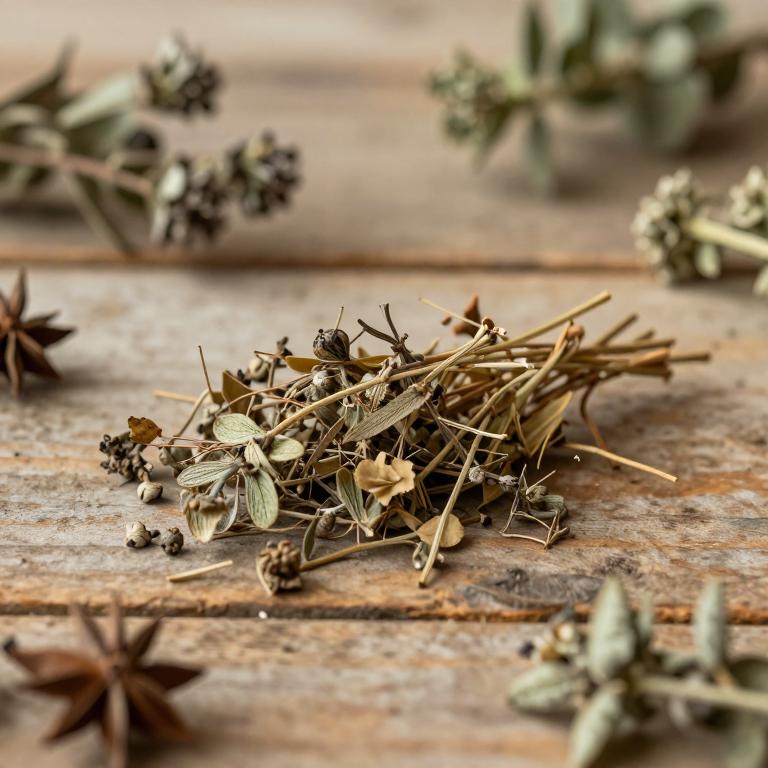
Names and Synonyms
Common Names
- South Indian Jellywort
Scientific Names
Accepted name
Platostoma menthoidesSynonyms
- Geniosporum menthoides
- Geniosporum menthoides var. prostratum
- Lumnitzera prostrata
- Thymus indicus
- Ocimum macrostachyum
- Ocimum menthoides
- Ocimum prostratum
- Elsholtzia ocimoides
- Mentha ocymoides
- Platostoma menthoides var. longiracemosum
- Geniosporum prostratum var. longiracemosum
- Geniosporum tenuiflorum var. gracile
- Geniosporum prostratum
- Geniosporum gracile
Sources: Wikidata, Catalogue of Life
Taxonomical Classification
This plant belongs to the kingdom Plantae and is classified under the phylum Streptophyta within the class Equisetopsida. It is further categorized under the subclass Magnoliidae and the order Lamiales, falling into the family Lamiaceae. Ultimately, the medicinal species is identified by its genus, Platostoma.
| Rank | Classification |
|---|---|
| Kingdom | Plantae |
| Phylum | Streptophyta |
| Class | Equisetopsida |
| Subclass | Magnoliidae |
| Order | Lamiales |
| Family | Lamiaceae |
| Genus | Platostoma |
Sources: The World Checklist of Vascular Plants (WCVP)
Distribution
This plant, Platostoma menthoides, exhibits a specific geographical distribution within the Asian region. Its natural habitat is primarily concentrated within the Indian Subcontinent. Specifically, it can be found growing in various parts of India. Additionally, the species is also distributed across the island nation of Sri Lanka. These two locations represent the primary known areas for its occurrence.
| Region | Area |
|---|---|
| Indian Subcontinent | India |
| Indian Subcontinent | Sri Lanka |
Sources: The World Checklist of Vascular Plants (WCVP)
Botanical Identification
Life history
The life history of Platostoma menthoides is characterized by its classification as a therophyte, a life form that completes its entire biological cycle within a single growing season. This strategy involves germinating from seeds, undergoing rapid vegetative growth, flowering, and producing seeds before the onset of unfavorable environmental conditions. As a therophyte, the plant avoids seasonal stresses, such as drought or cold, by existing primarily in a seed state during dormant periods, ensuring its survival through the dispersal of hardy offspring. This annual lifecycle allows the species to efficiently exploit transient periods of favorable moisture and light, making it highly adapted to its specific ecological niche through rapid maturation and prolific seed production.
- Life form :
- therophyte
Morphology
The morphology of Platostoma menthoides is characterized by its growth habit as a self-supporting climber, utilizing its structure to ascend through its environment. It functions as an independent organism, exhibiting no parasitic behavior toward other plants. Furthermore, it is classified as a terrestrial species rather than an epiphyte, establishing its root system and growth within the soil of its natural habitat.
- Climber :
- self-supporting
- Epiphyte :
- terrestrial
- Parasite :
- independent
Sources: Global Inventory of Floras and Traits (GIFT)
Chemicals
Platostoma menthoides has 1 reported phytochemicals identified across 0 scientific publications and several other databases. The most consistently reported chemicals include Flavonoid.
| Chemical | Supporting sources | Consensus |
|---|---|---|
| Flavonoid | 1 supporting sources | ★☆☆☆☆ |
Flavonoid
- Toxics
Activities
Platostoma menthoides has 3 reported activities identified across 0 scientific publications and several other databases. The most consistently reported activities include Antibacterial, Antimicrobial, Antioxidant.
| Activity | Supporting sources | Consensus |
|---|---|---|
| Antibacterial | 1 supporting sources | ★☆☆☆☆ |
| Antimicrobial | 1 supporting sources | ★☆☆☆☆ |
| Antioxidant | 1 supporting sources | ★☆☆☆☆ |
Antibacterial
- Toxics
Antimicrobial
- Toxics
Antioxidant
- Toxics
Conditions
Platostoma menthoides has 4 reported investigations on conditions identified across 0 scientific publications and several other databases. The most consistently reported conditions include antioxidant, free radicals, gram-negative bacteria, gram-positive bacteria.
| Condition | Supporting sources | Consensus |
|---|---|---|
| Antioxidant | 1 supporting sources | ★☆☆☆☆ |
| Free radicals | 1 supporting sources | ★☆☆☆☆ |
| Gram-negative bacteria | 1 supporting sources | ★☆☆☆☆ |
| Gram-positive bacteria | 1 supporting sources | ★☆☆☆☆ |
Antioxidant
- Toxics
Free radicals
- Toxics
Gram-negative bacteria
- Toxics
Gram-positive bacteria
- Toxics
Preparations
Platostoma menthoides has 1 reported preparations identified across 0 scientific publications and several other databases. The most consistently reported preparations include ethyl acetate extract.
| Preparation | Supporting sources | Consensus |
|---|---|---|
| Ethyl acetate extract | 1 supporting sources | ★☆☆☆☆ |
Ethyl acetate extract
- Toxics