London Plane
Platanus × hispanica · Accepted scientific name
Scientific literature: Very Sparse (4 studies) · ★☆☆☆☆
London Plane, scientifically known as Plataunus × hispanica, is a resilient hybrid celebrated for its impressive stature and unique exfoliating bark. While primarily an ornamental urban tree, its ability to thrive in polluted environments makes it a vital component of green infrastructure, offering significant air-purifying benefits and cooling shade.
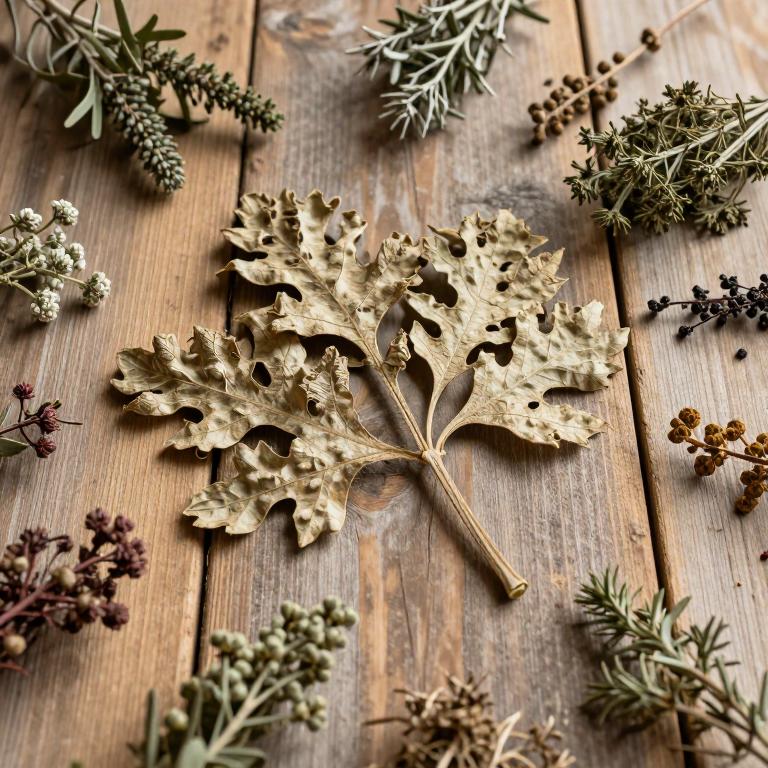
Names and Synonyms
Common Names
- London plane-tree
- maple-leaved plane-tree
- London plane
- London planetree
Scientific Names
Accepted name
Platanus × hispanicaSynonyms
- Platanus × acerifolia var. pyramidalis
- Platanus × acerifolia var. suttneri
- Platanus orientalis var. cuneata
- Platanus orientalis f. cuneata
- Platanus × acerifolia f. kelseyana
- Platanus × acerifolia f. suttneri
- Platanus orientalis var. pyramidalis
- Platanus orientalis var. acerifolia
- Platanus orientalis var. variegata
- Platanus vulgaris var. flabellifolia
- Platanus vulgaris var. acerifolia
- Platanus vulgaris var. vitifolia
- Platanus orientalis var. hispanica
- Platanus occidentalis var. kelseyana
- Platanus × hispanica var. pyramidata
- Platanus × acerifolia f. pyramidalis
- Platanus × acerifolia var. hispanica
- Platanus × hybrida
- Platanus × acerifolia var. cantabrigensis
- Platanus × acerifolia
- Platanus × acerifolia var. kelseyana
- Platanus × cantabrigensis
- Platanus orientalis f. pyramidalis
- Platanus × cuneata
- Platanus occidentalis var. pyramidalis
- Platanus × parviloba
- Platanus occidentalis var. suttneri
- Platanus orientalis var. pyramidata
- Platanus occidentalis var. hispanica
- Platanus orientalis f. vitifolia
Regional and Traditional Names
Spanish:
- Platanus acerifolia
- Plátano híbrido común
- Plátano híbrido español
- Plátano de sombra
- Plátano de Londres
- plátano de paseo
German:
- Ahornblättrige Platane
- Platane
- Gewöhnliche Platane
- Bastard-Platane
- gewöhnliche Platane
French:
- platane commun
- Platane à feuille d'érable
- platane à feuilles d'érable
- Platane d'Espagne
Sources: Wikidata, Catalogue of Life
Taxonomical Classification
This plant belongs to the kingdom Plantae and is classified under the phylum Streptophyta and class Equisetopsida. Within the subclass Magnoliidae and order Proteales, it is situated in the family Platanaceae. Ultimately, it is identified by the genus Platanus and the specific hybrid name Platanus × hispanica.
| Rank | Classification |
|---|---|
| Kingdom | Plantae |
| Phylum | Streptophyta |
| Class | Equisetopsida |
| Subclass | Magnoliidae |
| Order | Proteales |
| Family | Platanaceae |
| Genus | Platanus |
Sources: The World Checklist of Vascular Plants (WCVP)
Botanical Identification
Ecology
The ecology of Platanus × hispanica is characterized by its adaptability to various environmental conditions, although it is most frequently observed within the controlled settings of a garden. In these anthropogenic habitats, the plant benefits from managed soil moisture and nutrient availability, which allows it to thrive despite its natural tendency toward riparian or moisture-rich environments. While it can tolerate a range of soil types, it performs optimally in well-drained, fertile substrates that prevent root stagnation. Its presence in garden landscapes often serves an ecological role in providing shade and structural complexity, though its growth patterns are heavily influenced by the microclimates created by human landscaping and urban heat island effects.
- Habitat :
- garden
Life history
The life history of Platanus × hispanica is characterized by its status as a perennial organism, allowing it to establish long-term presence within its ecosystem through repeated seasonal cycles. As a phanerophyte, the plant maintains its photosynthetic organs on elevated branches above the ground level, a structural strategy that facilitates its growth into a significant woody form. Its physiological rhythm is defined by a deciduous nature, meaning it undergoes a period of dormancy where it sheds its foliage annually in response to seasonal changes. This combination of a perennial lifecycle, a phanerophyte life form, and deciduous behavior dictates its survival strategy, ensuring it can endure varying environmental conditions over many years.
- Deciduousness :
- deciduous
- Life form :
- phanerophyte
- Lifecycle :
- perennial
Morphology
The morphology of Platanus × hispanica is characterized by a woody growth form that can manifest as both a tree and a shrub. This species is a self-supporting, independent organism that does not function as a parasite or an epiphyte, maintaining a terrestrial existence. In terms of stature, it is a substantial plant with a height that typically ranges from a minimum of 10 m to a maximum of 30 m, with a mean plant height of approximately 30 m. Unlike climbing vines or lianas, it is strictly self-supporting in its structural development.
- Aquatic :
- terrestrial
- Climber :
- self-supporting
- Epiphyte :
- terrestrial
- Growth form :
- tree
- Growth form :
- shrub
- Parasite :
- independent
- Plant height mean:
- 30 m
- Plant height min:
- 10 m
- Woodiness :
- woody
Physiology
The physiology of Platanus × hispanica is characterized by a C3 photosynthetic pathway, reflecting its metabolic strategy for carbon fixation. The plant is strictly non-carnivorous, relying on traditional nutrient uptake through its root system rather than insectivory. Its structural development is supported by a mean stem specific density (SSD) of 701 mg/cm³, providing the necessary mechanical integrity for its growth habit. The foliar morphology is substantial, with leaf dimensions showing significant variability; the leaf length typically averages 17 cm, ranging from a minimum of 10 cm to a maximum of 24 cm. Similarly, leaf width fluctuates between a minimum of 12 cm and a maximum of 25 cm, with a recorded mean width of 18.5 cm, facilitating an expansive surface area for light interception and gas exchange.
- Carnivory :
- non-carnivorous
- Leaf length max:
- 24 cm
- Leaf length mean:
- 17 cm
- Leaf length min:
- 10 cm
- Leaf width max:
- 25 cm
- Leaf width mean:
- 18.5 cm
- Leaf width min:
- 12 cm
- Photosynthetic pathway :
- C3
- Stem specific density (SSD) mean:
- 701 mg/cm³
Reproduction
The reproduction of Platanus × hispanica is characterized by a specific seasonal flowering period that begins and concludes in May. The plant produces fruits classified as achenes, which are indehiscent, meaning they do not split open at maturity to release their contents. The seeds produced are quite small and uniform in size, with a consistent mean, minimum, and maximum seed mass of 0.00422 g. For the distribution of its offspring, the species utilizes an anemochorous dispersal syndrome, relying on the wind to transport its seeds away from the parent plant.
- Dehiscence :
- indehiscent
- Dispersal syndrome :
- anemochorous
- Flowering time :
- May
- Fruit type :
- achene
- Seed mass mean:
- 0.00422 g
Sources: Global Inventory of Floras and Traits (GIFT)
Plant Parts
Platanus × hispanica has 1 reported plant parts identified across 2 scientific publications and several other databases that are studied for medicinal purposes. The most consistently reported plant part include leaf.
| Plant part | Supporting sources | Consensus |
|---|---|---|
| Leaf | 2 supporting sources | ★☆☆☆☆ |
Leaf
- Bioorganic chemistry
- Molecules (Basel, Switzerland)
Chemicals
Platanus × hispanica has 1 reported phytochemicals identified across 2 scientific publications and several other databases. The most consistently reported chemicals include Compound 1.
| Chemical | Supporting sources | Consensus |
|---|---|---|
| Compound 1 | 1 supporting sources | ★☆☆☆☆ |
Compound 1
- Bioorganic chemistry
Preparations
Platanus × hispanica has 1 reported preparations identified across 2 scientific publications and several other databases. The most consistently reported preparations include bioactive extract of the May leaves.
| Preparation | Supporting sources | Consensus |
|---|---|---|
| Bioactive extract of the may leaves | 1 supporting sources | ★☆☆☆☆ |
Bioactive extract of the may leaves
- Bioorganic chemistry