Plantago albicans
Plantago albicans · Accepted scientific name
Scientific literature: Very Sparse (4 studies) · ★☆☆☆☆
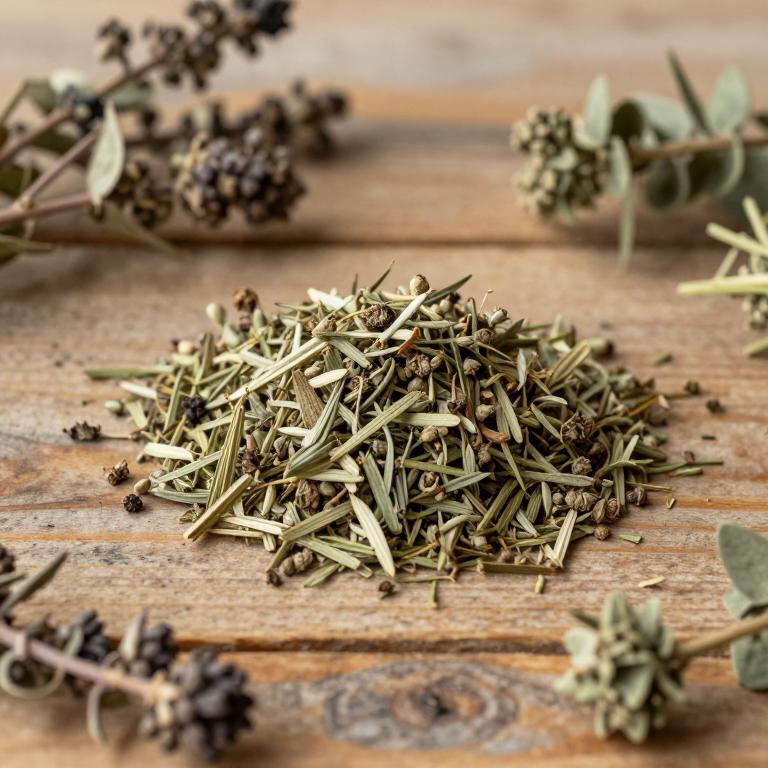
Plantago albicans, scientifically known as Plantago albicans, is a resilient perennial herb valued in traditional herbalism. Native to specific montane regions, this species is distinguished by its silvery foliage and medicinal potential. It is frequently studied for its soothing properties and its role in supporting respiratory and digestive health.
- Family
- Plantaginaceae
- Native range
- Europe
- Parts used
- Not available
- Common names
- Not available
- Scientific synonyms
- Plantago Albicans Var. Desertica · Plantago Albicantiformis · 18 more
Names and Synonyms
Scientific Names
Accepted name
Plantago albicansSynonyms
- Plantago albicans var. desertica
- Plantago albicantiformis
- Plantago albicans var. humilis
- Plantago parvula
- Plantago albicans var. lanata
- Plantago albicans var. lanuginosa
- Plantago albicans var. latifolia
- Plantago albicans var. macropoda
- Plantago albicans var. major
- Plantago albicans var. viridis
- Plantago boissieri
- Plantago boissieri var. tenera
- Plantago velutina
- Plantago albicans var. nana
- Lagopus albicans
- Plantago albicans f. latifolia
- Plantago albicans f. nana
- Plantago albicans f. major
- Plantago albicans f. minor
- Plantago albicans var. angustifolia
Regional and Traditional Names
German:
- Weißlicher Wegerich
Sources: Wikidata, Catalogue of Life
Taxonomical Classification
This plant, known scientifically as Plantago albiscaus, belongs to the kingdom Plantae and the phylum Streptophyta. It is classified under the class Equisetopsida and the subclass Magnoliidae within the order Lamiales. Finally, it is a member of the family Plantaginaceae and falls under the genus Plantago.
| Rank | Classification |
|---|---|
| Kingdom | Plantae |
| Phylum | Streptophyta |
| Class | Equisetopsida |
| Subclass | Magnoliidae |
| Order | Lamiales |
| Family | Plantaginaceae |
| Genus | Plantago |
Sources: The World Checklist of Vascular Plants (WCVP)
Distribution
This plant is primarily distributed across the regions of Southwestern Europe. Its presence is documented throughout several Mediterranean territories, including Spain and Portugal. It can also be found inhabiting the island of Sardegna. Additionally, its range extends to the French coastline. Finally, the species is located within the Baleares archipelago.
| Region | Area |
|---|---|
| Southwestern Europe | Baleares |
| Southwestern Europe | France |
| Southwestern Europe | Portugal |
| Southwestern Europe | Sardegna |
| Southwestern Europe | Spain |
| Southeastern Europe | Greece |
| Southeastern Europe | Italy |
| Southeastern Europe | Kriti |
| Southeastern Europe | Sicilia |
| Northern Africa | Algeria |
Sources: The World Checklist of Vascular Plants (WCVP)
Botanical Identification
Ecology
The ecology of Plantago albicans is characterized by its ability to inhabit a broad altitudinal spectrum, allowing it to adapt to diverse environmental conditions across varying landscapes. It is found at elevations ranging from 0 m AMSL up to a maximum of 1100 m AMSL, demonstrating a significant capacity for vertical distribution. This wide elevational range suggests that the species can thrive in both lowland habitats and moderate montane zones, occupying niches that vary in temperature, moisture availability, and atmospheric pressure. Such ecological flexibility enables the plant to colonize a variety of terrains within this specific altitude gradient, facilitating its presence across diverse topographical profiles.
- Elevational range max:
- 1100 m AMSL
- Elevational range min:
- 0 m AMSL
Life history
The life history of Plantago albus is characterized by a perennial lifecycle, allowing the plant to persist through multiple growing seasons. As a hemicryptophyte, its perennating buds are located at the soil surface, protected by leaf litter or the upper layers of the substrate during unfavorable periods. This life form enables the species to maintain a stable presence in its habitat, emerging from its ground-level buds to produce foliage and reproductive structures once environmental conditions become favorable.
- Life form :
- hemicryptophyte
- Lifecycle :
- perennial
Morphology
The morphology of Plantago albus is characterized by a low-growing, non-woody growth form, primarily functioning as a herb and forb. It is a self-supporting plant that does not exhibit climbing tendencies, such as being a liana or vine, and it operates as an independent organism rather than a parasite. The plant is terrestrial in its ecological habit, lacking aquatic or epiphytic lifestyles. In terms of physical dimensions, it is a small-statured species with a plant height ranging from a minimum of 0.1 m to a maximum of 0.4 m.
- Aquatic :
- terrestrial
- Climber :
- self-supporting
- Epiphyte :
- terrestrial
- Growth form :
- herb
- Parasite :
- independent
- Plant height max:
- 0.4 m
- Plant height min:
- 0.1 m
- Woodiness :
- non-woody
Physiology
The physiology of Plantago albians is characterized by distinct morphological adaptations in its foliage, which facilitate efficient resource acquisition and environmental interaction. The leaves exhibit an elliptic form, a shape optimized for light interception and surface area management within its ecological niche. These leaves demonstrate significant dimensional variability, with lengths ranging from a minimum of 3 cm to a maximum of 15 cm. Complementing this longitudinal variation, the leaf width fluctuates between a narrow 0.2 cm and a maximum of 1 cm, indicating a structural plasticity that allows the plant to regulate its transpiration rates and metabolic efficiency according to available moisture and light conditions.
- Leaf form :
- elliptic
- Leaf length max:
- 15 cm
- Leaf length min:
- 3 cm
- Leaf width max:
- 1 cm
- Leaf width min:
- 0.2 cm
Reproduction
The reproductive cycle of Plantago albus is characterized by a specific flowering window that typically begins in March and concludes in June. During this period, the plant produces an inflorescence in the form of a spike, which measures between 0.01 m and 0.1 m in length. Following pollination, the plant develops fruit classified as a dry capsule. These capsules are relatively small, with dimensions ranging from a minimum length of 0.37 cm to a maximum length of 0.42 cm, and a width spanning from 0.2 cm to 0.25 cm. The fruit is dehiscence-based, meaning it is dehiscent to facilitate seed release. The resulting seeds are exceptionally lightweight, with a mean mass of 0.000868 g, though individual seed masses can vary from a minimum of 0.00049 g to a maximum of 0.00123 g.
- Dehiscence :
- dehiscent
- Flowering time :
- Mar
- Flowering time :
- Jun
- Fruit dryness :
- dry
- Fruit length max:
- 0.42 cm
- Fruit length min:
- 0.37 cm
- Fruit type :
- capsule
- Fruit width max:
- 0.25 cm
- Fruit width min:
- 0.2 cm
- Inflorescence :
- spike
- Inflorescence length max:
- 0.1 m
- Inflorescence length min:
- 0.01 m
- Seed mass max:
- 0.00123 g
- Seed mass mean:
- 0.000868 g
- Seed mass min:
- 0.00049 g
Sources: Global Inventory of Floras and Traits (GIFT)
Activities
Plantago albicans has 2 reported activities identified across 0 scientific publications and several other databases. The most consistently reported activities include Anticancer, Antifungal.
| Activity | Supporting sources | Consensus |
|---|---|---|
| Anticancer | 1 supporting sources | ★☆☆☆☆ |
| Antifungal | 1 supporting sources | ★☆☆☆☆ |
Anticancer
- BioMed research international
Antifungal
- BioMed research international
Conditions
Plantago albicans has 2 reported investigations on conditions identified across 0 scientific publications and several other databases. The most consistently reported conditions include dermatophytes, fungal diseases.
| Condition | Supporting sources | Consensus |
|---|---|---|
| Dermatophytes | 1 supporting sources | ★☆☆☆☆ |
| Fungal diseases | 1 supporting sources | ★☆☆☆☆ |
Dermatophytes
- BioMed research international
Fungal diseases
- BioMed research international
Preparations
Plantago albicans has 2 reported preparations identified across 0 scientific publications and several other databases. The most consistently reported preparations include Plantago albicans extract, Plantago albicans extracts.
| Preparation | Supporting sources | Consensus |
|---|---|---|
| Plantago albicans extract | 1 supporting sources | ★☆☆☆☆ |
| Plantago albicans extracts | 1 supporting sources | ★☆☆☆☆ |
Plantago albicans extract
- Biomedicine & pharmacotherapy = Biomedecine & pharmacotherapie
Plantago albicans extracts
- Biomedicine & pharmacotherapy = Biomedecine & pharmacotherapie