billygoat-plum
Planchonia careya · Accepted scientific name
Scientific literature: Very Sparse (3 studies) · ★☆☆☆☆
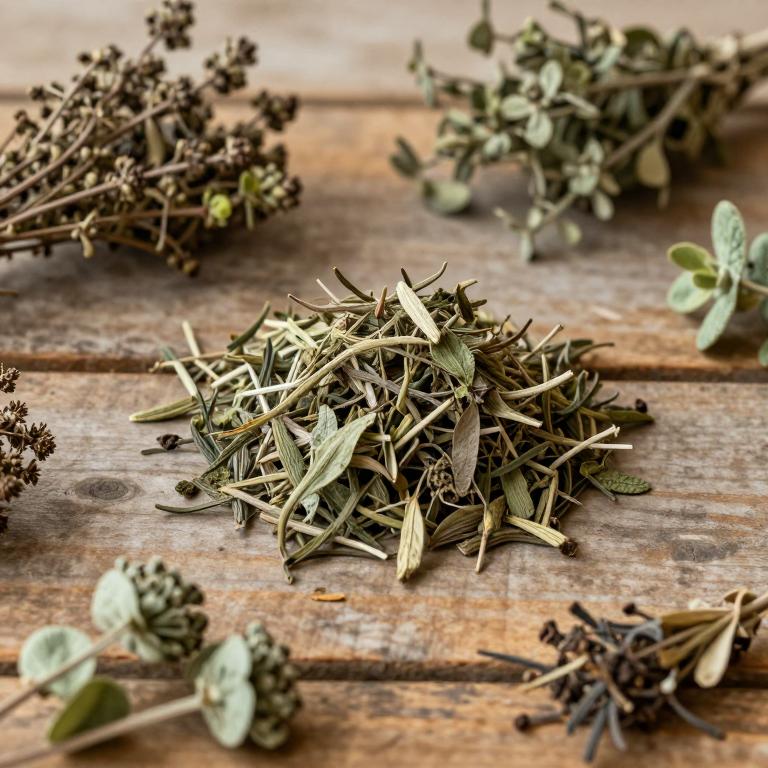
Billygoat-plum, scientifically known as Planchonia careya, is a versatile medicinal tree native to Southeast Asia. Renowned for its therapeutic properties, various parts of the plant—including the bark, leaves, and fruit—are utilized in traditional medicine to treat ailments such as inflammation, skin disorders, digestive issues, and fever.
Names and Synonyms
Common Names
- billygoat-plum
- cockatoo-apple
- cocky-apple
- Billygoat Plum
- Cockatoo Apple
- Cocky Apple
Scientific Names
Accepted name
Planchonia careyaSynonyms
- Cumbia australis
- Planchonia crenata
- Careya australis
- Barringtonia careya
- Careya arborea var. australis
Sources: Wikidata, Catalogue of Life
Taxonomical Classification
This plant belongs to the kingdom Plantae and is classified under the phylum Streptophyta and the class Equisetopsida. Within the subclass Magnoliidae, it is ordered under Ericales and falls into the family Lecythidaceae. Finally, it is identified by the genus Planchonia, specifically as the species Planchonia careya.
| Rank | Classification |
|---|---|
| Kingdom | Plantae |
| Phylum | Streptophyta |
| Class | Equisetopsida |
| Subclass | Magnoliidae |
| Order | Ericales |
| Family | Lecythidaceae |
| Genus | Planchonia |
Sources: The World Checklist of Vascular Plants (WCVP)
Distribution
This plant exhibits a wide geographical range across several distinct regions. Within the Papuasia region, it can be found growing in New Guinea. In Australia, its distribution extends into the Northern Territory. It is also commonly documented throughout the state of Queensland. Finally, the species can be located as far west as Western Australia.
| Region | Area |
|---|---|
| Papuasia | New Guinea |
| Australia | Northern Territory |
| Australia | Queensland |
| Australia | Western Australia |
Sources: The World Checklist of Vascular Plants (WCVP)
Botanical Identification
Life history
The life history of Planchonia careya is characterized by a perennial lifecycle, allowing the individual to persist across multiple growing seasons. As a phanerophyte, its regenerative buds are located high above the ground on woody stems, a structural adaptation that defines its life form. Specifically, it functions as a phanerophyte, maintaining its photosynthetic and reproductive structures on elevated branches to navigate its environmental niche.
- Life form :
- phanerophyte
- Lifecycle :
- perennial
Morphology
The morphology of Planchonia careya is characterized by its diverse growth forms, ranging from a small shrub to a more substantial tree, with a height that typically varies between 0.5 m and 15 m. This woody plant is primarily terrestrial in its habitat, though it can exhibit semiaquatic or aquatic tendencies depending on environmental conditions. As a self-supporting organism, it does not function as a climber (such as a liana or vine), nor does it act as an epiphyte or a parasite, maintaining an independent biological existence. Its structural development is defined by its woody nature, providing the necessary stability for its stature within its ecological niche.
- Aquatic :
- terrestrial
- Climber :
- self-supporting
- Epiphyte :
- terrestrial
- Growth form :
- tree
- Growth form :
- shrub
- Parasite :
- independent
- Plant height max:
- 15 m
- Plant height min:
- 0.5 m
- Woodiness :
- woody
Physiology
The physiology of Planchonia careya is characterized by a C3 photosynthetic pathway, which dictates its metabolic processes and resource acquisition strategies. As a C3 plant, the initial carbon fixation occurs through the enzyme Rubisco, which incorporates atmospheric carbon dioxide directly into a three-carbon molecule during the Calvin cycle. This metabolic route typically necessitates high water availability and moderate temperatures to maintain optimal stomatal conductance and minimize photorespiration. The plant's physiological efficiency is closely linked to its ability to manage transpiration rates alongside carbon assimilation, ensuring that the metabolic energy derived from sunlight is effectively utilized for biomass production and the synthesis of its various bioactive secondary metabolites.
- Photosynthetic pathway :
- C3
Sources: Global Inventory of Floras and Traits (GIFT)
Plant Parts
Planchonia careya has 1 reported plant parts identified across 1 scientific publications and several other databases that are studied for medicinal purposes. The most consistently reported plant part include leaf.
| Plant part | Supporting sources | Consensus |
|---|---|---|
| Leaf | 1 supporting sources | ★☆☆☆☆ |
Leaf
- Journal of ethnopharmacology
Activities
Planchonia careya has 1 reported activities identified across 1 scientific publications and several other databases. The most consistently reported activities include Antibacterial.
| Activity | Supporting sources | Consensus |
|---|---|---|
| Antibacterial | 1 supporting sources | ★☆☆☆☆ |
Antibacterial
- Journal of ethnopharmacology
Conditions
Planchonia careya has 1 reported investigations on conditions identified across 1 scientific publications and several other databases. The most consistently reported conditions include wounds.
| Condition | Supporting sources | Consensus |
|---|---|---|
| Wounds | 1 supporting sources | ★☆☆☆☆ |
Wounds
- Journal of ethnopharmacology
Preparations
Planchonia careya has 1 reported preparations identified across 1 scientific publications and several other databases. The most consistently reported preparations include leaf extracts.
| Preparation | Supporting sources | Consensus |
|---|---|---|
| Leaf extracts | 1 supporting sources | ★☆☆☆☆ |
Leaf extracts
- Journal of ethnopharmacology