Dixie Silverback Fern
Pityrogramma calomelanos · Accepted scientific name
Scientific literature: Very Sparse (10 studies) · ★☆☆☆☆
Dixie Silverback Fern, scientifically known as Pityrogramma calomelanos, is a versatile medicinal plant widely used in traditional practices across the tropics. Renowned for its potent antimicrobial and anti-inflammatory properties, this fern is frequently applied to treat skin infections, wounds, and various inflammatory conditions through its bioactive chemical compounds.
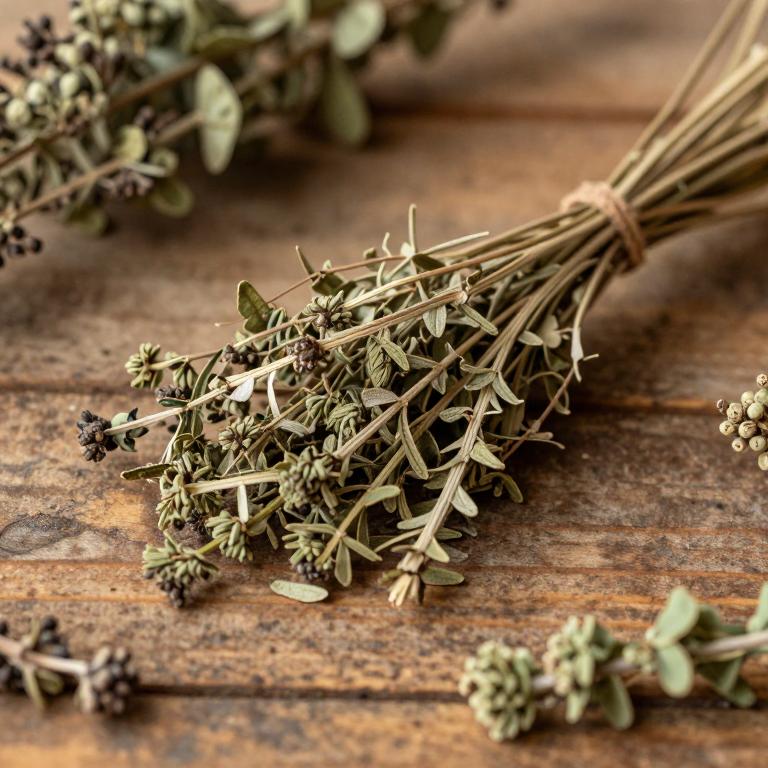
Names and Synonyms
Common Names
- Dixie Silverback Fern
- Golden Fern
- silver fern
Scientific Names
Accepted name
Pityrogramma calomelanosSynonyms
- Pityrogramma calomelanos var. integrifoliolata
- Ceropteris martensii
- Ceropteris massonii
- Ceropteris serrata
- Gymnogramma bidentata
- Gymnogramma calomelanos f. epruinata
- Gymnogramma calomelanos f. flavofarinosa
- Gymnogramma calomelanos var. denudata
- Gymnogramma calomelanos var. martensii
- Gymnogramma hybrida
- Gymnogramma martensii
- Gymnogramma massonii
- Gymnogramma serrata
- Pityrogramma albicans
- Pityrogramma chamaesorbus
- Pityrogramma consimilis
- Pityrogramma hybrida
- Pityrogramma insularis
- Pityrogramma mira
- Pityrogramma tenerrima
- Pityrogramma calomelanos var. distans
- Gymnogramma distans
- Ceropteris distans
- Gymnogramma calomelanos f. albo-farinosa
- Gymnogramma calomelanos
- Ceropteris calomelanos
- Neurogramma calomelanos
- Ceropteris calomelanos var. gracilis
- Gymnogramma calomelas
- Pityrogramma intermedia
- Acrostichum album
- Acrostichum calomelanos
Regional and Traditional Names
Spanish:
- Helecho plateado
Sources: Wikidata, Catalogue of Life
Taxonomical Classification
This plant belongs to the kingdom Plantae and is classified under the phylum Streptophyta and the class Equisetopsida. Within the subclass Polypodiinae and the order Polypodiales, it is situated in the family Pteridaceae. Its taxonomic identification is completed by its placement in the genus Pityrogramma.
| Rank | Classification |
|---|---|
| Kingdom | Plantae |
| Phylum | Streptophyta |
| Class | Equisetopsida |
| Subclass | Polypodiinae |
| Order | Polypodiales |
| Family | Pteridaceae |
| Genus | Pityrogramma |
Sources: The World Checklist of Vascular Plants (WCVP)
Distribution
This plant exhibits a diverse geographical distribution spanning across both the Atlantic islands and the African mainland. Within the Macaronesian region, it can be found growing in the Azores and Madeira. Moving toward the African continent, its presence extends into West Tropical Africa. Specifically, it is documented in the countries of Burkina, Ghana, and Guinea. Consequently, the species occupies a broad range of tropical and subtropical environments.
| Region | Area |
|---|---|
| Macaronesia | Azores |
| Macaronesia | Madeira |
| West Tropical Africa | Burkina |
| West Tropical Africa | Ghana |
| West Tropical Africa | Guinea |
| West Tropical Africa | Ivory Coast |
| West Tropical Africa | Liberia |
| West Tropical Africa | Nigeria |
| West Tropical Africa | Senegal |
| West Tropical Africa | Sierra Leone |
Sources: The World Checklist of Vascular Plants (WCVP)
Botanical Identification
Ecology
The ecology of Pityrogramma calomelanos is characterized by its remarkable adaptability across a diverse array of ecosystems and a broad altitudinal gradient. This species inhabits a wide variety of environments, ranging from the sandy, nutrient-poor soils of Campinarana and the rocky outcrops of Campo Rupestre to the diverse forest types including Cerrado (latu sensu), Floresta Ciliar or Galeria, Floresta de Terra Firme, Floresta Estacional Decidual, and Floresta Ombrófila (Pluvial). Additionally, it can be found in coastal Restingas and the Amazonian Savanna, demonstrating a high degree of ecological plasticity. In terms of vertical distribution, the plant occupies an extensive elevational range, spanning from sea level (0 m AMSL) up to high-altitude environments reaching 2700 m AMSL.
- Elevational range max:
- 2700 m AMSL
- Elevational range min:
- 0 m AMSL
- Habitat :
- Campinarana, Campo Rupestre, Cerrado (lato sensu), Floresta Ciliar ou Galeria, Floresta de Terra Firme, Floresta Estacional Decidual, Floresta Ombrófila (= Floresta Pluvial), Restinga, Savana Amazônica
Life history
The life history of Pityrogramma calomelanos is characterized by its status as a perennial species, allowing it to persist through multiple growing seasons. Structurally, the plant exhibits a hemicryptophyte life form, meaning its perennial buds are located at or just below the soil surface, protected by leaf litter or organic matter during unfavorable periods. This hemicryptophytic growth habit is consistent across its primary life form classification, ensuring its survival and ability to regenerate within its ecological niche.
- Life form :
- hemicryptophyte
- Lifecycle :
- perennial
Morphology
The morphology of Pityrogramma calomelanos is characterized by a growth form categorized as a non-woody herb and specifically a forb. It is a self-supporting plant, exhibiting neither climbing nor vine-like habits, and functions as an independent organism without parasitic tendencies. The species typically reaches a mean plant height of approximately 0.4 m. In terms of its ecological niche and physical substrate, it is a terrestrial species rather than an aquatic or epiphytic one, maintaining a non-epiphytic, terrestrial existence.
- Aquatic :
- terrestrial
- Climber :
- self-supporting
- Epiphyte :
- terrestrial
- Growth form :
- herb
- Growth form :
- forb
- Parasite :
- independent
- Plant height mean:
- 0.4 m
- Woodiness :
- non-woody
Physiology
The physiology of Pityrogramma calomelanos is characterized by a C3 photosynthetic pathway, which governs its carbon fixation processes and energy production. The plant's vegetative development is reflected in its leaf morphology, where individual leaves exhibit significant size variability, ranging in length from a minimum of 15 cm to a maximum of 45 cm. Correspondingly, the leaf width fluctuates between a minimum of 6 cm and a maximum of 27 cm, facilitating an expansive surface area for light interception. In terms of nutrient acquisition and soil interaction, the species does not function as a nitrogen fixer, meaning it relies on the uptake of available nitrates and ammonium from the substrate rather than symbiotic nitrogen fixation.
- Leaf length max:
- 45 cm
- Leaf length min:
- 15 cm
- Leaf width max:
- 27 cm
- Leaf width min:
- 6 cm
- Nitrogen fixer :
- no
- Photosynthetic pathway :
- C3
Sources: Global Inventory of Floras and Traits (GIFT)
Chemicals
Pityrogramma calomelanos has 1 reported phytochemicals identified across 0 scientific publications and several other databases. The most consistently reported chemicals include Dihydrochalcone.
| Chemical | Supporting sources | Consensus |
|---|---|---|
| Dihydrochalcone | 1 supporting sources | ★☆☆☆☆ |
Dihydrochalcone
- Plant cell reports
Activities
Pityrogramma calomelanos has 5 reported activities identified across 0 scientific publications and several other databases. The most consistently reported activities include Analgesic, Anticancer, Antimicrobial, Astringent, Cytotoxic.
| Activity | Supporting sources | Consensus |
|---|---|---|
| Analgesic | 1 supporting sources | ★☆☆☆☆ |
| Anticancer | 1 supporting sources | ★☆☆☆☆ |
| Antimicrobial | 1 supporting sources | ★☆☆☆☆ |
| Astringent | 1 supporting sources | ★☆☆☆☆ |
| Cytotoxic | 1 supporting sources | ★☆☆☆☆ |
Analgesic
- Bio Systems
Anticancer
- Plant cell reports
Antimicrobial
- BMC complementary and alternative medicine
Astringent
- Bio Systems
Cytotoxic
- Plant cell reports
Conditions
Pityrogramma calomelanos has 3 reported investigations on conditions identified across 0 scientific publications and several other databases. The most consistently reported conditions include analgesic, anti-hypertensive, astringent.
| Condition | Supporting sources | Consensus |
|---|---|---|
| Analgesic | 1 supporting sources | ★☆☆☆☆ |
| Anti-hypertensive | 1 supporting sources | ★☆☆☆☆ |
| Astringent | 1 supporting sources | ★☆☆☆☆ |
Analgesic
- Bio Systems
Anti-hypertensive
- Bio Systems
Astringent
- Bio Systems
Preparations
Pityrogramma calomelanos has 1 reported preparations identified across 0 scientific publications and several other databases. The most consistently reported preparations include decoctions.
| Preparation | Supporting sources | Consensus |
|---|---|---|
| Decoctions | 1 supporting sources | ★☆☆☆☆ |
Decoctions
- BMC complementary and alternative medicine