Pittosporum tetraspermum
Pittosporum tetraspermum · Accepted scientific name
Scientific literature: Very Sparse (12 studies) · ★☆☆☆☆
, scientifically known as Pittosporum tetraspermum, is a versatile medicinal shrub native to the Indian subcontinent. Renowned for its diverse therapeutic applications, this plant is frequently utilized in traditional medicine to treat skin ailments, inflammation, and respiratory issues, offering a rich source of bioactive compounds for natural healing.
- Family
- Pittosporaceae
- Native range
- Asia-Tropical
- Parts used
- Not available
- Common names
- Not available
- Scientific synonyms
- Not available
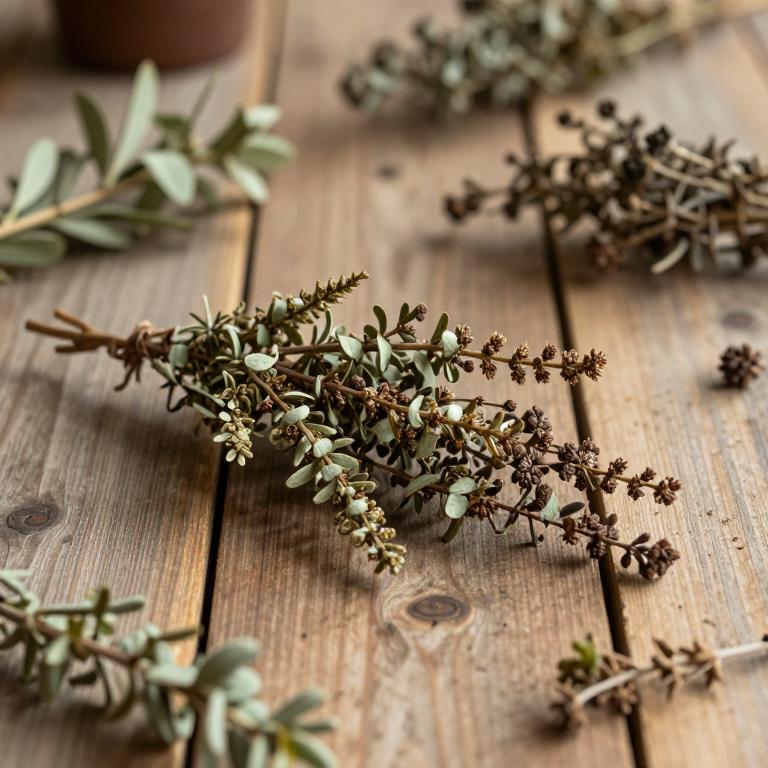
Names and Synonyms
Scientific Names
Accepted name
Pittosporum tetraspermumSources: Wikidata
Taxonomical Classification
This plant belongs to the kingdom Plantae and the phylum Streptophyta, falling under the class Equisetopsida and subclass Magnoliidae. Within the order Apiales, it is classified under the family Pittosporaceae and the genus Pittosporum. Specifically, its taxonomic identity is defined by the species name Pittosporum tetraspremum.
| Rank | Classification |
|---|---|
| Kingdom | Plantae |
| Phylum | Streptophyta |
| Class | Equisetopsida |
| Subclass | Magnoliidae |
| Order | Apiales |
| Family | Pittosporaceae |
| Genus | Pittosporum |
Sources: The World Checklist of Vascular Plants (WCVP)
Distribution
This plant exhibits a specific geographical range across several regions in Asia. Within the Indian Subcontinent, it can be found growing in India. It also maintains a presence throughout the island nation of Sri Lanka. Moving toward the Indo-China region, the species extends its reach into Vietnam. Consequently, its distribution spans diverse territories from South Asia to Southeast Asia.
| Region | Area |
|---|---|
| Indian Subcontinent | India |
| Indian Subcontinent | Sri Lanka |
| Indo-China | Vietnam |
Sources: The World Checklist of Vascular Plants (WCVP)
Botanical Identification
Morphology
The morphology of Pittosporum tetraspermum is characterized by its distinct growth habit as a climbing plant. It functions as a self-supporting liana and vine, demonstrating a growth pattern that can be classified as both an obligatory and facultative self-supporting climber. This structural adaptability allows the plant to navigate its environment through various climbing mechanisms, utilizing its stem architecture to ascend and support its weight without the need for external hosts.
- Climber :
- self-supporting
Sources: Global Inventory of Floras and Traits (GIFT)
Chemicals
Pittosporum tetraspermum has 1 reported phytochemicals identified across 0 scientific publications and several other databases. The most consistently reported chemicals include Isosteviol.
| Chemical | Supporting sources | Consensus |
|---|---|---|
| Isosteviol | 1 supporting sources | ★☆☆☆☆ |
Isosteviol
- Evidence-based complementary and alternative medicine : eCAM
Activities
Pittosporum tetraspermum has 4 reported activities identified across 0 scientific publications and several other databases. The most consistently reported activities include Antibacterial, Anticancer, Antifungal, Antioxidant.
| Activity | Supporting sources | Consensus |
|---|---|---|
| Antibacterial | 1 supporting sources | ★☆☆☆☆ |
| Anticancer | 1 supporting sources | ★☆☆☆☆ |
| Antifungal | 1 supporting sources | ★☆☆☆☆ |
| Antioxidant | 1 supporting sources | ★☆☆☆☆ |
Antibacterial
- Evidence-based complementary and alternative medicine : eCAM
Anticancer
- Evidence-based complementary and alternative medicine : eCAM
Antifungal
- Evidence-based complementary and alternative medicine : eCAM
Antioxidant
- Evidence-based complementary and alternative medicine : eCAM
Conditions
Pittosporum tetraspermum has 7 reported investigations on conditions identified across 0 scientific publications and several other databases. The most consistently reported conditions include Aspergillus niger, Candida albicans, E. coli, Klebsiella pneumoniae, Staphylococcus aureus.
| Condition | Supporting sources | Consensus |
|---|---|---|
| Aspergillus niger | 1 supporting sources | ★☆☆☆☆ |
| Candida albicans | 1 supporting sources | ★☆☆☆☆ |
| E. coli | 1 supporting sources | ★☆☆☆☆ |
| Klebsiella pneumoniae | 1 supporting sources | ★☆☆☆☆ |
| Staphylococcus aureus | 1 supporting sources | ★☆☆☆☆ |
| Staphylococcus epidermidis | 1 supporting sources | ★☆☆☆☆ |
| Infectious diseases | 1 supporting sources | ★☆☆☆☆ |
Aspergillus niger
- Evidence-based complementary and alternative medicine : eCAM
Candida albicans
- Evidence-based complementary and alternative medicine : eCAM
E. coli
- Evidence-based complementary and alternative medicine : eCAM
Klebsiella pneumoniae
- Evidence-based complementary and alternative medicine : eCAM
Staphylococcus aureus
- Evidence-based complementary and alternative medicine : eCAM
Staphylococcus epidermidis
- Evidence-based complementary and alternative medicine : eCAM
Infectious diseases
- Evidence-based complementary and alternative medicine : eCAM
Preparations
Pittosporum tetraspermum has 1 reported preparations identified across 0 scientific publications and several other databases. The most consistently reported preparations include crude ethyl acetate extract.
| Preparation | Supporting sources | Consensus |
|---|---|---|
| Crude ethyl acetate extract | 1 supporting sources | ★☆☆☆☆ |
Crude ethyl acetate extract
- Evidence-based complementary and alternative medicine : eCAM