Pittosporum tenuifolium
Pittosporum tenuifolium · Accepted scientific name
Scientific literature: Very Sparse (2 studies) · ★☆☆☆☆
scientifically known as Pittosporum tenuifolium, is a versatile evergreen shrub native to New Zealand. Renowned for its elegant, slender foliage, this plant holds significant cultural and medicinal value. Often used in traditional practices, its leaves possess unique bioactive properties that offer potential therapeutic benefits in various holistic healing applications.
- Family
- Not available
- Native range
- Europe
- Parts used
- Leaf · Root
- Common names
- Not available
- Scientific synonyms
- Not available
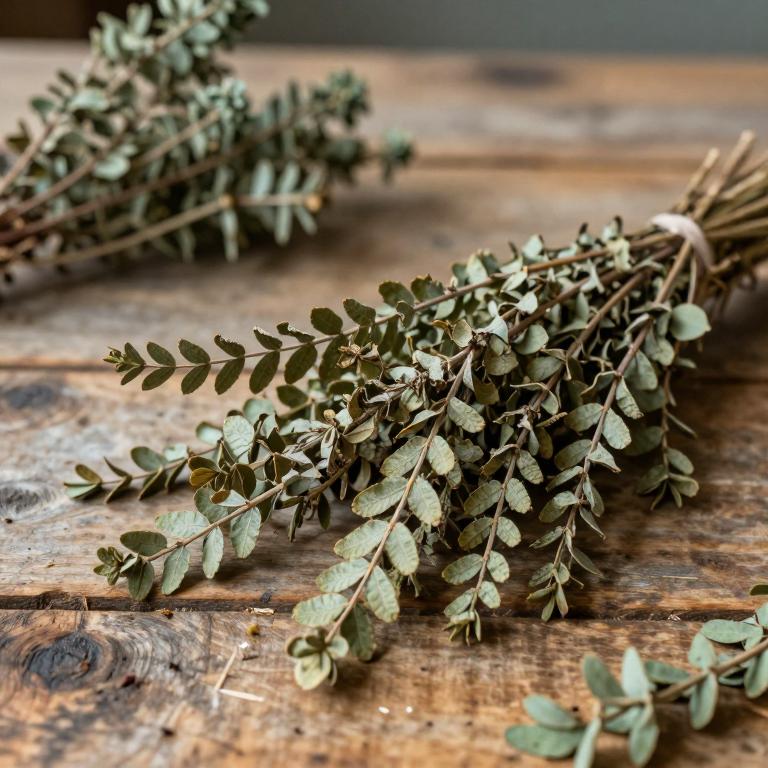
Names and Synonyms
Scientific Names
Accepted name
Pittosporum tenuifoliumDistribution
This plant exhibits a scattered geographical distribution across several regions in the Northern and Southern Hemispheres. In Northern Europe, its presence is noted within Great Britain and Ireland. Moving to the Southern Hemisphere, the species can be found in Tasmania, Australia. Its range also extends significantly into New Zealand, covering both the North and South Islands. Consequently, this medicinal plant occupies diverse ecological zones across these specific locations.
| Region | Area |
|---|---|
| Northern Europe | Great Britain |
| Northern Europe | Ireland |
| Australia | Tasmania |
| New Zealand | New Zealand North |
| New Zealand | New Zealand South |
| Southwestern U.S.A. | California |
Sources: The World Checklist of Vascular Plants (WCVP)
Botanical Identification
Ecology
The ecology of Pittosporum tenuifolium is fundamentally defined by its specialized adaptation to coastal environments, where it thrives in maritime habitats characterized by high salt spray and sandy, well-drained soils. As a resilient component of coastal scrub and littoral ecosystems, it occupies niches where it must withstand significant wind exposure and fluctuating moisture levels. Its presence in these coastal zones suggests a high tolerance for saline conditions and a physiological capacity to manage the physiological drought often induced by salt-laden winds. By stabilizing sandy substrates and providing structural complexity within coastal margins, the plant plays a vital role in the successional dynamics and physical integrity of its maritime ecological community.
- Habitat :
- Coastal
Life history
The life history of Pittosporum tenuifolium is characterized by its status as a perennial plant, ensuring its long-term survival and establishment within its ecosystem. As a phanerophyte, its regenerative buds are elevated above the ground level, typically supported by woody stems that allow it to maintain a stable structural presence over many seasons. This plant maintains an evergreen deciduousness, meaning it retains its foliage throughout the year rather than shedding it seasonally, providing a consistent photosynthetic surface area. Structurally, it functions as a phanerophyte, utilizing its elevated growth habit to access light and endure varying environmental conditions throughout its extended life cycle.
- Deciduousness :
- evergreen
- Life form :
- phanerophyte
- Lifecycle :
- perennial
Morphology
The morphology of Pittosporum tenuifolium is characterized by its woody growth form, functioning as a self-supporting tree. It is a terrestrial plant that does not exhibit aquatic or semiaquatic tendencies, nor does it function as an epiphyte or a parasite, maintaining an independent life cycle. As a self-supporting species, it lacks the climbing habits of lianas or vines. The plant reaches a maximum height of approximately 9 meters, establishing a robust structural presence through its woody stems and branches.
- Aquatic :
- terrestrial
- Climber :
- self-supporting
- Epiphyte :
- terrestrial
- Growth form :
- tree
- Parasite :
- independent
- Plant height max:
- 9 m
- Woodiness :
- woody
Physiology
The physiology of Pittosporum tenuifolium is characterized by a C3 photosynthetic pathway, which dictates its carbon fixation processes and metabolic efficiency. Its vegetative structure is defined by relatively small, narrow leaves, with a mean and consistent leaf width of 1.5 cm, ranging from a minimum of 1.5 cm to a maximum of 1.5 cm. The leaf length is similarly constrained, reaching a maximum value of 3 cm. Furthermore, the plant does not function as a nitrogen fixer, meaning it lacks the symbiotic relationship with nitrogen-fixing bacteria required to convert atmospheric nitrogen into a usable form for its growth.
- Leaf length max:
- 3 cm
- Leaf width mean:
- 1.5 cm
- Nitrogen fixer :
- no
- Photosynthetic pathway :
- C3
Reproduction
The reproduction of Pittosporum tenuifolium is primarily a sexual process, as asexual reproduction is noted to be absent. The plant produces fleshy capsules as its fruit type, which are characterized by a mean length of approximately 0.90925 cm (ranging from a minimum of 0.097 cm to a maximum of 1.14 cm) and a mean width of 1 cm. These fruits are dehiscent, meaning they open at maturity to release their contents. The seeds produced within these capsules exhibit a consistent length of 3.3 mm, with a recorded seed volume of 12 mm³. The seed mass is relatively small, with a mean of 0.011591 g, though it can range from a minimum of 0.0013 g to a maximum of 0.02141 g. Dispersal is achieved through a zoochorous syndrome, specifically utilizing endozoochory, where animals consume the fleshy fruit and disperse the seeds through their digestive tracts.
- Dehiscence :
- dehiscent
- Dispersal syndrome :
- zoochorous
- Dispersal syndrome :
- endozoochorous
- Fruit dryness :
- fleshy
- Fruit length max:
- 1.14 cm
- Fruit length mean:
- 0.90925 cm
- Fruit length min:
- 0.097 cm
- Fruit type :
- capsule
- Fruit width mean:
- 1 cm
- Reproduction asexual :
- absent
- Seed length mean:
- 3.3 mm
- Seed mass max:
- 0.02141 g
- Seed mass mean:
- 0.011591 g
- Seed mass min:
- 0.0013 g
- Seed volume max:
- 12 mm³
Sources: Global Inventory of Floras and Traits (GIFT)
Plant Parts
Pittosporum tenuifolium has 2 reported plant parts identified across 2 scientific publications and several other databases that are studied for medicinal purposes. The most consistently reported plant part include leaf, root.
| Plant part | Supporting sources | Consensus |
|---|---|---|
| Leaf | 1 supporting sources | ★☆☆☆☆ |
| Root | 1 supporting sources | ★☆☆☆☆ |
Leaf
- Molecules (Basel, Switzerland)
Root
- Molecules (Basel, Switzerland)
Preparations
Pittosporum tenuifolium has 3 reported preparations identified across 2 scientific publications and several other databases. The most consistently reported preparations include aqueous ethanolic extract of the leaves and roots, leaves, roots.
| Preparation | Supporting sources | Consensus |
|---|---|---|
| Aqueous ethanolic extract of the leaves and roots | 1 supporting sources | ★☆☆☆☆ |
| Leaves | 1 supporting sources | ★☆☆☆☆ |
| Roots | 1 supporting sources | ★☆☆☆☆ |
Aqueous ethanolic extract of the leaves and roots
- Molecules (Basel, Switzerland)
Leaves
- Molecules (Basel, Switzerland)
Roots
- Molecules (Basel, Switzerland)