Berrigan
Pittosporum angustifolium · Accepted scientific name
Scientific literature: Very Sparse (14 studies) · ★☆☆☆☆
Berrigan, scientifically known as Pittosporum angustifoilium, is a versatile evergreen shrub native to Australia. Renowned for its glossy foliage and fragrant white flowers, this plant holds significant cultural importance. Traditionally used by Indigenous communities, it serves as a vital resource for medicinal applications and ecological restoration in diverse landscapes.
- Family
- Pittosporaceae
- Native range
- Australasia
- Parts used
- Not available
- Common names
- Berrigan · Bitter Bush · 9 more
- Scientific synonyms
- Pittosporum Phillyreoides Var. Microcarpa
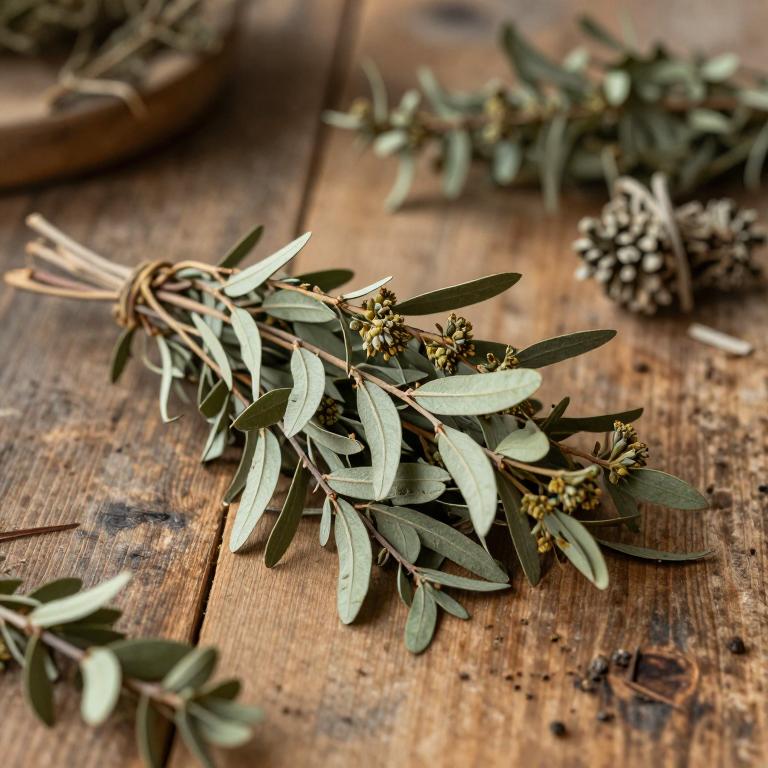
Names and Synonyms
Common Names
- Berrigan
- Bitter Bush
- Cattle Bush
- Cheesewood
- Native Apricot
- Native Willow
- Western Pittosporum
- poisonberry
- poisonberry-tree
- weeping pittosporum
- Gumbi gumbi
Scientific Names
Accepted name
Pittosporum angustifoliumSynonyms
- Pittosporum phillyreoides var. microcarpa
Sources: Wikidata, Catalogue of Life
Taxonomical Classification
This plant belongs to the kingdom Plantae within the phylum Streptophyta and the class Equisetopsida. As a member of the subclass Magnoliidae and order Apiales, it is further classified under the family Pittosporaceae. Finally, its specific taxonomic designation falls within the genus Pittosporum.
| Rank | Classification |
|---|---|
| Kingdom | Plantae |
| Phylum | Streptophyta |
| Class | Equisetopsida |
| Subclass | Magnoliidae |
| Order | Apiales |
| Family | Pittosporaceae |
| Genus | Pittosporum |
Sources: The World Checklist of Vascular Plants (WCVP)
Distribution
This plant exhibits a widespread presence across several different regions within the Australian continent. Its distribution can be found extending through the eastern states of New South Wales and Queensland. Additionally, it inhabits significant portions of Victoria and South Australia. Moving further north, the species is also documented within the Northern Territory. Collectively, these areas highlight the diverse geographical range this medicinal plant maintains throughout Australia.
| Region | Area |
|---|---|
| Australia | New South Wales |
| Australia | Northern Territory |
| Australia | Queensland |
| Australia | South Australia |
| Australia | Victoria |
| Australia | Western Australia |
| Southwestern U.S.A. | Arizona |
Sources: The World Checklist of Vascular Plants (WCVP)
Botanical Identification
Life history
The life history of Pittosporum angustifolium is characterized by its status as a perennial species, allowing it to persist in its environment through multiple growing seasons. As a long-lived woody plant, it does not follow the rapid turnover of annuals or the shorter lifespan of biennials, instead establishing a stable presence within its native ecosystem. Its developmental trajectory involves an initial establishment phase followed by continuous growth and periodic reproductive cycles, where it allocates resources toward maintaining robust structural integrity and foliage over many years. This perennial nature enables the plant to adapt to seasonal fluctuations and contribute to the long-term stability of its habitat.
- Lifecycle :
- perennial
Morphology
The morphology of Pittosporum angustifolium is characterized by a woody growth form that can manifest as both a shrub and a tree. As a terrestrial and independent plant, it does not function as a parasite or an epiphyte, instead maintaining a self-supporting structure rather than acting as a climber. The plant exhibits significant variation in stature, with a height ranging from a minimum of 1 meter to a maximum of 10 meters, maintaining an average plant height of approximately 10 meters.
- Aquatic :
- terrestrial
- Climber :
- self-supporting
- Epiphyte :
- terrestrial
- Growth form :
- tree
- Growth form :
- shrub
- Parasite :
- independent
- Plant height mean:
- 10 m
- Plant height min:
- 1 m
- Woodiness :
- woody
Physiology
The physiological structure of Pittosporum angustifolium is characterized by its distinctively linear and elongated foliage, which plays a critical role in its photosynthetic efficiency and transpiration regulation. The leaves exhibit a significant morphological range, with lengths spanning from a minimum of 4 cm to a maximum of 12 cm. Complementing this longitudinal growth, the leaf width is relatively narrow, ranging from a minimum of 0.4 cm to a maximum of 1.2 cm. This slender leaf architecture is a key physiological adaptation, likely functioning to minimize surface area exposure to intense solar radiation while optimizing gas exchange through a streamlined profile. Such dimensions contribute to the plant's overall metabolic processes and its ability to manage water loss in varying environmental conditions.
- Leaf length max:
- 12 cm
- Leaf length min:
- 4 cm
- Leaf width max:
- 1.2 cm
- Leaf width min:
- 0.4 cm
Reproduction
The reproduction of Pittosporum angustifolium is characterized by the production of fruit classified as a capsule. These fruits are dehiscence-type, meaning they are designed to split open at maturity to facilitate seed dispersal. The seeds produced within these capsules exhibit specific morphological weight characteristics, with a recorded minimum seed mass of 0.01138 g and a maximum seed mass of 0.01839 g. On average, the seed mass for this species is approximately 0.014885 g, ensuring a consistent reproductive output suitable for its ecological niche.
- Dehiscence :
- dehiscent
- Fruit type :
- capsule
- Seed mass max:
- 0.01839 g
- Seed mass mean:
- 0.014885 g
- Seed mass min:
- 0.01138 g
Sources: Global Inventory of Floras and Traits (GIFT)
Chemicals
Pittosporum angustifolium has 4 reported phytochemicals identified across 0 scientific publications and several other databases. The most consistently reported chemicals include Acetic Acid Decyl Ester, Flavonoids, Saponins, Terpenoids.
| Chemical | Supporting sources | Consensus |
|---|---|---|
| Acetic Acid Decyl Ester | 1 supporting sources | ★☆☆☆☆ |
| Flavonoids | 1 supporting sources | ★☆☆☆☆ |
| Saponins | 1 supporting sources | ★☆☆☆☆ |
| Terpenoids | 1 supporting sources | ★☆☆☆☆ |
Acetic Acid Decyl Ester
- Journal of ethnopharmacology
Flavonoids
- Scientifica
Saponins
- Journal of ethnopharmacology
Terpenoids
- Scientifica
Activities
Pittosporum angustifolium has 2 reported activities identified across 0 scientific publications and several other databases. The most consistently reported activities include Antimicrobial, Lactagogue.
| Activity | Supporting sources | Consensus |
|---|---|---|
| Antimicrobial | 1 supporting sources | ★☆☆☆☆ |
| Lactagogue | 1 supporting sources | ★☆☆☆☆ |
Antimicrobial
- Journal of integrative medicine
Lactagogue
- Journal of ethnopharmacology
Conditions
Pittosporum angustifolium has 7 reported investigations on conditions identified across 0 scientific publications and several other databases. The most consistently reported conditions include Proteus mirabilis, autoimmune diseases, coughs, cramps, eczema.
| Condition | Supporting sources | Consensus |
|---|---|---|
| Proteus mirabilis | 1 supporting sources | ★☆☆☆☆ |
| Autoimmune diseases | 1 supporting sources | ★☆☆☆☆ |
| Coughs | 1 supporting sources | ★☆☆☆☆ |
| Cramps | 1 supporting sources | ★☆☆☆☆ |
| Eczema | 1 supporting sources | ★☆☆☆☆ |
| Inflammation | 1 supporting sources | ★☆☆☆☆ |
| Pruritis | 1 supporting sources | ★☆☆☆☆ |
Proteus mirabilis
- Journal of integrative medicine
Autoimmune diseases
- Journal of integrative medicine
Coughs
- Journal of ethnopharmacology
Cramps
- Journal of ethnopharmacology
Eczema
- Journal of ethnopharmacology
Inflammation
- Journal of integrative medicine
Pruritis
- Journal of ethnopharmacology
Preparations
Pittosporum angustifolium has 2 reported preparations identified across 0 scientific publications and several other databases. The most consistently reported preparations include Essential oil, solvent extracts.
| Preparation | Supporting sources | Consensus |
|---|---|---|
| Essential oil | 1 supporting sources | ★☆☆☆☆ |
| Solvent extracts | 1 supporting sources | ★☆☆☆☆ |
Essential oil
- Journal of ethnopharmacology
Solvent extracts
- Journal of ethnopharmacology