Baneh
Pistacia atlantica · Accepted scientific name
Scientific literature: Moderate (103 studies) · ★★★☆☆
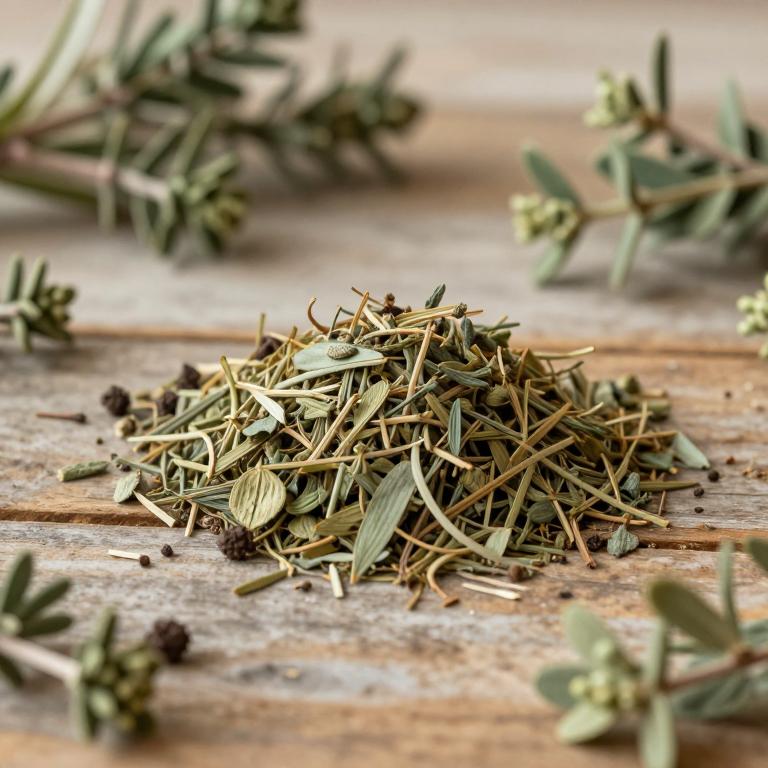
Baneh, scientifically known as Pistacia atlantica, is a resilient tree native to the Middle East, particularly Iran. Renowned for its nutritious seeds, it serves as a cornerstone in traditional medicine and culinary arts. This versatile plant offers significant antioxidant properties, supporting digestive health and providing essential fatty acids.
Names and Synonyms
Common Names
- Atlantic Pistachio
- Cashew
- Mount Atlas Mastic
- Turpentine tree
- Wild pistachio
- Mount Atlas Pistachio
- Mount Atlas mastic tree
- Mt. Atlas mastic tree
- Persian turpentine tree
Scientific Names
Accepted name
Pistacia atlanticaSynonyms
- Lentiscus mutica
- Pistacia atlantica subsp. mutica
- Pistacia atlantica subsp. cypricola
- Pistacia cabulica
- Lentiscus atlantica
- Pistacia chia
- Terebinthus atlanticus
- Pistacia atlantica subsp. cabulica
- Pistacia mutica
- Pistacia atlantica var. latifolia
- Pistacia mutica subsp. cabulica
- Pistacia mutica f. multijuga
- Pistacia mutica var. cypricola
- Pistacia atlantica f. oxycarpa
Regional and Traditional Names
Spanish:
- Terebinthus atlanticus
- Pistacia atlantica var. mutica
- Pistacia mutica
German:
- Atlantische Pistazie
French:
- Pistachier de l’atlas
- Térébinthe
- Pistachier de l'Atlas
Sources: Wikidata, Catalogue of Life
Taxonomical Classification
This plant belongs to the kingdom Plantae and the phylum Streptophyta, falling under the class Equisetopsida and subclass Magnoliidae. It is further classified within the order Sapindales and the family Anacardiaceae. Finally, it is identified by the genus Pistacia, specifically as the species Pistacia atlantica.
| Rank | Classification |
|---|---|
| Kingdom | Plantae |
| Phylum | Streptophyta |
| Class | Equisetopsida |
| Subclass | Magnoliidae |
| Order | Sapindales |
| Family | Anacardiaceae |
| Genus | Pistacia |
Sources: The World Checklist of Vascular Plants (WCVP)
Distribution
This plant exhibits a diverse geographical distribution spanning across multiple continents and regions. In Southeastern Europe, it can be found growing in Greece and within the European portion of Türkiye. Its range extends further into Eastern Europe, specifically reaching the region of Krym. Moving toward Northern Africa, the species is established in Algeria. Finally, its presence is also noted within the territory of Libya.
| Region | Area |
|---|---|
| Southeastern Europe | Greece |
| Southeastern Europe | Türkiye-in-Europe |
| Eastern Europe | Krym |
| Northern Africa | Algeria |
| Northern Africa | Libya |
| Northern Africa | Morocco |
| Northern Africa | Tunisia |
| Macaronesia | Canary Is. |
| Central Asia | Tadzhikistan |
| Caucasus | North Caucasus |
Sources: The World Checklist of Vascular Plants (WCVP)
Botanical Identification
Ecology
The ecology of Pistacia atlantica is characterized by its ability to thrive across diverse topographical and hydrological settings, primarily inhabiting mountains, riverine areas, and saline places. It occupies a significant vertical distribution within its ecosystem, maintaining an elevational range that begins at 600 m AMSL and extends up to a maximum of 2500 m AMSL. This broad altitudinal span allows the species to adapt to varying climatic gradients and soil compositions found throughout its native mountainous landscapes.
- Elevational range max:
- 2500 m AMSL
- Elevational range min:
- 600 m AMSL
- Habitat :
- mountains, rivers, saline places
Life history
The life history of Pistacia atlantica is characterized by its status as a perennial plant, allowing it to establish long-term presence within its ecosystem. As a phanerophyte, its reproductive buds are elevated above the ground level on woody stems, a structural adaptation that facilitates its growth into a substantial tree or shrub. This species exhibits a deciduous nature, shedding its foliage seasonally in response to environmental cues or climatic shifts. Its developmental strategy is defined by this phanerophyte life form, ensuring structural stability and longevity throughout its extensive life cycle.
- Deciduousness :
- deciduous
- Life form :
- phanerophyte
- Lifecycle :
- perennial
Morphology
The morphology of Pistacia atlantica is characterized by its growth form as a woody tree, which serves as a self-supporting structure rather than a climber or liana. As a terrestrial organism, it does not exhibit aquatic, semiaquatic, or epiphytic tendencies, functioning instead as an independent plant without parasitic behavior. The species typically reaches a plant height ranging from a minimum of 4 meters to a maximum of 15 meters.
- Aquatic :
- terrestrial
- Climber :
- self-supporting
- Epiphyte :
- terrestrial
- Growth form :
- tree
- Parasite :
- independent
- Plant height max:
- 15 m
- Plant height min:
- 4 m
- Woodiness :
- woody
Physiology
The physiology of Pistacia atlantica is characterized by its adaptation to arid and semi-arid environments, utilizing a C3 photosynthetic pathway to drive carbon fixation. This metabolic route involves the direct fixation of atmospheric CO2 via the enzyme Rubisco, which is typical for many woody Mediterranean species. Morphologically, the plant exhibits a distinct leaf structure, featuring an imparipinnate leaf form, which influences its surface area and transpiration rates within its ecological niche. These physiological and structural traits work in tandem to manage water use efficiency and energy production under varying light intensities and moisture availability.
- Leaf form :
- imparipinnate
- Photosynthetic pathway :
- C3
Reproduction
The reproduction of Pistacia atlantica is characterized by a dioecious sexual reproduction system, meaning individual plants are either male or female. The flowering process typically begins in March and concludes around April, featuring green-colored flowers arranged in paniculate inflorescences. These inflorescences are relatively small, ranging in length from a minimum of 0.1 m to a maximum of 0.15 m. Following pollination, the plant produces fleshy fruits that are distinctively red in color. The fruits are quite uniform in size, with a length of 0.6 cm and a width ranging between 0.55 cm and 0.6 cm. Within these fruits, the seeds possess a mean mass of approximately 0.120106667 g, with individual seed masses varying from a minimum of 0.11529 g to a maximum of 0.12658 g. Additionally, the seeds maintain a consistent volume of 75 mm³.
- Flower colour :
- green
- Flowering time :
- Mar
- Flowering time :
- Apr
- Fruit colour :
- red
- Fruit dryness :
- fleshy
- Fruit length max:
- 0.6 cm
- Fruit width max:
- 0.6 cm
- Fruit width min:
- 0.55 cm
- Inflorescence :
- panicle
- Inflorescence length max:
- 0.15 m
- Inflorescence length min:
- 0.1 m
- Reproduction sexual :
- dioecious
- Seed mass max:
- 0.12658 g
- Seed mass mean:
- 0.120106667 g
- Seed mass min:
- 0.11529 g
- Seed volume max:
- 75 mm³
Sources: Global Inventory of Floras and Traits (GIFT)
Plant Parts
Pistacia atlantica has 2 reported plant parts identified across 6 scientific publications and several other databases that are studied for medicinal purposes. The most consistently reported plant part include leaf, fruit.
| Plant part | Supporting sources | Consensus |
|---|---|---|
| Leaf | 4 supporting sources | ★★☆☆☆ |
| Fruit | 2 supporting sources | ★☆☆☆☆ |
Leaf
- Microbial pathogenesis
- Chemistry & biodiversity
- Natural product research
- Recent patents on anti-infective drug discovery
Fruit
- Natural product communications
- Recent patents on anti-infective drug discovery
Chemicals
Pistacia atlantica has 27 reported phytochemicals identified across 6 scientific publications and several other databases. The most consistently reported chemicals include Flavonoids, Fatty acids, Gallic acid, RUTIN, quercetin.
| Chemical | Supporting sources | Consensus |
|---|---|---|
| Flavonoids | 6 supporting sources | ★★★☆☆ |
| Fatty acids | 2 supporting sources | ★☆☆☆☆ |
| Gallic acid | 2 supporting sources | ★☆☆☆☆ |
| RUTIN | 2 supporting sources | ★☆☆☆☆ |
| quercetin | 2 supporting sources | ★☆☆☆☆ |
| CALCIUM | 1 supporting sources | ★☆☆☆☆ |
| CAMPESTEROL | 1 supporting sources | ★☆☆☆☆ |
| CATECHIN | 1 supporting sources | ★☆☆☆☆ |
| CHLOROGENIC ACID | 1 supporting sources | ★☆☆☆☆ |
| COPPER | 1 supporting sources | ★☆☆☆☆ |
Flavonoids
- Recent patents on food, nutrition & agriculture
- Acta chimica Slovenica
- Food science & nutrition
- Chemistry & biodiversity
- Natural product research
View 1 additional sources
- Journal of ethnopharmacology
Fatty acids
- Natural product communications
- Journal of ethnopharmacology
Gallic acid
- Recent patents on food, nutrition & agriculture
- Acta chimica Slovenica
RUTIN
- Recent patents on food, nutrition & agriculture
- Microbial pathogenesis
quercetin
- Recent patents on food, nutrition & agriculture
- Acta chimica Slovenica
CALCIUM
- Journal of ethnopharmacology
CAMPESTEROL
- Journal of ethnopharmacology
CATECHIN
- Recent patents on food, nutrition & agriculture
CHLOROGENIC ACID
- Acta chimica Slovenica
COPPER
- Journal of ethnopharmacology
Activities
Pistacia atlantica has 18 reported activities identified across 6 scientific publications and several other databases. The most consistently reported activities include Antioxidant, Antidiabetic, Anticholinesterase, Antimicrobial, Analgesic.
| Activity | Supporting sources | Consensus |
|---|---|---|
| Antioxidant | 5 supporting sources | ★★★☆☆ |
| Antidiabetic | 3 supporting sources | ★★☆☆☆ |
| Anticholinesterase | 2 supporting sources | ★☆☆☆☆ |
| Antimicrobial | 2 supporting sources | ★☆☆☆☆ |
| Analgesic | 1 supporting sources | ★☆☆☆☆ |
| Antibacterial | 1 supporting sources | ★☆☆☆☆ |
| Anticancer | 1 supporting sources | ★☆☆☆☆ |
| Antifungal | 1 supporting sources | ★☆☆☆☆ |
| Antihyperglycemic | 1 supporting sources | ★☆☆☆☆ |
| Antihyperlipidemic | 1 supporting sources | ★☆☆☆☆ |
Antioxidant
- Journal of medicine and life
- Recent patents on food, nutrition & agriculture
- Acta chimica Slovenica
- Chemistry & biodiversity
- Phytotherapy research : PTR
Antidiabetic
- Journal of medicine and life
- Phytotherapy research : PTR
- Journal of ethnopharmacology
Anticholinesterase
- Recent patents on food, nutrition & agriculture
- Journal of ethnopharmacology
Antimicrobial
- Chemistry & biodiversity
- Journal of ethnopharmacology
Analgesic
- Journal of ethnopharmacology
Antibacterial
- Acta chimica Slovenica
Anticancer
- Journal of ethnopharmacology
Antifungal
- Journal of ethnopharmacology
Antihyperglycemic
- JBRA assisted reproduction
Antihyperlipidemic
- Journal of medicine and life
Conditions
Pistacia atlantica has 25 reported investigations on conditions identified across 6 scientific publications and several other databases. The most consistently reported conditions include Diabetes mellitus, pain, Antioxidant, Aspergillus flavus, Aspergillus fumigates.
| Condition | Supporting sources | Consensus |
|---|---|---|
| Diabetes mellitus | 2 supporting sources | ★☆☆☆☆ |
| Pain | 2 supporting sources | ★☆☆☆☆ |
| Antioxidant | 1 supporting sources | ★☆☆☆☆ |
| Aspergillus flavus | 1 supporting sources | ★☆☆☆☆ |
| Aspergillus fumigates | 1 supporting sources | ★☆☆☆☆ |
| Aspergillus niger | 1 supporting sources | ★☆☆☆☆ |
| Candida albicans | 1 supporting sources | ★☆☆☆☆ |
| Escherichia coli | 1 supporting sources | ★☆☆☆☆ |
| Antihyperglycemic | 1 supporting sources | ★☆☆☆☆ |
| Blood glucose | 1 supporting sources | ★☆☆☆☆ |
Diabetes mellitus
- JBRA assisted reproduction
- Endocrinology, diabetes & metabolism
Pain
- Phytotherapy research : PTR
- Journal of ethnopharmacology
Antioxidant
- Chemistry & biodiversity
Aspergillus flavus
- Current medical mycology
Aspergillus fumigates
- Current medical mycology
Aspergillus niger
- Current medical mycology
Candida albicans
- Chemistry & biodiversity
Escherichia coli
- Chemistry & biodiversity
Antihyperglycemic
- Journal of ethnopharmacology
Blood glucose
- Phytotherapy research : PTR
Preparations
Pistacia atlantica has 22 reported preparations identified across 6 scientific publications and several other databases. The most consistently reported preparations include gum, Aqueous extracts, PAG, Pistacia atlantica Oleoresin, Resin Oil.
| Preparation | Supporting sources | Consensus |
|---|---|---|
| Gum | 2 supporting sources | ★☆☆☆☆ |
| Aqueous extracts | 1 supporting sources | ★☆☆☆☆ |
| Pag | 1 supporting sources | ★☆☆☆☆ |
| Pistacia atlantica oleoresin | 1 supporting sources | ★☆☆☆☆ |
| Resin oil | 1 supporting sources | ★☆☆☆☆ |
| Aqueous one | 1 supporting sources | ★☆☆☆☆ |
| Crude extract | 1 supporting sources | ★☆☆☆☆ |
| Ethanol and aqueous leaf extracts | 1 supporting sources | ★☆☆☆☆ |
| Ethanol as a solvent | 1 supporting sources | ★☆☆☆☆ |
| Extract | 1 supporting sources | ★☆☆☆☆ |
Gum
- Phytotherapy research : PTR
- Food science & nutrition
Aqueous extracts
- Journal of ethnopharmacology
Pag
- Food science & nutrition
Pistacia atlantica oleoresin
- Endocrinology, diabetes & metabolism
Resin oil
- World journal of plastic surgery
Aqueous one
- Natural product research
Crude extract
- Microbial pathogenesis
Ethanol and aqueous leaf extracts
- Chemistry & biodiversity
Ethanol as a solvent
- Natural product research
Extract
- JBRA assisted reproduction