Piper rostratum
Piper rostratum · Accepted scientific name
Scientific literature: Very Sparse (5 studies) · ★☆☆☆☆
Piper rostratum, scientifically known as Piper rostratum, is a medicinal plant valued in traditional healing practices. Belonging to the pepper family, it is recognized for its bioactive compounds that offer potential therapeutic benefits. This species is often studied for its antimicrobial and anti-inflammatory properties in various folk medicine traditions.
- Family
- Piperaceae
- Native range
- Asia-Tropical
- Parts used
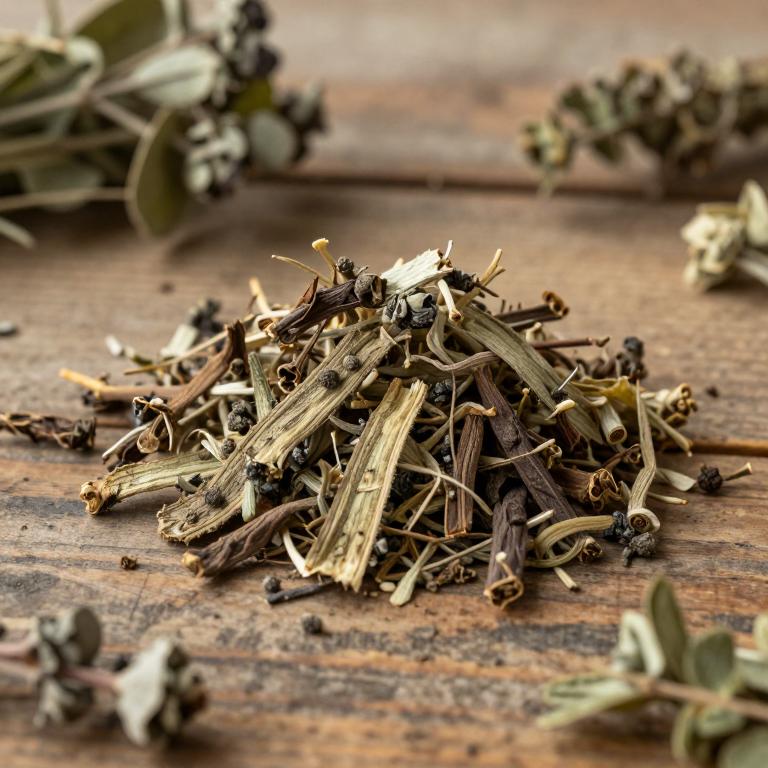
- Leaf · Root
- Common names
- Not available
- Scientific synonyms
- Piper Birmanicum · Peperomia Rostrata · 1 more
Names and Synonyms
Scientific Names
Accepted name
Piper rostratumSynonyms
- Piper birmanicum
- Peperomia rostrata
- Piper stylosum
Sources: Catalogue of Life
Taxonomical Classification
This plant belongs to the kingdom Plantae and the phylum Streptophyta, falling under the class Equisetopsida and subclass Magnoliidae. Within the order Piperales, it is classified under the family Piperaceae. Finally, it is identified by its specific genus, Piper.
| Rank | Classification |
|---|---|
| Kingdom | Plantae |
| Phylum | Streptophyta |
| Class | Equisetopsida |
| Subclass | Magnoliidae |
| Order | Piperales |
| Family | Piperaceae |
| Genus | Piper |
Sources: The World Checklist of Vascular Plants (WCVP)
Distribution
This plant exhibits a wide geographical distribution across the Southeast Asian region. Within the Indo-China territory, it can be found growing in Myanmar and Thailand. Its presence extends into the Malesia region, where it is documented in Jawa and Malaya. Additionally, the species is recorded as being native to the Maluku islands. This broad range highlights its adaptability to various tropical environments across these diverse locations.
| Region | Area |
|---|---|
| Indo-China | Myanmar |
| Indo-China | Thailand |
| Malesia | Jawa |
| Malesia | Malaya |
| Malesia | Maluku |
| Malesia | Sumatera |
Sources: The World Checklist of Vascular Plants (WCVP)
Botanical Identification
Morphology
The morphology of Piper rostratum is characterized by its growth form as a herb, exhibiting a non-woody structure throughout its vegetative parts. This herbaceous plant typically reaches a maximum height of approximately 0.4 m, maintaining a relatively low stature within its ecological niche.
- Growth form :
- herb
- Plant height max:
- 0.4 m
- Woodiness :
- non-woody
Sources: Global Inventory of Floras and Traits (GIFT)
Plant Parts
Piper rostratum has 2 reported plant parts identified across 2 scientific publications and several other databases that are studied for medicinal purposes. The most consistently reported plant part include leaf, root.
| Plant part | Supporting sources | Consensus |
|---|---|---|
| Leaf | 1 supporting sources | ★☆☆☆☆ |
| Root | 1 supporting sources | ★☆☆☆☆ |
Leaf
- Fitoterapia
Root
- Fitoterapia
Activities
Piper rostratum has 2 reported activities identified across 2 scientific publications and several other databases. The most consistently reported activities include Antibacterial, Antifungal.
| Activity | Supporting sources | Consensus |
|---|---|---|
| Antibacterial | 1 supporting sources | ★☆☆☆☆ |
| Antifungal | 1 supporting sources | ★☆☆☆☆ |
Antibacterial
- Fitoterapia
Antifungal
- Fitoterapia
Preparations
Piper rostratum has 1 reported preparations identified across 2 scientific publications and several other databases. The most consistently reported preparations include methanol extracts.
| Preparation | Supporting sources | Consensus |
|---|---|---|
| Methanol extracts | 1 supporting sources | ★☆☆☆☆ |
Methanol extracts
- Fitoterapia