Piper rivinoides
Piper rivinoides · Accepted scientific name
Scientific literature: Very Sparse (21 studies) · ★☆☆☆☆
Piper rivinoide, scientifically known as Piper rivinoides, is a significant medicinal shrub belonging to the Piperaceae family. Widely distributed across tropical regions, this plant is revered in traditional medicine for its diverse therapeutic properties, including anti-inflammatory, antimicrobial, and antioxidant activities, making it a valuable subject for pharmacological research.
- Family
- Piperaceae
- Native range
- Southern America
- Parts used
- Leaf · Root
- Common names
- Not available
- Scientific synonyms
- Schilleria Rivinoides · Artanthe Rivinoides
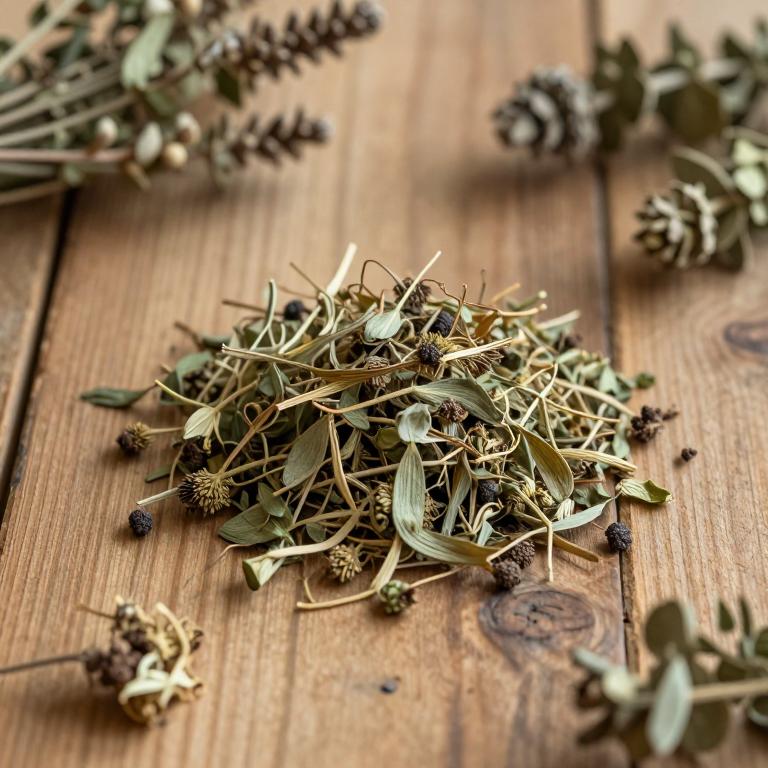
Names and Synonyms
Scientific Names
Accepted name
Piper rivinoidesSynonyms
- Schilleria rivinoides
- Artanthe rivinoides
Sources: Wikidata
Taxonomical Classification
This plant belongs to the kingdom Plantae and the phylum Streptophyta, falling under the class Equisetopsida and subclass Magnoliidae. It is classified within the order Piperales and the family Piperaceae. Ultimately, its taxonomic identity is defined by its placement in the genus Piper.
| Rank | Classification |
|---|---|
| Kingdom | Plantae |
| Phylum | Streptophyta |
| Class | Equisetopsida |
| Subclass | Magnoliidae |
| Order | Piperales |
| Family | Piperaceae |
| Genus | Piper |
Sources: The World Checklist of Vascular Plants (WCVP)
Distribution
This plant exhibits a widespread presence across the diverse territories of Brazil. Its natural range extends through the lush landscapes of Brazil North and the tropical regions of Brazil Northeast. Additionally, it can be found inhabiting the central portions of the country within Brazil West-Central. The species also thrives in the coastal and inland areas of Brazil Southeast. Finally, its geographical footprint reaches the southern reaches of the nation in Brazil South.
| Region | Area |
|---|---|
| Brazil | Brazil West-Central |
| Brazil | Brazil Northeast |
| Brazil | Brazil Southeast |
| Brazil | Brazil North |
| Brazil | Brazil South |
Sources: The World Checklist of Vascular Plants (WCVP)
Botanical Identification
Ecology
Piper rivinoides thrives across a diverse range of ecological settings, demonstrating significant adaptability to various landscape types. It is commonly found within anthropogenic areas (Área Antrópica), the specialized rocky fields known as Campo Rupestre, the expansive Cerrado (latu sensu) biome, and within moist forest environments, specifically the Ombrophilous Forest (Floresta Ombrófila/Pluvial). This species occupies a broad altitudinal gradient, occurring from sea level up to a maximum elevation of 500 meters above mean sea level (m AMSL).
- Elevational range max:
- 500 m AMSL
- Elevational range min:
- 0 m AMSL
- Habitat :
- Área Antrópica, Campo Rupestre, Cerrado (lato sensu), Floresta Ombrófila (= Floresta Pluvial)
Life history
The life history of Piper rivinoides is characterized by its nature as a perennial plant, allowing it to persist through multiple growing seasons rather than completing its cycle within a single year. As a perennial species, it maintains a continuous presence in its natural habitat, often developing robust vegetative structures that support long-term survival and repeated reproductive efforts. This lifecycle enables the plant to establish itself within its ecological niche, leveraging its longevity to navigate seasonal variations and stabilize its population over time.
- Lifecycle :
- perennial
Morphology
The morphology of Piper rivinoides is characterized by a woody growth form that functions as a shrub, reaching a maximum plant height of approximately 4 meters. It is a terrestrial species that operates as an independent organism, lacking any parasitic tendencies. While it possesses climbing capabilities, it is categorized as a self-supporting climber, exhibiting both self-supporting and facultative tendencies rather than being an obligatory liana or vine. Although its habitat can vary, its primary ecological classification is terrestrial, distinguishing it from aquatic or semiaquatic life forms, and it does not function as an epiphyte (whether holoepiphyte or hemiepiphyte), maintaining a grounded, non-epiphytic existence.
- Aquatic :
- terrestrial
- Climber :
- self-supporting
- Epiphyte :
- terrestrial
- Growth form :
- tree
- Growth form :
- shrub
- Parasite :
- independent
- Plant height max:
- 4 m
- Woodiness :
- woody
Sources: Global Inventory of Floras and Traits (GIFT)
Plant Parts
Piper rivinoides has 3 reported plant parts identified across 3 scientific publications and several other databases that are studied for medicinal purposes. The most consistently reported plant part include leaf, root, stem.
| Plant part | Supporting sources | Consensus |
|---|---|---|
| Leaf | 1 supporting sources | ★☆☆☆☆ |
| Root | 1 supporting sources | ★☆☆☆☆ |
| Stem | 1 supporting sources | ★☆☆☆☆ |
Leaf
- Molecules (Basel, Switzerland)
Root
- Molecules (Basel, Switzerland)
Stem
- Molecules (Basel, Switzerland)
Chemicals
Piper rivinoides has 4 reported phytochemicals identified across 3 scientific publications and several other databases. The most consistently reported chemicals include Conocarpan, Eupomatenoid 5, Eupomatenoid 6, LIMONENE.
| Chemical | Supporting sources | Consensus |
|---|---|---|
| Conocarpan | 1 supporting sources | ★☆☆☆☆ |
| Eupomatenoid 5 | 1 supporting sources | ★☆☆☆☆ |
| Eupomatenoid 6 | 1 supporting sources | ★☆☆☆☆ |
| LIMONENE | 1 supporting sources | ★☆☆☆☆ |
Conocarpan
- Molecules (Basel, Switzerland)
Eupomatenoid 5
- Molecules (Basel, Switzerland)
Eupomatenoid 6
- Molecules (Basel, Switzerland)
LIMONENE
- Natural product research
Activities
Piper rivinoides has 2 reported activities identified across 3 scientific publications and several other databases. The most consistently reported activities include Anticancer, Cytotoxic.
| Activity | Supporting sources | Consensus |
|---|---|---|
| Anticancer | 1 supporting sources | ★☆☆☆☆ |
| Cytotoxic | 1 supporting sources | ★☆☆☆☆ |
Anticancer
- Natural product research
Cytotoxic
- Natural product research
Conditions
Piper rivinoides has 2 reported investigations on conditions identified across 3 scientific publications and several other databases. The most consistently reported conditions include Mycobacterium tuberculosis, oral squamous cell carcinoma.
| Condition | Supporting sources | Consensus |
|---|---|---|
| Mycobacterium tuberculosis | 1 supporting sources | ★☆☆☆☆ |
| Oral squamous cell carcinoma | 1 supporting sources | ★☆☆☆☆ |
Mycobacterium tuberculosis
- Molecules (Basel, Switzerland)
Oral squamous cell carcinoma
- Natural product research
Preparations
Piper rivinoides has 1 reported preparations identified across 3 scientific publications and several other databases. The most consistently reported preparations include leaf extract.
| Preparation | Supporting sources | Consensus |
|---|---|---|
| Leaf extract | 1 supporting sources | ★☆☆☆☆ |
Leaf extract
- Molecules (Basel, Switzerland)