Piper regnellii
Piper regnellii · Accepted scientific name
Scientific literature: Very Sparse (15 studies) · ★☆☆☆☆
, scientifically known as Piper regnellii, is a versatile medicinal shrub native to West Africa. Widely used in traditional medicine, this plant is prized for its potent antimicrobial and anti-inflammatory properties. Often utilized in herbal remedies, it plays a crucial role in treating various ailments and enhancing dietary flavors.
- Family
- Piperaceae
- Native range
- Southern America
- Parts used
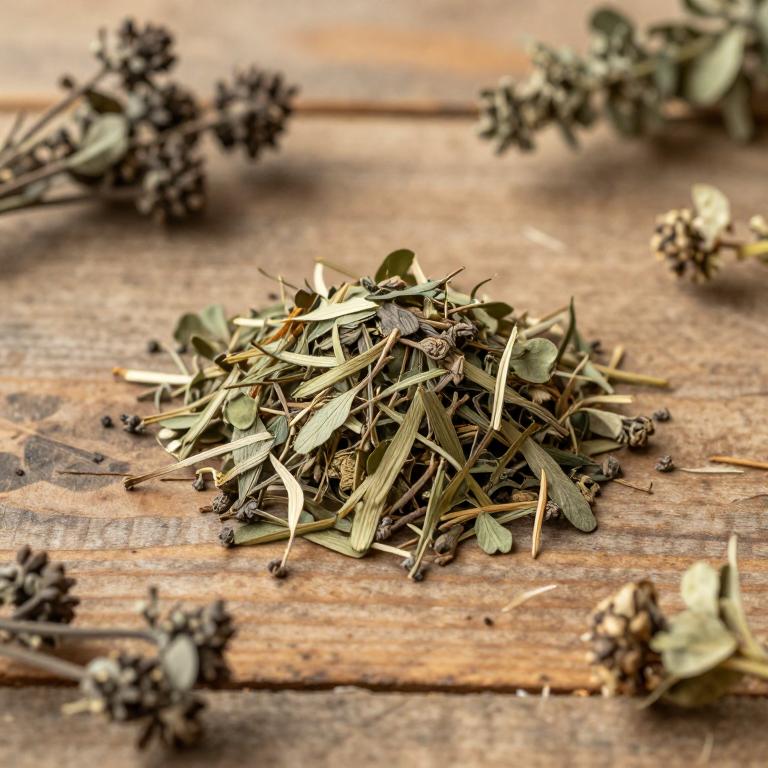
- Leaf
- Common names
- Not available
- Scientific synonyms
- Artanthe Regnellii · Piper Flabellinerve · 10 more
Names and Synonyms
Scientific Names
Accepted name
Piper regnelliiSynonyms
- Artanthe regnellii
- Piper flabellinerve
- Piper regnellii var. glabrius
- Piper regnellii var. parvifolium
- Piper fulvescens
- Piper fulvescens var. geraense
- Piper pallescens
- Piper epunctulatum
- Piper fulvescens var. velutinum
- Piper fulvescens var. subglabrum
- Piper fulvescens var. igatimiana
- Piper regnellii var. pallescens
Sources: Wikidata
Taxonomical Classification
This plant belongs to the kingdom Plantae and the phylum Streptophyta, specifically classified under the class Equisetopsida and subclass Magnoliidae. Within the order Piperales, it is a member of the family Piperaceae. Ultimately, it is identified by the genus Piper, with the specific species being Piper regnellii.
| Rank | Classification |
|---|---|
| Kingdom | Plantae |
| Phylum | Streptophyta |
| Class | Equisetopsida |
| Subclass | Magnoliidae |
| Order | Piperales |
| Family | Piperaceae |
| Genus | Piper |
Sources: The World Checklist of Vascular Plants (WCVP)
Distribution
This plant exhibits a broad presence across the vast territory of Brazil. It is widely distributed throughout the Brazil North region, spanning various ecological zones. The species also makes significant appearances in Brazil Northeast and Brazil West-Central. Furthermore, its range extends into the lush landscapes of Brazil Southeast. Finally, the geographical footprint of Piper regnellii is completed by its occurrence in Brazil South.
| Region | Area |
|---|---|
| Brazil | Brazil West-Central |
| Brazil | Brazil Northeast |
| Brazil | Brazil Southeast |
| Brazil | Brazil North |
| Brazil | Brazil South |
| Southern South America | Argentina Northeast |
| Southern South America | Paraguay |
Sources: The World Checklist of Vascular Plants (WCVP)
Botanical Identification
Ecology
The ecology of Piper regnellii is characterized by its broad adaptability across diverse Brazilian biomes and a wide altitudinal distribution. It inhabits a variety of specialized environments, including Campo Rupestre, Cerrado (latu sensu), Floresta Ciliar or Galeria, Floresta Estacional Semi-decidual, and Floresta Ombrófila (also known as Floresta Pluvial). This range of habitats suggests the species can thrive in both seasonally dry forests and more humid, closed-canopy rainforests. Its vertical distribution is expansive, ranging from sea level (0 m AMSL) up to a maximum elevation of 1100 m AMSL, allowing it to occupy various ecological niches within these complex landscape mosaics.
- Elevational range max:
- 1100 m AMSL
- Elevational range min:
- 0 m AMSL
- Habitat :
- Campo Rupestre, Cerrado (lato sensu), Floresta Ciliar ou Galeria, Floresta Estacional Semidecidual, Floresta Ombrófila (= Floresta Pluvial)
Life history
The life history of Piper regnellii is characterized by its status as a perennial plant, meaning it persists through multiple growing seasons rather than completing its life cycle in a single year. As a perennial species, it establishes a robust root system that allows it to maintain long-term vegetative presence in its natural habitat. Throughout its lifespan, the plant undergoes successive cycles of growth, development, and reproduction, often demonstrating a stable life history that enables it to occupy consistent ecological niches. This perennial nature facilitates its ability to recover from seasonal fluctuations and contribute to the long-term stability of its local ecosystem.
- Lifecycle :
- perennial
Morphology
The morphology of Piper regnellii is characterized by a growth form that functions as a self-supporting herb and a shrub, exhibiting a woody texture in its structure. As a terrestrial species, it does not occupy aquatic or semiaquatic habitats, nor does it function as an epiphyte, remaining strictly terrestrial in its ecological positioning. The plant is an independent organism, lacking any parasitic tendencies, and while it possesses climbing tendencies, it is classified as a self-supporting entity rather than an obligatory vine or liana.
- Aquatic :
- terrestrial
- Climber :
- self-supporting
- Epiphyte :
- terrestrial
- Growth form :
- shrub
- Growth form :
- herb
- Parasite :
- independent
- Woodiness :
- woody
Sources: Global Inventory of Floras and Traits (GIFT)
Plant Parts
Piper regnellii has 1 reported plant parts identified across 2 scientific publications and several other databases that are studied for medicinal purposes. The most consistently reported plant part include leaf.
| Plant part | Supporting sources | Consensus |
|---|---|---|
| Leaf | 2 supporting sources | ★☆☆☆☆ |
Leaf
- Journal of ethnopharmacology
- Molecules (Basel, Switzerland)
Chemicals
Piper regnellii has 6 reported phytochemicals identified across 2 scientific publications and several other databases. The most consistently reported chemicals include Eupomatenoid 5, 1-methoxy-4-(1-propenyl)-benzene, Apiol, Eupomatenoid-3, Ishwarane.
| Chemical | Supporting sources | Consensus |
|---|---|---|
| Eupomatenoid 5 | 2 supporting sources | ★☆☆☆☆ |
| 1-methoxy-4-(1-propenyl)-benzene | 1 supporting sources | ★☆☆☆☆ |
| Apiol | 1 supporting sources | ★☆☆☆☆ |
| Eupomatenoid-3 | 1 supporting sources | ★☆☆☆☆ |
| Ishwarane | 1 supporting sources | ★☆☆☆☆ |
| trans-Anethole | 1 supporting sources | ★☆☆☆☆ |
Eupomatenoid 5
- Journal of ethnopharmacology
- Molecules (Basel, Switzerland)
1-methoxy-4-(1-propenyl)-benzene
- Pharmaceutical biology
Apiol
- Pharmaceutical biology
Eupomatenoid-3
- Journal of ethnopharmacology
Ishwarane
- Journal of ethnopharmacology
trans-Anethole
- Journal of ethnopharmacology
Conditions
Piper regnellii has 5 reported investigations on conditions identified across 2 scientific publications and several other databases. The most consistently reported conditions include Bacillus subtilis, Escherichia coli, Pseudomonas aeruginosa, dermatophytes, infectious diseases.
| Condition | Supporting sources | Consensus |
|---|---|---|
| Bacillus subtilis | 1 supporting sources | ★☆☆☆☆ |
| Escherichia coli | 1 supporting sources | ★☆☆☆☆ |
| Pseudomonas aeruginosa | 1 supporting sources | ★☆☆☆☆ |
| Dermatophytes | 1 supporting sources | ★☆☆☆☆ |
| Infectious diseases | 1 supporting sources | ★☆☆☆☆ |
Bacillus subtilis
- Memorias do Instituto Oswaldo Cruz
Escherichia coli
- Memorias do Instituto Oswaldo Cruz
Pseudomonas aeruginosa
- Memorias do Instituto Oswaldo Cruz
Dermatophytes
- Journal of ethnopharmacology
Infectious diseases
- Molecules (Basel, Switzerland)
Preparations
Piper regnellii has 4 reported preparations identified across 2 scientific publications and several other databases. The most consistently reported preparations include Extracts, Hexane fractions from hydroalcoholic extracts, essential oil from the leaves, methanol extracts.
| Preparation | Supporting sources | Consensus |
|---|---|---|
| Extracts | 1 supporting sources | ★☆☆☆☆ |
| Hexane fractions from hydroalcoholic extracts | 1 supporting sources | ★☆☆☆☆ |
| Essential oil from the leaves | 1 supporting sources | ★☆☆☆☆ |
| Methanol extracts | 1 supporting sources | ★☆☆☆☆ |
Extracts
- Memorias do Instituto Oswaldo Cruz
Hexane fractions from hydroalcoholic extracts
- Pharmaceutical biology
Essential oil from the leaves
- Journal of ethnopharmacology
Methanol extracts
- Fitoterapia