Piper excelsum
Piper excelsum · Accepted scientific name
Scientific literature: Very Sparse (17 studies) · ★☆☆☆☆
Piper excelsum, scientifically known as Piper excelsum, is a significant medicinal plant native to various tropical regions. Renowned for its diverse therapeutic properties, it is frequently utilized in traditional medicine to treat ailments ranging from digestive issues to skin inflammations, offering a rich source of bioactive phytochemical compounds.
- Family
- Piperaceae
- Native range
- Australasia
- Parts used
- Fruit · Leaf
- Common names
- Not available
- Scientific synonyms
- Methysticum Excelsum · Macropiper Excelsum
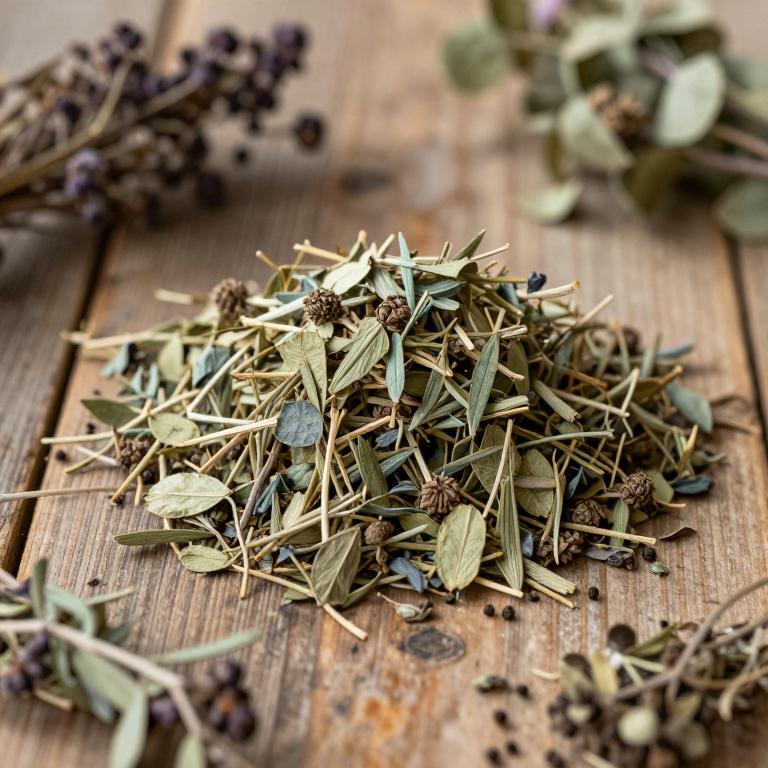
Names and Synonyms
Scientific Names
Accepted name
Piper excelsumSynonyms
- Methysticum excelsum
- Macropiper excelsum
Sources: Wikidata
Taxonomical Classification
This plant belongs to the kingdom Plantae and is classified under the phylum Streptophyta and class Equisetopsida. Within the subclass Magnoliidae, it is organized under the order Piperales and the family Piperaceae. Finally, it is specifically identified by the genus Piper.
| Rank | Classification |
|---|---|
| Kingdom | Plantae |
| Phylum | Streptophyta |
| Class | Equisetopsida |
| Subclass | Magnoliidae |
| Order | Piperales |
| Family | Piperaceae |
| Genus | Piper |
Sources: The World Checklist of Vascular Plants (WCVP)
Distribution
This plant exhibits a widespread distribution across several key regions in the Pacific. In New Zealand, it can be found growing throughout the North Island. Its presence also extends across the South Island of the same country. Furthermore, the species is located within the South-Central Pacific region. Specifically, it inhabits the Society Islands as part of its broader natural range.
| Region | Area |
|---|---|
| New Zealand | New Zealand North |
| New Zealand | New Zealand South |
| South-Central Pacific | Society Is. |
Sources: The World Checklist of Vascular Plants (WCVP)
Botanical Identification
Ecology
The ecology of Piper excelsum is fundamentally defined by its preference for coastal environments, where it thrives in the unique microclimates provided by maritime influences. In these coastal habitats, the species often occupies the margins of forests or dense thickets, where it can benefit from the increased humidity and moderated temperatures characteristic of seaside regions. The plant is well-adapted to the specific soil compositions found in these areas, often growing in well-drained, organic-rich substrates that support its growth patterns. By occupying these coastal niches, Piper excelsum plays a role in the structural complexity of the coastal understory, interacting with local fauna and contributing to the stability of the coastal vegetation layers.
- Habitat :
- Coastal
Life history
The life history of Piper excelsum is characterized by its classification as a phanerophyte, specifically exhibiting traits associated with nanophanerophytes and larger phanerophytes depending on its environmental conditions. This plant maintains a consistent physiological presence through its evergreen deciduousness, ensuring that its foliage remains functional throughout the seasonal cycles rather than shedding leaves annually. As a phanerophyte, its regenerative buds are elevated above the soil surface, allowing it to establish a stable and perennial growth habit within its ecosystem.
- Deciduousness :
- evergreen
- Life form :
- phanerophyte
Morphology
The morphology of Piper excelsum is characterized by a woody growth form, primarily functioning as a tree. It exhibits a terrestrial habit, growing as an independent organism rather than acting as a parasite or an epiphyte. In terms of stature, the plant reaches a mean height of approximately 4 m, though it can attain a maximum height of up to 6 m. Although it possesses the structural capacity to be self-supporting, its growth habit is consistent with a climbing or woody tree-like structure.
- Aquatic :
- terrestrial
- Climber :
- self-supporting
- Epiphyte :
- terrestrial
- Growth form :
- tree
- Parasite :
- independent
- Plant height max:
- 6 m
- Plant height mean:
- 4 m
- Woodiness :
- woody
Physiology
The physiology of Piper excelsum is characterized by specific morphological dimensions and metabolic profiles, particularly concerning its vegetative structures and nutrient acquisition processes. The leaves exhibit significant variability in size, with lengths ranging from a minimum of 1 cm to a maximum of 10 cm. In terms of lateral expansion, the leaf width remains consistent throughout its developmental range, maintaining a mean and a minimum/maximum width of 9 cm. Regarding its metabolic interactions with soil nutrients, the plant does not function as a nitrogen fixer, meaning it lacks the symbiotic relationship with nitrogen-fixing bacteria required to convert atmospheric nitrogen into a usable form for its growth.
- Leaf length max:
- 10 cm
- Leaf length min:
- 1 cm
- Leaf width mean:
- 9 cm
- Nitrogen fixer :
- no
Reproduction
The reproduction of Piper excelsum is characterized by a reliance on sexual processes, as asexual reproduction is absent. The plant produces fleshy, indehiscent fruits classified as drupes, which typically measure an average of 4 cm in length and 0.4 cm in width. These fruits facilitate seed dispersal through a zoochorous syndrome, specifically via endozoochory, where seeds are distributed after being ingested by animals. The seeds themselves are relatively uniform in size, with a mean length of 2 mm, a mean width of 2 mm, and a consistent seed volume of 1.5 mm³. In terms of mass, the seeds are quite small, ranging from a minimum of 0.001 g to a maximum of 0.0024 g, with an overall mean seed mass of 0.001505 g.
- Dehiscence :
- indehiscent
- Dispersal syndrome :
- zoochorous
- Dispersal syndrome :
- endozoochorous
- Fruit dryness :
- fleshy
- Fruit length mean:
- 4 cm
- Fruit type :
- drupe
- Fruit width mean:
- 0.4 cm
- Reproduction asexual :
- absent
- Seed length mean:
- 2 mm
- Seed mass max:
- 0.0024 g
- Seed mass mean:
- 0.001505 g
- Seed mass min:
- 0.001 g
- Seed volume max:
- 1.5 mm³
- Seed width mean:
- 2 mm
Sources: Global Inventory of Floras and Traits (GIFT)
Plant Parts
Piper excelsum has 2 reported plant parts identified across 2 scientific publications and several other databases that are studied for medicinal purposes. The most consistently reported plant part include fruit, leaf.
| Plant part | Supporting sources | Consensus |
|---|---|---|
| Fruit | 1 supporting sources | ★☆☆☆☆ |
| Leaf | 1 supporting sources | ★☆☆☆☆ |
Fruit
- Planta medica
Leaf
- Molecular nutrition & food research
Chemicals
Piper excelsum has 7 reported phytochemicals identified across 2 scientific publications and several other databases. The most consistently reported chemicals include Amide, Diayangambin, Elemicin, Myristicin, PIPERCHABAMIDE A.
| Chemical | Supporting sources | Consensus |
|---|---|---|
| Amide | 1 supporting sources | ★☆☆☆☆ |
| Diayangambin | 1 supporting sources | ★☆☆☆☆ |
| Elemicin | 1 supporting sources | ★☆☆☆☆ |
| Myristicin | 1 supporting sources | ★☆☆☆☆ |
| PIPERCHABAMIDE A | 1 supporting sources | ★☆☆☆☆ |
| Piperdardine | 1 supporting sources | ★☆☆☆☆ |
| Piperlongumine | 1 supporting sources | ★☆☆☆☆ |
Amide
- Planta medica
Diayangambin
- Journal of ethnopharmacology
Elemicin
- Journal of ethnopharmacology
Myristicin
- Journal of ethnopharmacology
PIPERCHABAMIDE A
- Planta medica
Piperdardine
- Planta medica
Piperlongumine
- Planta medica
Activities
Piper excelsum has 1 reported activities identified across 2 scientific publications and several other databases. The most consistently reported activities include Cytotoxic.
| Activity | Supporting sources | Consensus |
|---|---|---|
| Cytotoxic | 1 supporting sources | ★☆☆☆☆ |
Cytotoxic
- Planta medica
Conditions
Piper excelsum has 1 reported investigations on conditions identified across 2 scientific publications and several other databases. The most consistently reported conditions include inflammation.
| Condition | Supporting sources | Consensus |
|---|---|---|
| Inflammation | 1 supporting sources | ★☆☆☆☆ |
Inflammation
- Food science & nutrition