African long pepper
Piper capense · Accepted scientific name
Scientific literature: Very Sparse (38 studies) · ★☆☆☆☆
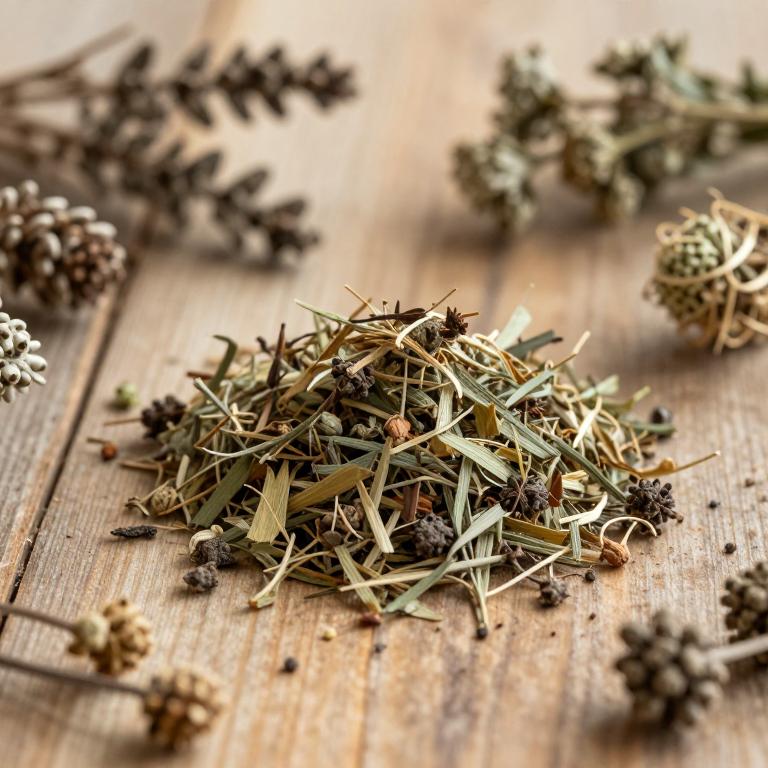
African long pepper, scientifically known as Piper capense, is a versatile medicinal plant native to tropical Africa. Renowned for its pungent aroma and spicy flavor, it is widely utilized in traditional medicine to treat digestive issues, respiratory ailments, and inflammatory conditions, serving as a vital component in herbal healing.
Names and Synonyms
Common Names
- African long pepper
- Ethiopian Long Pepper
- Wild Pepper
- long pepper
Scientific Names
Accepted name
Piper capenseSynonyms
- Cubeba capensis
- Peperomia capensis
- Coccobryon capense
Regional and Traditional Names
Spanish:
- Pimienta Timiz
Sources: Wikidata, Catalogue of Life
Taxonomical Classification
This plant belongs to the kingdom Plantae and the phylum Streptophyta. It is classified under the class Equisetopsida and subclass Magnoliidae, falling within the order Piperales. Ultimately, it is a member of the family Piperaceae and the genus Piper.
| Rank | Classification |
|---|---|
| Kingdom | Plantae |
| Phylum | Streptophyta |
| Class | Equisetopsida |
| Subclass | Magnoliidae |
| Order | Piperales |
| Family | Piperaceae |
| Genus | Piper |
Sources: The World Checklist of Vascular Plants (WCVP)
Distribution
This plant, known as Piper capense, is primarily distributed across the West Tropical Africa region. Its natural habitat spans several key nations, including Ghana and Guinea. Additionally, it can be found growing within the borders of Liberia. The species also maintains a presence in Nigeria, contributing to its regional importance. Finally, its geographical range extends to include the country of Sierra Leone.
| Region | Area |
|---|---|
| West Tropical Africa | Ghana |
| West Tropical Africa | Guinea |
| West Tropical Africa | Liberia |
| West Tropical Africa | Nigeria |
| West Tropical Africa | Sierra Leone |
| West-Central Tropical Africa | Burundi |
| West-Central Tropical Africa | Cameroon |
| West-Central Tropical Africa | Equatorial Guinea |
| West-Central Tropical Africa | Gabon |
| West-Central Tropical Africa | Gulf of Guinea Is. |
Sources: The World Checklist of Vascular Plants (WCVP)
Botanical Identification
Ecology
The ecology of Piper capense is characterized by a broad altitudinal distribution, allowing it to inhabit a diverse range of topographical environments. This species is found across a significant vertical gradient, with its presence recorded from low-lying areas at a minimum elevation of 15 m AMSL to high-altitude regions reaching a maximum of 1760 m AMSL. This extensive elevational range suggests an adaptable ecological niche, enabling the plant to thrive in varied climatic conditions and moisture regimes found across different mountain profiles and lowland habitats.
- Elevational range max:
- 1760 m AMSL
- Elevational range min:
- 15 m AMSL
Life history
The life history of Piper capense is characterized by its nature as a perennial plant, allowing it to persist through multiple growing seasons rather than completing its cycle within a single year. Throughout its lifespan, it maintains a consistent physiological state as an evergreen species, retaining its foliage year-round without the seasonal shedding of leaves typical of deciduous plants.
- Deciduousness :
- evergreen
- Lifecycle :
- perennial
Morphology
The morphology of Piper capense is characterized by a woody, shrub-like growth form that functions as an obligatory liana. This climbing plant exhibits a terrestrial habit, operating as an independent organism rather than a parasite or an epiphyte. In terms of its physical dimensions, the plant displays significant variation in stature, with heights ranging from a minimum of 0.5 m to a maximum of 3 m, though it reaches a mean height of approximately 4 m as it climbs.
- Aquatic :
- terrestrial
- Climber :
- liana
- Climber :
- obligatory
- Epiphyte :
- terrestrial
- Growth form :
- shrub
- Parasite :
- independent
- Plant height max:
- 3 m
- Plant height mean:
- 4 m
- Plant height min:
- 0.5 m
- Woodiness :
- woody
Physiology
The physiology of Piper capense is characterized by its metabolic processes as a perennial climber, primarily driven by its ability to perform efficient photosynthesis within its leaf structures to support rapid vegetative growth. Its nutrient acquisition strategies are focused on the absorption of minerals through a specialized root system designed to anchor the plant and uptake essential elements from the soil substrate. Regarding its interaction with soil chemistry and atmospheric gases, the plant does not possess the biological mechanisms required for symbiotic nitrogen fixation; therefore, it is not a nitrogen fixer, meaning it cannot convert atmospheric nitrogen into a usable form and must rely on available nitrates or ammonium in the soil. This reliance on external nitrogen sources dictates its nutrient cycling requirements and influences its growth patterns in nitrogen-limited environments.
- Nitrogen fixer :
- no
Sources: Global Inventory of Floras and Traits (GIFT)
Plant Parts
Piper capense has 1 reported plant parts identified across 2 scientific publications and several other databases that are studied for medicinal purposes. The most consistently reported plant part include fruit.
| Plant part | Supporting sources | Consensus |
|---|---|---|
| Fruit | 2 supporting sources | ★☆☆☆☆ |
Fruit
- Heliyon
- Journal of ethnopharmacology
Chemicals
Piper capense has 13 reported phytochemicals identified across 2 scientific publications and several other databases. The most consistently reported chemicals include 5-Hydroxy-7,4'-dimethoxyflavone, ALPHA-PINENE, BETA-PINENE, CARDAMOMIN, LICARIN A.
| Chemical | Supporting sources | Consensus |
|---|---|---|
| 5-Hydroxy-7,4'-dimethoxyflavone | 1 supporting sources | ★☆☆☆☆ |
| ALPHA-PINENE | 1 supporting sources | ★☆☆☆☆ |
| BETA-PINENE | 1 supporting sources | ★☆☆☆☆ |
| CARDAMOMIN | 1 supporting sources | ★☆☆☆☆ |
| LICARIN A | 1 supporting sources | ★☆☆☆☆ |
| LICARIN B | 1 supporting sources | ★☆☆☆☆ |
| Lupeol | 1 supporting sources | ★☆☆☆☆ |
| OLEANOLIC ACID | 1 supporting sources | ★☆☆☆☆ |
| Phenols | 1 supporting sources | ★☆☆☆☆ |
| SABINENE | 1 supporting sources | ★☆☆☆☆ |
5-Hydroxy-7,4'-dimethoxyflavone
- Journal of ethnopharmacology
ALPHA-PINENE
- Natural product communications
BETA-PINENE
- Natural product communications
CARDAMOMIN
- Journal of ethnopharmacology
LICARIN A
- Journal of ethnopharmacology
LICARIN B
- Journal of ethnopharmacology
Lupeol
- Journal of ethnopharmacology
OLEANOLIC ACID
- Journal of ethnopharmacology
Phenols
- BMC complementary and alternative medicine
SABINENE
- Natural product communications
Activities
Piper capense has 4 reported activities identified across 2 scientific publications and several other databases. The most consistently reported activities include Cytotoxic, Antimicrobial, Antioxidant, Antiproliferative.
| Activity | Supporting sources | Consensus |
|---|---|---|
| Cytotoxic | 3 supporting sources | ★★☆☆☆ |
| Antimicrobial | 1 supporting sources | ★☆☆☆☆ |
| Antioxidant | 1 supporting sources | ★☆☆☆☆ |
| Antiproliferative | 1 supporting sources | ★☆☆☆☆ |
Cytotoxic
- Natural product communications
- Journal of ethnopharmacology
- Frontiers in pharmacology
Antimicrobial
- Natural product communications
Antioxidant
- Natural product communications
Antiproliferative
- Natural product communications
Conditions
Piper capense has 14 reported investigations on conditions identified across 2 scientific publications and several other databases. The most consistently reported conditions include Plasmodium falciparum, cancer, Cancer, appetite, bacterial infections.
| Condition | Supporting sources | Consensus |
|---|---|---|
| Plasmodium falciparum | 2 supporting sources | ★☆☆☆☆ |
| Cancer | 2 supporting sources | ★☆☆☆☆ |
| Cancer | 1 supporting sources | ★☆☆☆☆ |
| Appetite | 1 supporting sources | ★☆☆☆☆ |
| Bacterial infections | 1 supporting sources | ★☆☆☆☆ |
| Cancers | 1 supporting sources | ★☆☆☆☆ |
| Fever | 1 supporting sources | ★☆☆☆☆ |
| Leukemia | 1 supporting sources | ★☆☆☆☆ |
| Malaria | 1 supporting sources | ★☆☆☆☆ |
| Malignancies | 1 supporting sources | ★☆☆☆☆ |
Plasmodium falciparum
- Journal of ethnopharmacology
- Fitoterapia
Cancer
- Heliyon
- Journal of ethnopharmacology
Cancer
- Frontiers in pharmacology
Appetite
- Heliyon
Bacterial infections
- BMC complementary and alternative medicine
Cancers
- Journal of ethnopharmacology
Fever
- Heliyon
Leukemia
- Journal of ethnopharmacology
Malaria
- Journal of ethnopharmacology
Malignancies
- Journal of ethnopharmacology
Preparations
Piper capense has 12 reported preparations identified across 2 scientific publications and several other databases. The most consistently reported preparations include methanol extract, Crude methanol and water extracts, Methanol extracts, Nah poh, Nkui.
| Preparation | Supporting sources | Consensus |
|---|---|---|
| Methanol extract | 2 supporting sources | ★☆☆☆☆ |
| Crude methanol and water extracts | 1 supporting sources | ★☆☆☆☆ |
| Methanol extracts | 1 supporting sources | ★☆☆☆☆ |
| Nah poh | 1 supporting sources | ★☆☆☆☆ |
| Nkui | 1 supporting sources | ★☆☆☆☆ |
| Aqueous decoction | 1 supporting sources | ★☆☆☆☆ |
| Essential oil | 1 supporting sources | ★☆☆☆☆ |
| Extracts | 1 supporting sources | ★☆☆☆☆ |
| Methanol extract from the piper capense fruits | 1 supporting sources | ★☆☆☆☆ |
| Methanol extract of piper capense fruits | 1 supporting sources | ★☆☆☆☆ |
Methanol extract
- Heliyon
- Journal of ethnopharmacology
Crude methanol and water extracts
- Fitoterapia
Methanol extracts
- Journal of ethnopharmacology
Nah poh
- Natural product communications
Nkui
- Natural product communications
Aqueous decoction
- Journal of ethnopharmacology
Essential oil
- Natural product communications
Extracts
- Journal of ethnopharmacology
Methanol extract from the piper capense fruits
- Heliyon
Methanol extract of piper capense fruits
- Heliyon