Bamboo Piper
Piper aduncum · Accepted scientific name
Scientific literature: Very Sparse (49 studies) · ★☆☆☆☆
Bamboo Piper, scientifically known as Piper aduncuum, is a versatile climbing shrub native to tropical regions. Renowned in traditional medicine, it is widely utilized for its potent antimicrobial, anti-inflammatory, and antioxidant properties. This plant plays a crucial role in treating various ailments, offering significant therapeutic potential in herbal pharmacology.
- Family
- Piperaceae
- Native range
- Africa
- Parts used
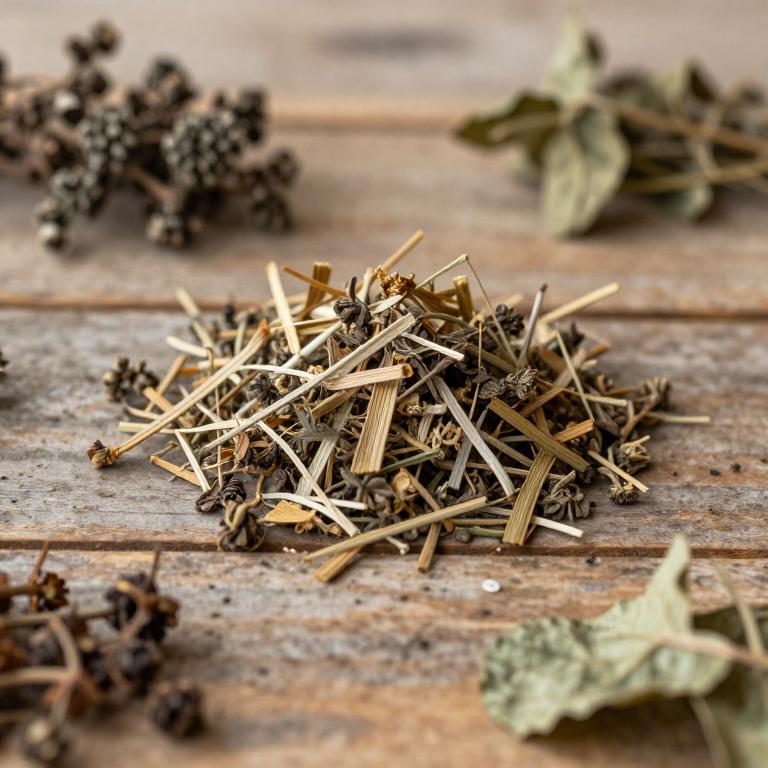
- Leaf
- Common names
- Bamboo Piper · Spiked Pepper · 1 more
- Scientific synonyms
- Steffensia Adunca · Artanthe Adunca
Names and Synonyms
Common Names
- Bamboo Piper
- spiked pepper
- higuillo de hoja menuda
Scientific Names
Accepted name
Piper aduncumSynonyms
- Steffensia adunca
- Artanthe adunca
Regional and Traditional Names
Spanish:
- Higuillo de hoja menuda
- Piper elongatum
- Piper celtidifolium
- Piper angustifolium
- Piper expolitum
- Artanthe elengata
- Piper stenophyllum
- Achotlín
- Achotlin
- Piper granulosum
- Higuillo
- Stephensia elongata
- cordoncillo
- higuillo
- matico
Sources: Wikidata, Catalogue of Life
Taxonomical Classification
This plant belongs to the kingdom Plantae and the phylum Streptophyta, falling under the class Equisetopsida and subclass Magnoliidae. Within the order Piperales, it is classified under the family Piperaceae. It is further identified by its genus, Piper, and its specific species name, Piper aduncum.
| Rank | Classification |
|---|---|
| Kingdom | Plantae |
| Phylum | Streptophyta |
| Class | Equisetopsida |
| Subclass | Magnoliidae |
| Order | Piperales |
| Family | Piperaceae |
| Genus | Piper |
Sources: The World Checklist of Vascular Plants (WCVP)
Distribution
This plant exhibits a broad geographical distribution across several distinct oceanic and tropical regions. Within the Malesia zone, it is commonly found in Malaya and the islands of Jawa. Its presence extends further into the Lesser Sunda Islands and even reaches the remote Christmas Island. Additionally, the species can be located in the Middle Atlantic Ocean on Ascension. These diverse locations highlight the wide environmental adaptability of Piper aduncum.
| Region | Area |
|---|---|
| Middle Atlantic Ocean | Ascension |
| Malesia | Jawa |
| Malesia | Lesser Sunda Is. |
| Malesia | Malaya |
| Malesia | Christmas I. |
| Papuasia | Solomon Is. |
| Southwestern Pacific | Fiji |
| Southwestern Pacific | Vanuatu |
| Southeastern U.S.A. | Florida |
| Mexico | Mexico Central |
Sources: The World Checklist of Vascular Plants (WCVP)
Botanical Identification
Ecology
The ecology of Piper aduncum is characterized by its remarkable adaptability to diverse environmental conditions and a broad altitudinal distribution. It thrives across a wide range of elevations, starting from sea level (0 m AMSL) up to a maximum of 2,600 m AMSL, with a mean elevation of approximately 600 m AMSL. This species demonstrates high ecological plasticity, inhabiting a variety of distinct ecosystems, including anthropogenic areas (Área Antrópica), Cerrado (latu sensu), and various forest types such as Riparian or Gallery Forests (Floresta Ciliar ou Galeria), Terra Firme Forests (Floresta de Terra Firme), Semi-deciduous Seasonal Forests (Floresta Estacional Semi-decidual), Ombrophilous Forests (Floresta Ombrófila, including both Pluvial and Mixed types), and the Amazonian Savanna (Savana Amazônica).
- Elevational range max:
- 2600 m AMSL
- Elevational range mean:
- 600 m AMSL
- Elevational range min:
- 0 m AMSL
- Habitat :
- Área Antrópica, Cerrado (lato sensu), Floresta Ciliar ou Galeria, Floresta de Terra Firme, Floresta Estacional Semidecidual, Floresta Ombrófila (= Floresta Pluvial), Floresta Ombrófila Mista, Savana Amazônica
Life history
The life history of Piper aduncum is characterized by its status as a perennial plant, allowing it to persist in its environment over multiple growing seasons. It functions primarily as a phanerophyte, maintaining its photosynthetic structures above the ground, though it can also be classified within the nanophanerophyte life form category depending on the specific environmental context and scale of its growth. Throughout its life cycle, the species maintains an evergreen deciduousness, ensuring that its foliage remains functional and green year-round rather than shedding seasonally.
- Deciduousness :
- evergreen
- Life form :
- nanophanerophyte
- Life form :
- phanerophyte
- Lifecycle :
- perennial
Morphology
The morphology of Piper aduncum is characterized by its robust, woody growth form, typically manifesting as a shrub. It functions as a self-supporting climber, though it maintains an independent parasitic status, meaning it does not rely on a host plant for nutrients. As a terrestrial species, it is neither aquatic nor an epiphyte. The plant exhibits significant vertical development, with an average height of approximately 3.25 m, though it has the capacity to reach a maximum height of up to 10 m.
- Aquatic :
- terrestrial
- Climber :
- self-supporting
- Epiphyte :
- terrestrial
- Growth form :
- shrub
- Parasite :
- independent
- Plant height max:
- 10 m
- Plant height mean:
- 3.25 m
- Woodiness :
- woody
Physiology
The physiology of Piper aduncum is characterized by its specific carbon fixation strategy and structural composition. The plant utilizes a C3 photosynthetic pathway, which dictates its metabolic approach to carbon assimilation. In terms of tissue density and biomass allocation, the stem exhibits a consistent Stem Specific Density (SSD) of 330 mg/cm³, with the minimum, mean, and maximum values all recorded at this specific level. The leaf characteristics further define its physiological profile, showing a Leaf Dry Matter Content (LDMC) that ranges from a minimum of 239.9 mg/g to a maximum of 273.3 mg/g, resulting in an overall LDMC mean of 256.6 mg/g. Additionally, the species does not function as a nitrogen fixer, relying on external nitrogen sources rather than symbiotic biological nitrogen fixation.
- Leaf dry matter content (LDMC) max:
- 273.3 mg/g
- Leaf dry matter content (LDMC) mean:
- 256.6 mg/g
- Leaf dry matter content (LDMC) min:
- 239.9 mg/g
- Nitrogen fixer :
- no
- Photosynthetic pathway :
- C3
- Stem specific density (SSD) min:
- 330 mg/cm³
Reproduction
The reproduction of Piper aduncum is characterized by specific morphological and ecological traits that facilitate its propagation. The plant produces fleshy fruits, a characteristic that plays a vital role in its dispersal strategy. The dispersal syndrome is primarily zoochorous, indicating that animals are the main agents responsible for moving the seeds to new locations. Regarding the dimensions of the seeds, they are relatively uniform and small, with a maximum, minimum, and mean seed volume of 0.52 mm³. Furthermore, the seeds exhibit a consistent length, with a maximum measurement of 1 mm. This combination of fleshy fruit tissue and zoochorous dispersal ensures the effective distribution of the species within its habitat.
- Dispersal syndrome :
- zoochorous
- Fruit dryness :
- fleshy
- Seed length max:
- 1 mm
- Seed volume max:
- 0.52 mm³
Sources: Global Inventory of Floras and Traits (GIFT)
Plant Parts
Piper aduncum has 1 reported plant parts identified across 6 scientific publications and several other databases that are studied for medicinal purposes. The most consistently reported plant part include leaf.
| Plant part | Supporting sources | Consensus |
|---|---|---|
| Leaf | 6 supporting sources | ★★★☆☆ |
Leaf
- Phytochemistry
- Phytochemical analysis : PCA
- Journal of ethnopharmacology
- Planta medica
- Journal of natural products
View 1 additional sources
- Molecules (Basel, Switzerland)
Chemicals
Piper aduncum has 20 reported phytochemicals identified across 6 scientific publications and several other databases. The most consistently reported chemicals include Dillapiole, 2',6'-Dihydroxy-4'-methoxydihydrochalcone, 2',6',4-Trihydroxy-4'-methoxydihydrochalcone, 3,5-Bis(3-methyl-2-butenyl)-4-methoxybenzoic acid, Anodendroic acid methyl ester.
| Chemical | Supporting sources | Consensus |
|---|---|---|
| Dillapiole | 3 supporting sources | ★★☆☆☆ |
| 2',6'-Dihydroxy-4'-methoxydihydrochalcone | 2 supporting sources | ★☆☆☆☆ |
| 2',6',4-Trihydroxy-4'-methoxydihydrochalcone | 1 supporting sources | ★☆☆☆☆ |
| 3,5-Bis(3-methyl-2-butenyl)-4-methoxybenzoic acid | 1 supporting sources | ★☆☆☆☆ |
| Anodendroic acid methyl ester | 1 supporting sources | ★☆☆☆☆ |
| Asebogenin | 1 supporting sources | ★☆☆☆☆ |
| Caryophyllene epoxide | 1 supporting sources | ★☆☆☆☆ |
| Dillapiol | 1 supporting sources | ★☆☆☆☆ |
| Flavonoids | 1 supporting sources | ★☆☆☆☆ |
| Free Fatty Acids | 1 supporting sources | ★☆☆☆☆ |
Dillapiole
- Plants (Basel, Switzerland)
- Pharmaceutical biology
- Revista brasileira de parasitologia veterinaria = Brazilian journal of veterinary parasitology : Orgao Oficial do Colegio Brasileiro de Parasitologia Veterinaria
2',6'-Dihydroxy-4'-methoxydihydrochalcone
- Phytochemistry
- Journal of natural products
2',6',4-Trihydroxy-4'-methoxydihydrochalcone
- Journal of natural products
3,5-Bis(3-methyl-2-butenyl)-4-methoxybenzoic acid
- Planta medica
Anodendroic acid methyl ester
- Journal of natural products
Asebogenin
- Journal of natural products
Caryophyllene epoxide
- Planta medica
Dillapiol
- Planta medica
Flavonoids
- Molecules (Basel, Switzerland)
Free Fatty Acids
- Molecules (Basel, Switzerland)
Activities
Piper aduncum has 6 reported activities identified across 6 scientific publications and several other databases. The most consistently reported activities include Antibacterial, Antifungal, Antimicrobial, Antipyretic, Cytotoxic.
| Activity | Supporting sources | Consensus |
|---|---|---|
| Antibacterial | 3 supporting sources | ★★☆☆☆ |
| Antifungal | 3 supporting sources | ★★☆☆☆ |
| Antimicrobial | 3 supporting sources | ★★☆☆☆ |
| Antipyretic | 1 supporting sources | ★☆☆☆☆ |
| Cytotoxic | 1 supporting sources | ★☆☆☆☆ |
| Repellent | 1 supporting sources | ★☆☆☆☆ |
Antibacterial
- Planta medica
- Journal of natural products
- Molecules (Basel, Switzerland)
Antifungal
- Journal of ethnopharmacology
- Plants (Basel, Switzerland)
- Molecules (Basel, Switzerland)
Antimicrobial
- Plants (Basel, Switzerland)
- Planta medica
- Molecules (Basel, Switzerland)
Antipyretic
- Journal of ethnopharmacology
Cytotoxic
- Journal of natural products
Repellent
- Revista brasileira de parasitologia veterinaria = Brazilian journal of veterinary parasitology : Orgao Oficial do Colegio Brasileiro de Parasitologia Veterinaria
Conditions
Piper aduncum has 7 reported investigations on conditions identified across 6 scientific publications and several other databases. The most consistently reported conditions include Mycobacterium tuberculosis, bacteria, fungi, mollusks, oxidative stress.
| Condition | Supporting sources | Consensus |
|---|---|---|
| Mycobacterium tuberculosis | 1 supporting sources | ★☆☆☆☆ |
| Bacteria | 1 supporting sources | ★☆☆☆☆ |
| Fungi | 1 supporting sources | ★☆☆☆☆ |
| Mollusks | 1 supporting sources | ★☆☆☆☆ |
| Oxidative stress | 1 supporting sources | ★☆☆☆☆ |
| Respiratory diseases | 1 supporting sources | ★☆☆☆☆ |
| Wound healing | 1 supporting sources | ★☆☆☆☆ |
Mycobacterium tuberculosis
- Molecules (Basel, Switzerland)
Bacteria
- Pharmaceutical biology
Fungi
- Pharmaceutical biology
Mollusks
- Pharmaceutical biology
Oxidative stress
- ACS omega
Respiratory diseases
- Molecules (Basel, Switzerland)
Wound healing
- Journal of ethnopharmacology
Preparations
Piper aduncum has 6 reported preparations identified across 6 scientific publications and several other databases. The most consistently reported preparations include essential oils, methanolic extracts, CH2Cl2 extract, chloroform fractions, extracts.
| Preparation | Supporting sources | Consensus |
|---|---|---|
| Essential oils | 2 supporting sources | ★☆☆☆☆ |
| Methanolic extracts | 2 supporting sources | ★☆☆☆☆ |
| Ch2cl2 extract | 1 supporting sources | ★☆☆☆☆ |
| Chloroform fractions | 1 supporting sources | ★☆☆☆☆ |
| Extracts | 1 supporting sources | ★☆☆☆☆ |
| Leaf | 1 supporting sources | ★☆☆☆☆ |
Essential oils
- International journal of molecular sciences
- Revista brasileira de parasitologia veterinaria = Brazilian journal of veterinary parasitology : Orgao Oficial do Colegio Brasileiro de Parasitologia Veterinaria
Methanolic extracts
- Fitoterapia
- Saudi journal of biological sciences
Ch2cl2 extract
- Journal of natural products
Chloroform fractions
- Saudi journal of biological sciences
Extracts
- Journal of ethnopharmacology
Leaf
- Journal of ethnopharmacology