the pine genus
Pinus · Accepted scientific name
Scientific literature: Sparse (69 studies) · ★★☆☆☆
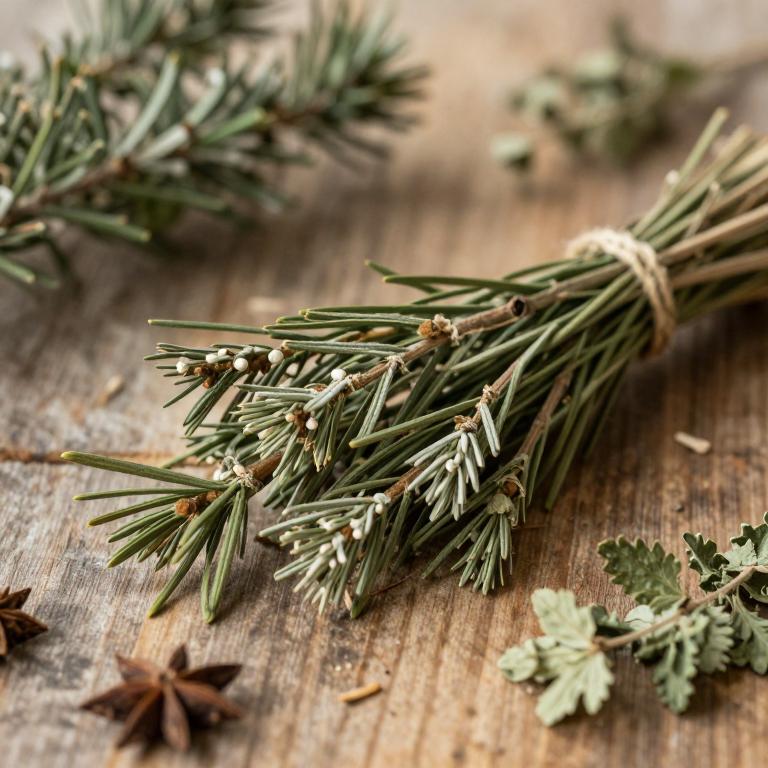
The pine genus, scientifically known as Pinus, is a diverse group of coniferous trees valued globally for their medicinal properties. Rich in essential oils, resins, and antioxidants, various species offer therapeutic benefits, including anti-inflammatory and respiratory support. These resilient evergreens remain vital components in traditional and modern herbal medicine.
Names and Synonyms
Common Names
- pine
- Deal
- Pine Trees
- pines
Scientific Names
Accepted name
PinusSynonyms
- Strobus
- Pinea
- Cembra
- Caryopitys
- Apinus
- Ducampopinus
Regional and Traditional Names
Spanish:
- pino
- Pinos
German:
- Kiefern
- Dähle
- Förchenholz
- Forle
- Föhre
- Forlen
- Sjüren
- Kiefer
- Dählen
- Forlen
- Föhren
- Kiefern
- Sjüren
French:
- pin
- Pin
- pins
- Pin
Sources: Wikidata, Catalogue of Life
Taxonomical Classification
This plant belongs to the kingdom Plantae and is classified under the phylum Streptophyta and class Equisetopsida. Within the subclass Pinidae and order Pinales, it is placed in the family Pinaceae. Ultimately, it is identified by the genus Pinus.
| Rank | Classification |
|---|---|
| Kingdom | Plantae |
| Phylum | Streptophyta |
| Class | Equisetopsida |
| Subclass | Pinidae |
| Order | Pinales |
| Family | Pinaceae |
| Genus | Pinus |
Sources: The World Checklist of Vascular Plants (WCVP)
Distribution
This plant, known as Pinus, exhibits a specific distribution across several regions in Northern Europe. It can be found growing within the landscapes of Denmark and Finland. Additionally, its presence extends to the islands of Føroyar and Iceland. The species also inhabits various parts of Great Britain. Together, these locations highlight its ability to thrive in diverse Northern European environments.
| Region | Area |
|---|---|
| Northern Europe | Denmark |
| Northern Europe | Finland |
| Northern Europe | Føroyar |
| Northern Europe | Great Britain |
| Northern Europe | Iceland |
| Northern Europe | Ireland |
| Northern Europe | Norway |
| Northern Europe | Sweden |
| Middle Europe | Austria |
| Middle Europe | Belgium |
Sources: The World Checklist of Vascular Plants (WCVP)
Chemicals
Pinus has 21 reported phytochemicals identified across 0 scientific publications and several other databases. The most consistently reported chemicals include LIGNIN, 3-Carene, ALPHA-PINENE, Al, BETA-PINENE.
| Chemical | Supporting sources | Consensus |
|---|---|---|
| LIGNIN | 5 supporting sources | ★★★☆☆ |
| 3-Carene | 1 supporting sources | ★☆☆☆☆ |
| ALPHA-PINENE | 1 supporting sources | ★☆☆☆☆ |
| Al | 1 supporting sources | ★☆☆☆☆ |
| BETA-PINENE | 1 supporting sources | ★☆☆☆☆ |
| Borneol | 1 supporting sources | ★☆☆☆☆ |
| Bornylacetate | 1 supporting sources | ★☆☆☆☆ |
| Cembrene | 1 supporting sources | ★☆☆☆☆ |
| LINALYL ACETATE | 1 supporting sources | ★☆☆☆☆ |
| N- | 1 supporting sources | ★☆☆☆☆ |
LIGNIN
- Astrophysical letters & communications
- Annals of botany
- Advances in space research : the official journal of the Committee on Space Research (COSPAR)
- Anticancer research
- Waste management (New York, N.Y.)
3-Carene
- Current pharmaceutical biotechnology
ALPHA-PINENE
- Bone
Al
- Plant foods for human nutrition (Dordrecht, Netherlands)
BETA-PINENE
- Bone
Borneol
- Bone
Bornylacetate
- Bone
Cembrene
- Current pharmaceutical biotechnology
LINALYL ACETATE
- BMC complementary and alternative medicine
N-
- Rapid communications in mass spectrometry : RCM
Activities
Pinus has 10 reported activities identified across 0 scientific publications and several other databases. The most consistently reported activities include Antioxidant, Antimicrobial, Antitumor, Analgesic, Antiapoptotic.
| Activity | Supporting sources | Consensus |
|---|---|---|
| Antioxidant | 4 supporting sources | ★★☆☆☆ |
| Antimicrobial | 3 supporting sources | ★★☆☆☆ |
| Antitumor | 2 supporting sources | ★☆☆☆☆ |
| Analgesic | 1 supporting sources | ★☆☆☆☆ |
| Antiapoptotic | 1 supporting sources | ★☆☆☆☆ |
| Antibacterial | 1 supporting sources | ★☆☆☆☆ |
| Anticancer | 1 supporting sources | ★☆☆☆☆ |
| Antidiabetic | 1 supporting sources | ★☆☆☆☆ |
| Antiinflammatory | 1 supporting sources | ★☆☆☆☆ |
| Antiviral | 1 supporting sources | ★☆☆☆☆ |
Antioxidant
- Antibiotics (Basel, Switzerland)
- Antioxidants (Basel, Switzerland)
- Phytotherapy research : PTR
- Journal of exercise nutrition & biochemistry
Antimicrobial
- Antibiotics (Basel, Switzerland)
- Antioxidants (Basel, Switzerland)
- Anticancer research
Antitumor
- Antibiotics (Basel, Switzerland)
- Anticancer research
Analgesic
- Antibiotics (Basel, Switzerland)
Antiapoptotic
- Journal of exercise nutrition & biochemistry
Antibacterial
- Antibiotics (Basel, Switzerland)
Anticancer
- Antioxidants (Basel, Switzerland)
Antidiabetic
- Antioxidants (Basel, Switzerland)
Antiinflammatory
- Phytotherapy research : PTR
Antiviral
- Anticancer research
Conditions
Pinus has 18 reported investigations on conditions identified across 0 scientific publications and several other databases. The most consistently reported conditions include Escherichia coli, breast cancer, Candida albicans, Hymenolepis nana, Klebsiella pneumoniae.
| Condition | Supporting sources | Consensus |
|---|---|---|
| Escherichia coli | 2 supporting sources | ★☆☆☆☆ |
| Breast cancer | 2 supporting sources | ★☆☆☆☆ |
| Candida albicans | 1 supporting sources | ★☆☆☆☆ |
| Hymenolepis nana | 1 supporting sources | ★☆☆☆☆ |
| Klebsiella pneumoniae | 1 supporting sources | ★☆☆☆☆ |
| Pseudomonas aeruginosa | 1 supporting sources | ★☆☆☆☆ |
| Ascites | 1 supporting sources | ★☆☆☆☆ |
| Bacterial infection | 1 supporting sources | ★☆☆☆☆ |
| Bone resorption | 1 supporting sources | ★☆☆☆☆ |
| Cancer | 1 supporting sources | ★☆☆☆☆ |
Escherichia coli
- Zhurnal mikrobiologii, epidemiologii i immunobiologii
- Anticancer research
Breast cancer
- Anti-cancer agents in medicinal chemistry
- Arzneimittel-Forschung
Candida albicans
- Anticancer research
Hymenolepis nana
- Anticancer research
Klebsiella pneumoniae
- Anticancer research
Pseudomonas aeruginosa
- Anticancer research
Ascites
- Anticancer research
Bacterial infection
- In vivo (Athens, Greece)
Bone resorption
- Bone
Cancer
- Journal of pharmacological sciences
Preparations
Pinus has 4 reported preparations identified across 0 scientific publications and several other databases. The most consistently reported preparations include I-P, II-P, III-P, IV-P.
| Preparation | Supporting sources | Consensus |
|---|---|---|
| I-p | 1 supporting sources | ★☆☆☆☆ |
| Ii-p | 1 supporting sources | ★☆☆☆☆ |
| Iii-p | 1 supporting sources | ★☆☆☆☆ |
| Iv-p | 1 supporting sources | ★☆☆☆☆ |
I-p
- Arzneimittel-Forschung
Ii-p
- Arzneimittel-Forschung
Iii-p
- Arzneimittel-Forschung
Iv-p
- Arzneimittel-Forschung