Gray Pine
Pinus sabiniana · Accepted scientific name
Scientific literature: Very Sparse (2 studies) · ★☆☆☆☆
Gray Pine, scientifically known as Pinus sabiniana, is a resilient evergreen native to the arid landscapes of the Southwestern United States. Renowned for its adaptability to rocky soils, this species offers significant ethnobotanical value, providing traditional medicinal applications through its resin, needles, and bark in various holistic practices.
- Family
- Pinaceae
- Native range
- Northern America
- Parts used
- Leaf
- Common names
- Bull Pine · Gray Pine · 5 more
- Scientific synonyms
- Pinus Sabiniana F. Microcarpa · Pinus Sabiniana Var. Explicata
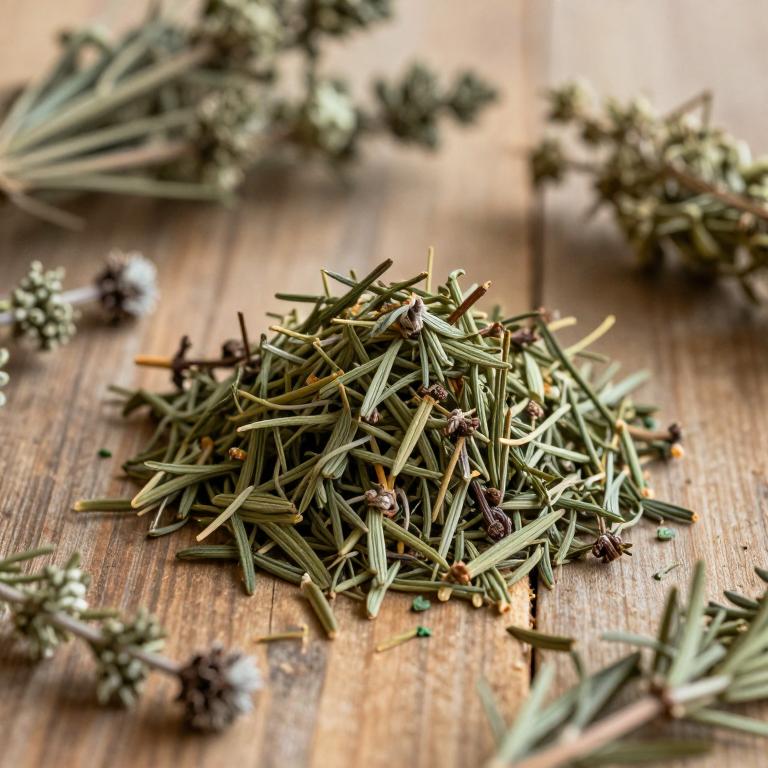
Names and Synonyms
Common Names
- Bull Pine
- Gray Pine
- digger pine
- foothill pine
- California foothill pine
- ghost pine
- grey pine
Scientific Names
Accepted name
Pinus sabinianaSynonyms
- Pinus sabiniana f. microcarpa
- Pinus sabiniana var. explicata
Regional and Traditional Names
Spanish:
- Pino de Sabine
German:
- Weiß-Kiefer
- Weißkiefer
- Digger-Kiefer
- Sabines Kiefer
French:
- Pin gris de Californie
Sources: Wikidata, Catalogue of Life
Taxonomical Classification
This plant, Pinus sabiinianna, belongs to the kingdom Plantae and the phylum Streptophyta. It is classified within the class Equisetopsida and the subclass Pinidae, falling under the order Pinales and the family Pinaceae. Finally, its taxonomic placement is completed within the genus Pinus.
| Rank | Classification |
|---|---|
| Kingdom | Plantae |
| Phylum | Streptophyta |
| Class | Equisetopsida |
| Subclass | Pinidae |
| Order | Pinales |
| Family | Pinaceae |
| Genus | Pinus |
Sources: The World Checklist of Vascular Plants (WCVP)
Distribution
This plant is a specific species of pine known for its unique ecological niche. Its natural geographical distribution is quite limited compared to other pine varieties. Currently, it can be found primarily within the southwestern region of the United States. Specifically, its habitat is concentrated within the state of California. This localized range makes the species a distinct part of the regional flora.
| Region | Area |
|---|---|
| Southwestern U.S.A. | California |
Sources: The World Checklist of Vascular Plants (WCVP)
Botanical Identification
Life history
The life history of Pinus sabiniana is characterized by a perennial lifecycle, allowing the individual to persist through many growing seasons and establish long-term dominance within its ecosystem. As a phanerophyte, its regenerative buds are located high above the ground on woody branches, a structural adaptation that facilitates survival in diverse environmental conditions. This phanerophyte life form ensures that the plant's vital tissues remain protected, supporting its extensive growth patterns and long-term developmental stability over many years.
- Life form :
- phanerophyte
- Lifecycle :
- perennial
Morphology
The morphology of Pinus sabiñana is characterized by a woody growth form, specifically categorized as a tree. It is a terrestrial species that functions as a self-supporting organism, neither acting as a climber nor as an epiphyte. As an independent plant, it does not exhibit parasitic behavior. In terms of stature, the plant reaches a mean height of 24 m, with a maximum recorded height of up to 20 m.
- Aquatic :
- terrestrial
- Climber :
- self-supporting
- Epiphyte :
- terrestrial
- Growth form :
- tree
- Parasite :
- independent
- Plant height max:
- 20 m
- Plant height mean:
- 24 m
- Woodiness :
- woody
Physiology
The physiology of Pinus sabiñana is characterized by a specialized metabolic framework adapted to its environmental conditions, most notably through its utilization of the C3 photosynthetic pathway. As a C3 plant, the primary carbon fixation process occurs via the Calvin cycle, where the enzyme Ribulose-1,5-bisphosphate carboxylase/oxygenase (RuBisCO) catalyzes the initial fixation of atmospheric carbon dioxide into a three-carbon compound, 3-phosphoglycerate. This metabolic strategy is supported by needle-like leaf morphology designed to optimize light interception while managing gas exchange. To mitigate the risks of photorespiration and excessive transpiration inherent to the C3 pathway in varying climates, the plant employs sophisticated stomatal regulation and anatomical features such as sunken stomata and a thick cuticle, which help maintain internal water potential and facilitate efficient photosynthetic electron transport.
- Photosynthetic pathway :
- C3
Reproduction
Reproduction in Pinus sabiñana is achieved through the production of seeds that exhibit significant variability in their physical dimensions. The seeds are characterized by a mean mass of approximately 0.7478 g, though they demonstrate a broad range of weight depending on individual developmental factors. Specifically, the seed mass fluctuates from a minimum value of 0.1002 g to a maximum value of 1 g. This variation in seed mass is a critical component of the species' reproductive strategy and dispersal capabilities.
- Seed mass max:
- 1 g
- Seed mass mean:
- 0.7478407145 g
- Seed mass min:
- 0.1002 g
Sources: Global Inventory of Floras and Traits (GIFT)
Plant Parts
Pinus sabiniana has 1 reported plant parts identified across 1 scientific publications and several other databases that are studied for medicinal purposes. The most consistently reported plant part include leaf.
| Plant part | Supporting sources | Consensus |
|---|---|---|
| Leaf | 1 supporting sources | ★☆☆☆☆ |
Leaf
- Molecules (Basel, Switzerland)
Chemicals
Pinus sabiniana has 1 reported phytochemicals identified across 1 scientific publications and several other databases. The most consistently reported chemicals include LIMONENE.
| Chemical | Supporting sources | Consensus |
|---|---|---|
| LIMONENE | 1 supporting sources | ★☆☆☆☆ |
LIMONENE
- Molecules (Basel, Switzerland)
Preparations
Pinus sabiniana has 1 reported preparations identified across 1 scientific publications and several other databases. The most consistently reported preparations include leaf essential oils.
| Preparation | Supporting sources | Consensus |
|---|---|---|
| Leaf essential oils | 1 supporting sources | ★☆☆☆☆ |
Leaf essential oils
- Molecules (Basel, Switzerland)