Pinus longifolia
Pinus roxburghii · Accepted scientific name
Scientific literature: Sparse (69 studies) · ★★☆☆☆
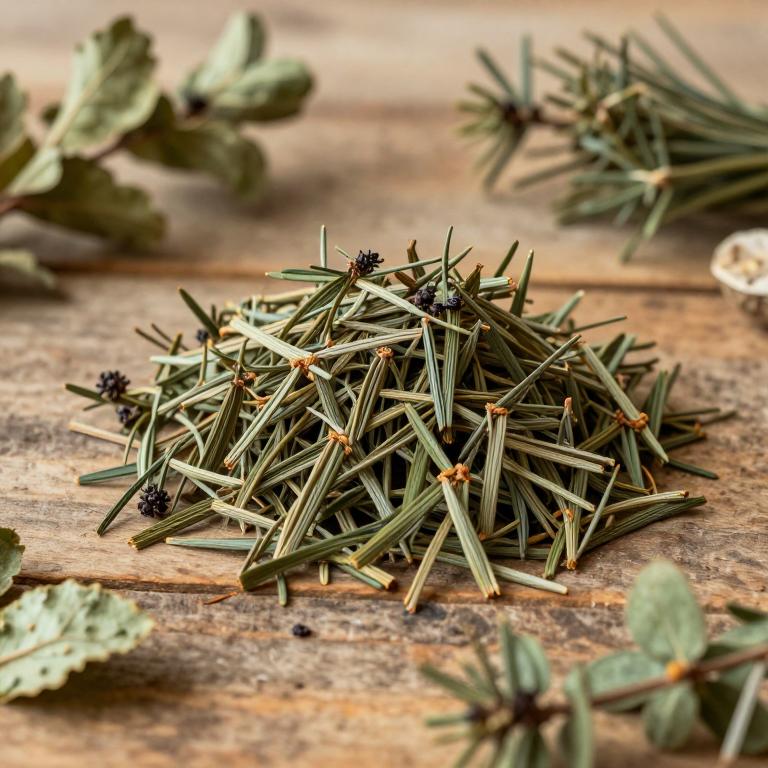
Pinus longifolia, scientifically known as Pinus roxburgii, is a majestic coniferous tree native to the Himalayan region. Renowned for its multifaceted medicinal properties, it provides resin, essential oils, and bark extracts used in traditional healing. This versatile plant offers significant therapeutic potential in treating various respiratory and skin ailments.
- Family
- Pinaceae
- Native range
- Africa
- Parts used
- Seed
- Common names
- Chir Pine · Long-Leaved Indian Pine · 6 more
- Scientific synonyms
- Not available
Names and Synonyms
Common Names
- Chir Pine
- Long-leaved Indian Pine
- longleaf Indian pine
- Emodi Pine
- Himalayan longleaf pine
- Indian longleaf pine
- Longifolia Pine
- imodi pine
Scientific Names
Accepted name
Pinus roxburghiiRegional and Traditional Names
German:
- Emodikiefer
- Emodikiefer
- Emodi-Kiefer
French:
- Pin de Roxburgh
Sources: Wikidata, Catalogue of Life
Taxonomical Classification
This plant, known scientifically as Pinus roxburgii, belongs to the kingdom Plantae and the phylum Streptophyta. It is classified under the class Equisetopsida and the subclass Pinidae within the order Pinales. Furthermore, it is a member of the family Pinaceae and falls under the genus Pinus.
| Rank | Classification |
|---|---|
| Kingdom | Plantae |
| Phylum | Streptophyta |
| Class | Equisetopsida |
| Subclass | Pinidae |
| Order | Pinales |
| Family | Pinaceae |
| Genus | Pinus |
Sources: The World Checklist of Vascular Plants (WCVP)
Distribution
This plant exhibits a diverse geographical range that spans several distinct regions. In the Indian Subcontinent, it is widely distributed across India, Bangladesh, and the East Himalaya. Its presence also extends into the high-altitude regions of Tibet within China. Interestingly, the species is recorded as far as Ascension in the Middle Atlantic Ocean. This widespread distribution highlights the adaptability of Pinus roxburghii across varied environments.
| Region | Area |
|---|---|
| Middle Atlantic Ocean | Ascension |
| China | Tibet |
| Indian Subcontinent | Bangladesh |
| Indian Subcontinent | East Himalaya |
| Indian Subcontinent | India |
| Indian Subcontinent | Nepal |
| Indian Subcontinent | Pakistan |
| Indian Subcontinent | West Himalaya |
Sources: The World Checklist of Vascular Plants (WCVP)
Botanical Identification
Ecology
The ecology of Pinus roxburghii is characterized by its ability to thrive across a diverse altitudinal gradient within montane ecosystems. This species is typically distributed across a significant elevational range, occupying habitats from as low as 500 m AMSL to elevations reaching a maximum of 2500 m AMSL. Within these varying altitudes, the plant adapts to diverse microclimates, often forming dominant stands in temperate forest zones where it influences soil composition and moisture retention. Its presence is often dictated by specific topographic features and soil types that can support its growth throughout this broad vertical distribution.
- Elevational range max:
- 2500 m AMSL
- Elevational range min:
- 500 m AMSL
Life history
The life history of Pinus roxburghii is characterized by its status as a perennial organism, ensuring its long-term survival and presence within its ecological niche over many years. As a member of the gymnosperms, its growth pattern is sustained through multiple seasonal cycles, allowing it to establish a permanent structural presence in its habitat. In terms of its biological architecture, the species is classified as a phanerophyte, a life form defined by having its perennating buds located high above the ground on woody branches. This phanerophyte habit enables the plant to maintain its photosynthetic and reproductive structures in a protected position, facilitating its dominance in forested landscapes.
- Life form :
- phanerophyte
- Lifecycle :
- perennial
Morphology
The morphology of Pinus roxburgii is characterized by its growth form as a large, woody tree that is strictly terrestrial in its habitat. As a self-supporting organism, it does not function as a climber, liana, or vine, nor does it exhibit epiphytic or parasitic behaviors, maintaining an independent life cycle. The plant reaches significant dimensions, with a height ranging from a minimum of 4 m to a maximum of 55 m, supported by a robust, woody structure.
- Aquatic :
- terrestrial
- Climber :
- self-supporting
- Epiphyte :
- terrestrial
- Growth form :
- tree
- Parasite :
- independent
- Plant height max:
- 55 m
- Plant height min:
- 4 m
- Woodiness :
- woody
Physiology
The physiology of Pinus roxburgii is characterized by specialized adaptations to temperate and sub-tropical montane environments, primarily driven by its needle-like leaf morphology which minimizes transpirational water loss. As a gymnosperm, its metabolic processes are governed by the C3 photosynthetic pathway, a mechanism where carbon fixation occurs via the enzyme RuBisCO to form a three-carbon compound during the Calvin cycle. This C3 pathway is integrated with a robust tracheid-based vascular system that facilitates the efficient transport of water and minerals under varying hydraulic pressures. Furthermore, the plant exhibits significant physiological resilience to seasonal temperature fluctuations, employing biochemical adjustments in membrane fluidity and osmotic regulation to maintain cellular integrity during cold periods. Its metabolic activity is also closely linked to its resin production, which serves both as a defense mechanism against herbivory and as a secondary physiological response to environmental stressors.
- Photosynthetic pathway :
- C3
Reproduction
The reproduction of Pinus roxburghii is characterized by a specific phenological cycle and distinct seed morphology. The flowering period typically begins in February and extends through May, though the exact timing can be variable depending on environmental conditions. Following pollination, the plant produces seeds with a highly consistent mass profile; the mean seed mass is approximately 0.0873325 g, with individual seed weights ranging from a minimum of 0.08099 g to a maximum of 0.09524 g.
- Flowering time :
- Feb
- Flowering time :
- May
- Seed mass max:
- 0.09524 g
- Seed mass mean:
- 0.0873325 g
- Seed mass min:
- 0.08099 g
Sources: Global Inventory of Floras and Traits (GIFT)
Plant Parts
Pinus roxburghii has 1 reported plant parts identified across 1 scientific publications and several other databases that are studied for medicinal purposes. The most consistently reported plant part include seed.
| Plant part | Supporting sources | Consensus |
|---|---|---|
| Seed | 1 supporting sources | ★☆☆☆☆ |
Seed
- BioMed research international
Chemicals
Pinus roxburghii has 15 reported phytochemicals identified across 1 scientific publications and several other databases. The most consistently reported chemicals include (E)-Caryophyllene, ABIETIC ACID, ALPHA-PINENE, BETA-PINENE, CAMPHENE.
| Chemical | Supporting sources | Consensus |
|---|---|---|
| (E)-Caryophyllene | 1 supporting sources | ★☆☆☆☆ |
| ABIETIC ACID | 1 supporting sources | ★☆☆☆☆ |
| ALPHA-PINENE | 1 supporting sources | ★☆☆☆☆ |
| BETA-PINENE | 1 supporting sources | ★☆☆☆☆ |
| CAMPHENE | 1 supporting sources | ★☆☆☆☆ |
| Delta-3-Carene | 1 supporting sources | ★☆☆☆☆ |
| Hexacosyl ferulate | 1 supporting sources | ★☆☆☆☆ |
| LONGIFOLENE | 1 supporting sources | ★☆☆☆☆ |
| Longicyclene | 1 supporting sources | ★☆☆☆☆ |
| Sesquiterpenes | 1 supporting sources | ★☆☆☆☆ |
(E)-Caryophyllene
- Pharmacognosy research
ABIETIC ACID
- Journal of integrative medicine
ALPHA-PINENE
- Dr. Duke
BETA-PINENE
- Dr. Duke
CAMPHENE
- Dr. Duke
Delta-3-Carene
- Dr. Duke
Hexacosyl ferulate
- Dr. Duke
LONGIFOLENE
- Dr. Duke
Longicyclene
- Dr. Duke
Sesquiterpenes
- Pharmacognosy research
Activities
Pinus roxburghii has 37 reported activities identified across 1 scientific publications and several other databases. The most consistently reported activities include Antioxidant, Allelochemic, Allelopathic, Allergenic, Allergenic?.
| Activity | Supporting sources | Consensus |
|---|---|---|
| Antioxidant | 2 supporting sources | ★☆☆☆☆ |
| Allelochemic | 1 supporting sources | ★☆☆☆☆ |
| Allelopathic | 1 supporting sources | ★☆☆☆☆ |
| Allergenic | 1 supporting sources | ★☆☆☆☆ |
| Allergenic? | 1 supporting sources | ★☆☆☆☆ |
| Analgesic | 1 supporting sources | ★☆☆☆☆ |
| Antiacne | 1 supporting sources | ★☆☆☆☆ |
| Antibacterial | 1 supporting sources | ★☆☆☆☆ |
| Antifeedant | 1 supporting sources | ★☆☆☆☆ |
| Antiflu | 1 supporting sources | ★☆☆☆☆ |
Antioxidant
- Dr. Duke
- BioMed research international
Allelochemic
- Dr. Duke
Allelopathic
- Dr. Duke
Allergenic
- Dr. Duke
Allergenic?
- Dr. Duke
Analgesic
- Advances in pharmacological sciences
Antiacne
- Dr. Duke
Antibacterial
- Dr. Duke
Antifeedant
- Dr. Duke
Antiflu
- Dr. Duke
Conditions
Pinus roxburghii has 6 reported investigations on conditions identified across 1 scientific publications and several other databases. The most consistently reported conditions include Micrococcus luteus, Pseudomonas aeruginosa, Staphylococcus aureus, blisters, boils.
| Condition | Supporting sources | Consensus |
|---|---|---|
| Micrococcus luteus | 1 supporting sources | ★☆☆☆☆ |
| Pseudomonas aeruginosa | 1 supporting sources | ★☆☆☆☆ |
| Staphylococcus aureus | 1 supporting sources | ★☆☆☆☆ |
| Blisters | 1 supporting sources | ★☆☆☆☆ |
| Boils | 1 supporting sources | ★☆☆☆☆ |
| Wounds | 1 supporting sources | ★☆☆☆☆ |
Micrococcus luteus
- Pakistan journal of pharmaceutical sciences
Pseudomonas aeruginosa
- Pakistan journal of pharmaceutical sciences
Staphylococcus aureus
- Pakistan journal of pharmaceutical sciences
Blisters
- Pharmacognosy research
Boils
- Pharmacognosy research
Wounds
- Pharmacognosy research
Preparations
Pinus roxburghii has 5 reported preparations identified across 1 scientific publications and several other databases. The most consistently reported preparations include crude methanolic extracts, essential oils, raw, roasted, seed extracts.
| Preparation | Supporting sources | Consensus |
|---|---|---|
| Crude methanolic extracts | 1 supporting sources | ★☆☆☆☆ |
| Essential oils | 1 supporting sources | ★☆☆☆☆ |
| Raw | 1 supporting sources | ★☆☆☆☆ |
| Roasted | 1 supporting sources | ★☆☆☆☆ |
| Seed extracts | 1 supporting sources | ★☆☆☆☆ |
Crude methanolic extracts
- Pakistan journal of pharmaceutical sciences
Essential oils
- Pharmacognosy research
Raw
- BioMed research international
Roasted
- BioMed research international
Seed extracts
- BioMed research international