ponderosa pine
Pinus ponderosa var. ponderosa · Accepted scientific name
Scientific literature: Very Sparse (3 studies) · ★☆☆☆☆
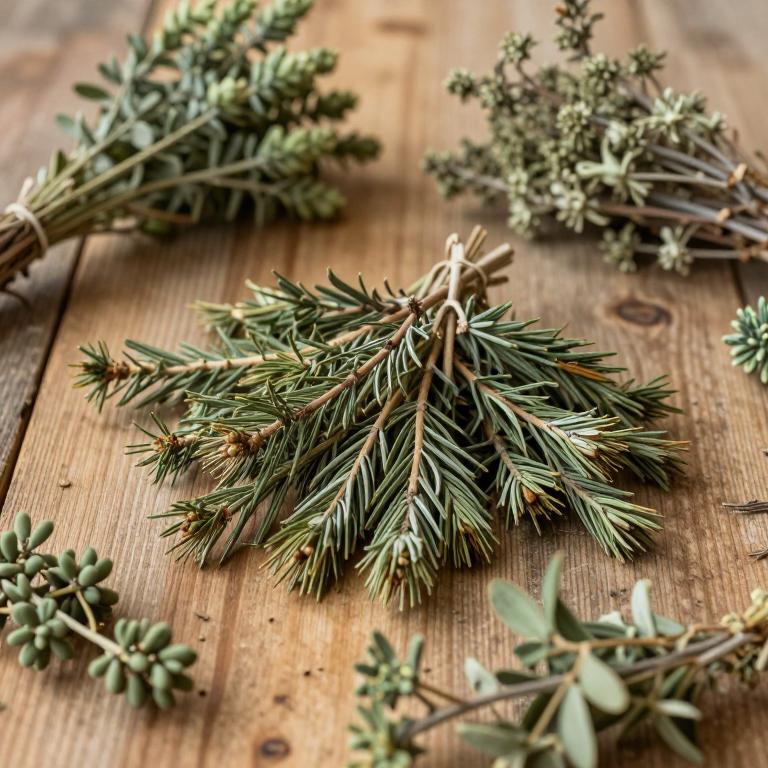
Ponderosa pine, scientifically known as Pinus ponderosa var. ponderosa, is a majestic evergreen native to western North America. Beyond its towering presence, this species holds significant ethnobotanical value. Historically, indigenous cultures utilized its resin, needles, and bark for various medicinal purposes, valuing its unique aromatic and therapeutic properties.
Names and Synonyms
Common Names
- ponderosa pine
- North Plateau Ponderosa Pine
- washoe pine
Scientific Names
Accepted name
Pinus ponderosa var. ponderosaSynonyms
- Pinus ponderosa var. parryana
- Pinus ponderosa var. nigricans
- Pinus ponderosa var. pendula
- Pinus jeffreyi var. nigricans
- Pinus ponderosa subsp. readiana
- Pinus ponderosa var. nana
- Pinus ponderosa f. crispata
- Pinus beardsleyi
- Pinus jeffreyi var. ambigua
- Pinus craigiana
- Pinus parryana
- Pinus ponderosa f. pendula
Regional and Traditional Names
French:
- pin ponderosa
- pin ponderosa typique
Sources: Wikidata, Catalogue of Life
Taxonomical Classification
This plant belongs to the kingdom Plantae and is classified under the phylum Streptophyta within the class Equisetopsida. It is further organized into the subclass Pinidae and the order Pinales, falling under the family Pinaceae. Finally, it is categorized within the genus Pinus as the specific variety ponderosa.
| Rank | Classification |
|---|---|
| Kingdom | Plantae |
| Phylum | Streptophyta |
| Class | Equisetopsida |
| Subclass | Pinidae |
| Order | Pinales |
| Family | Pinaceae |
| Genus | Pinus |
Sources: The World Checklist of Vascular Plants (WCVP)
Distribution
This plant exhibits a specific distribution across several regions within the European continent. In Northern Europe, its presence can be documented in Great Britain and Ireland. The species also extends its range further north into Sweden. Moving toward Middle Europe, the plant is found within the borders of Austria. Finally, its geographical reach includes the country of Germany.
| Region | Area |
|---|---|
| Northern Europe | Great Britain |
| Northern Europe | Ireland |
| Northern Europe | Sweden |
| Middle Europe | Austria |
| Middle Europe | Germany |
| Middle Europe | Hungary |
| Southwestern Europe | Spain |
| Southeastern Europe | Greece |
| Southeastern Europe | Italy |
| Southeastern Europe | Romania |
Sources: The World Checklist of Vascular Plants (WCVP)
Chemicals
Pinus ponderosa var. ponderosa has 2 reported phytochemicals identified across 0 scientific publications and several other databases. The most consistently reported chemicals include Pinosylvin, Pinosylvin monomethyl ether.
| Chemical | Supporting sources | Consensus |
|---|---|---|
| Pinosylvin | 1 supporting sources | ★☆☆☆☆ |
| Pinosylvin monomethyl ether | 1 supporting sources | ★☆☆☆☆ |
Pinosylvin
- Journal of industrial microbiology & biotechnology
Pinosylvin monomethyl ether
- Journal of industrial microbiology & biotechnology
Preparations
Pinus ponderosa var. ponderosa has 1 reported preparations identified across 0 scientific publications and several other databases. The most consistently reported preparations include bark extracts.
| Preparation | Supporting sources | Consensus |
|---|---|---|
| Bark extracts | 1 supporting sources | ★☆☆☆☆ |
Bark extracts
- Antioxidants (Basel, Switzerland)