Stone Pine
Pinus pinea · Accepted scientific name
Scientific literature: Very Extensive (307 studies) · ★★★★★
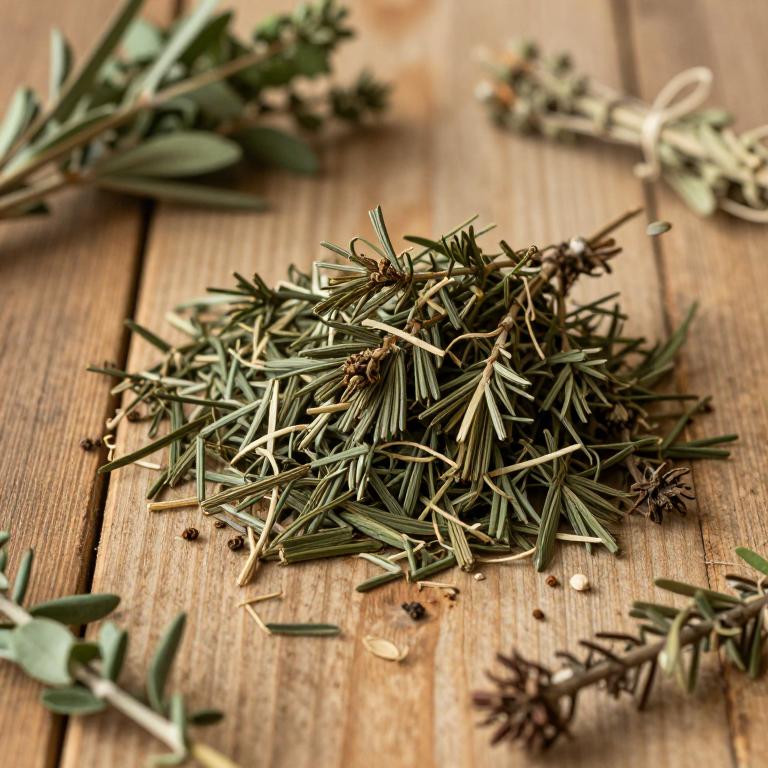
Stone Pine, scientifically known as Pinus pinea, is a majestic Mediterranean conifer renowned for its edible pine nuts. Beyond its culinary value, this species offers significant medicinal potential, containing bioactive compounds with antioxidant, anti-inflammatory, and antimicrobial properties. It remains a vital resource in traditional herbalism and modern pharmacological research.
Names and Synonyms
Common Names
- Stone Pine
- Italian Stone Pine
- Umbrella Pine
- parasol pine
- pignolia-nut pine
Scientific Names
Accepted name
Pinus pineaSynonyms
- Apinus pinea
- Pinus africana
- Pinus pinea var. maderiensis
- Pinus maderiensis
Regional and Traditional Names
Spanish:
- Pino albar
- Pino pinea
- Pino piñonero
- Pino manso
- Pino doncel
- Pino Piñonero
German:
- Pinie
- Schirm-Kiefer
- Mittelmeerkiefer
- Italienische Steinkiefer
- Mittelmeer-Kiefer
- Pinie
- Schirmkiefer
French:
- Pin parasol
- Pin franc
- Pin pignon
- Pin parasol
- Pin parasol
- Pin pignon
Sources: Wikidata, Catalogue of Life
Taxonomical Classification
This plant belongs to the kingdom Plantae and the phylum Streptophyta, falling under the class Equisetopsida and subclass Pinidae. It is classified within the order Pinales and the family Pinaceae. Finally, its taxonomic identity is defined by the genus Pinus.
| Rank | Classification |
|---|---|
| Kingdom | Plantae |
| Phylum | Streptophyta |
| Class | Equisetopsida |
| Subclass | Pinidae |
| Order | Pinales |
| Family | Pinaceae |
| Genus | Pinus |
Sources: The World Checklist of Vascular Plants (WCVP)
Distribution
This plant, known as Pinus pinea, exhibits a specific geographical distribution across the Mediterranean region. It is widely found throughout Southwestern Europe, occupying diverse coastal and inland habitats. Within this region, its presence is well-documented in the Balearic Islands and the island of Corsica. The species also thrives extensively across the mainland territories of France and Portugal. Furthermore, it maintains a significant and widespread presence throughout the various landscapes of Spain.
| Region | Area |
|---|---|
| Southwestern Europe | Baleares |
| Southwestern Europe | Corse |
| Southwestern Europe | France |
| Southwestern Europe | Portugal |
| Southwestern Europe | Spain |
| Southeastern Europe | Albania |
| Southeastern Europe | Greece |
| Southeastern Europe | Italy |
| Southeastern Europe | Kriti |
| Southeastern Europe | Sicilia |
Sources: The World Checklist of Vascular Plants (WCVP)
Botanical Identification
Ecology
The ecology of Pinus pinea is characterized by its preference for forest habitats, where it plays a significant role in the structuring of its ecosystem. This species exhibits a broad altitudinal distribution, thriving across a diverse range of topographic gradients. It is typically found at lower elevations, with a mean elevation of 331 m AMSL, but it is capable of ascending to significant heights, reaching a maximum elevation of 1600 m AMSL. The species can establish itself in environments as low as 50 m AMSL, demonstrating a high degree of adaptability to varying vertical profiles within its forest habitats.
- Elevational range max:
- 1600 m AMSL
- Elevational range mean:
- 331 m AMSL
- Elevational range min:
- 50 m AMSL
- Habitat :
- forest
Life history
The life history of Pinus pinea is characterized by a long-lived, perennial lifecycle, allowing the individual to persist and reproduce over many decades or even centuries. As a phanerophyte, its vital buds are located high above the ground on woody branches, a structural adaptation that defines its growth habit and survival strategy in its natural habitat. This phanerophyte life form ensures that the plant's regenerative organs are protected from various ground-level environmental stressors, supporting its continuous development and long-term presence within its ecosystem.
- Life form :
- phanerophyte
- Lifecycle :
- perennial
Morphology
The morphology of Pinus pinea is characterized by its growth form as a large, woody tree that is entirely self-supporting and does not function as a climber or a liana. As an independent organism, it lacks parasitic or epiphytic tendencies, maintaining a strictly terrestrial existence rather than an aquatic or semiaquatic one. The plant exhibits a robust, woody structure, typically reaching a significant stature with a height ranging from a minimum of 12 meters to a maximum of 25 meters.
- Aquatic :
- terrestrial
- Climber :
- self-supporting
- Epiphyte :
- terrestrial
- Growth form :
- tree
- Parasite :
- independent
- Plant height max:
- 25 m
- Plant height min:
- 12 m
- Woodiness :
- woody
Physiology
The physiology of Pinus pinea is characterized by specialized morphological and metabolic adaptations, most notably its use of the C3 photosynthetic pathway to facilitate carbon fixation. The foliage consists of acicular leaves, which are structurally optimized for environmental resilience, featuring dimensions that typically range from a minimum length of 8 cm to a maximum of 20 cm. These needle-like structures are notably slender, with a width varying between 0.15 cm and 0.2 cm. Furthermore, the plant exhibits a mean Specific Leaf Area (SLA) of 39 cm²/g, a metric that reflects the investment of biomass relative to the leaf surface area and plays a critical role in its resource acquisition and water-use efficiency strategies.
- Leaf form :
- acicular
- Leaf length max:
- 20 cm
- Leaf length min:
- 8 cm
- Leaf width max:
- 0.2 cm
- Leaf width min:
- 0.15 cm
- Photosynthetic pathway :
- C3
- Specific Leaf Area (SLA) mean:
- 39 cm²/g
Reproduction
The reproduction of Pinus pinea begins with its flowering period, which typically commences in April and concludes in June. The flowers are characterized by a brown color. Following fertilization, the plant develops dry, cone-type fruits that serve as the primary reproductive structures. These cones vary in size, with a length ranging from 8 to 15 cm and a width spanning between 7 and 10 cm. The seeds produced within these cones are substantial, featuring a seed length between 15 and 20 mm. In terms of mass, the seeds have a mean weight of approximately 0.717918333 g, with individual seed masses ranging from a minimum of 0.61013 g to a maximum of 0.76923 g. The dispersal syndrome of the species is classified as autochorous, meaning the seeds are dispersed via autochory.
- Dispersal syndrome :
- autochorous
- Flower colour :
- brown
- Flowering time :
- Apr
- Flowering time :
- Jun
- Fruit dryness :
- dry
- Fruit length max:
- 15 cm
- Fruit length min:
- 8 cm
- Fruit type :
- cone
- Fruit width max:
- 10 cm
- Fruit width min:
- 7 cm
- Seed length max:
- 20 mm
- Seed length min:
- 15 mm
- Seed mass max:
- 0.76923 g
- Seed mass mean:
- 0.717918333 g
- Seed mass min:
- 0.61013 g
Sources: Global Inventory of Floras and Traits (GIFT)
Chemicals
Pinus pinea has 45 reported phytochemicals identified across 0 scientific publications and several other databases. The most consistently reported chemicals include Ash, CALCIUM, COPPER, FAT, GLUTAMIC ACID.
| Chemical | Supporting sources | Consensus |
|---|---|---|
| Ash | 1 supporting sources | ★☆☆☆☆ |
| CALCIUM | 1 supporting sources | ★☆☆☆☆ |
| COPPER | 1 supporting sources | ★☆☆☆☆ |
| FAT | 1 supporting sources | ★☆☆☆☆ |
| GLUTAMIC ACID | 1 supporting sources | ★☆☆☆☆ |
| Gadoleic acid | 1 supporting sources | ★☆☆☆☆ |
| IRON | 1 supporting sources | ★☆☆☆☆ |
| Isoleucine | 1 supporting sources | ★☆☆☆☆ |
| K+ | 1 supporting sources | ★☆☆☆☆ |
| Monoterpenes | 1 supporting sources | ★☆☆☆☆ |
Ash
- Dr. Duke
CALCIUM
- Dr. Duke
COPPER
- Dr. Duke
FAT
- Dr. Duke
GLUTAMIC ACID
- Dr. Duke
Gadoleic acid
- Dr. Duke
IRON
- Dr. Duke
Isoleucine
- Dr. Duke
K+
- Brazilian journal of biology = Revista brasleira de biologia
Monoterpenes
- Planta medica
Activities
Pinus pinea has 258 reported activities identified across 0 scientific publications and several other databases. The most consistently reported activities include 5-Alpha-Reductase-Inhibitor, ACE-Inhibitor, Adjuvant, Allergenic, Alpha-Reductase-Inhibitor.
| Activity | Supporting sources | Consensus |
|---|---|---|
| 5-Alpha-Reductase-Inhibitor | 1 supporting sources | ★☆☆☆☆ |
| ACE-Inhibitor | 1 supporting sources | ★☆☆☆☆ |
| Adjuvant | 1 supporting sources | ★☆☆☆☆ |
| Allergenic | 1 supporting sources | ★☆☆☆☆ |
| Alpha-Reductase-Inhibitor | 1 supporting sources | ★☆☆☆☆ |
| Analgesic | 1 supporting sources | ★☆☆☆☆ |
| Anemiagenic | 1 supporting sources | ★☆☆☆☆ |
| Angiotensin-Receptor-Blocker | 1 supporting sources | ★☆☆☆☆ |
| AntiADD | 1 supporting sources | ★☆☆☆☆ |
| AntiBPH | 1 supporting sources | ★☆☆☆☆ |
5-Alpha-Reductase-Inhibitor
- Dr. Duke
ACE-Inhibitor
- Dr. Duke
Adjuvant
- Dr. Duke
Allergenic
- Dr. Duke
Alpha-Reductase-Inhibitor
- Dr. Duke
Analgesic
- Dr. Duke
Anemiagenic
- Dr. Duke
Angiotensin-Receptor-Blocker
- Dr. Duke
AntiADD
- Dr. Duke
AntiBPH
- Dr. Duke
Conditions
Pinus pinea has 1 reported investigations on conditions identified across 0 scientific publications and several other databases. The most consistently reported conditions include wound healing.
| Condition | Supporting sources | Consensus |
|---|---|---|
| Wound healing | 1 supporting sources | ★☆☆☆☆ |
Wound healing
- Journal of ethnopharmacology
Preparations
Pinus pinea has 5 reported preparations identified across 0 scientific publications and several other databases. The most consistently reported preparations include chloroform, essential oils obtained from the cones, methanol, water, wood essential oils.
| Preparation | Supporting sources | Consensus |
|---|---|---|
| Chloroform | 1 supporting sources | ★☆☆☆☆ |
| Essential oils obtained from the cones | 1 supporting sources | ★☆☆☆☆ |
| Methanol | 1 supporting sources | ★☆☆☆☆ |
| Water | 1 supporting sources | ★☆☆☆☆ |
| Wood essential oils | 1 supporting sources | ★☆☆☆☆ |
Chloroform
- Turkish journal of medical sciences
Essential oils obtained from the cones
- Journal of ethnopharmacology
Methanol
- Turkish journal of medical sciences
Water
- Turkish journal of medical sciences
Wood essential oils
- Planta medica