Pinus pinaster pinaster
Pinus pinaster subsp. pinaster · Accepted scientific name
Scientific literature: Very Sparse (3 studies) · ★☆☆☆☆
Pinus pinaster pinaster, scientifically known as Pinus pinaster subsp. pinaster, is a resilient Mediterranean conifer valued for its therapeutic potential. Renowned for its aromatic resin and essential oils, this subspecies offers significant medicinal benefits, particularly in respiratory and antiseptic applications, making it a vital resource in traditional herbal medicine.
- Family
- Pinaceae
- Native range
- Europe
- Parts used
- Not available
- Common names
- Pinus Pinaster Pinaster · Maritime Pine
- Scientific synonyms
- Pinus Halepensis Var. Maritima · Pinus Pinaster Var. Lemoniana · 11 more
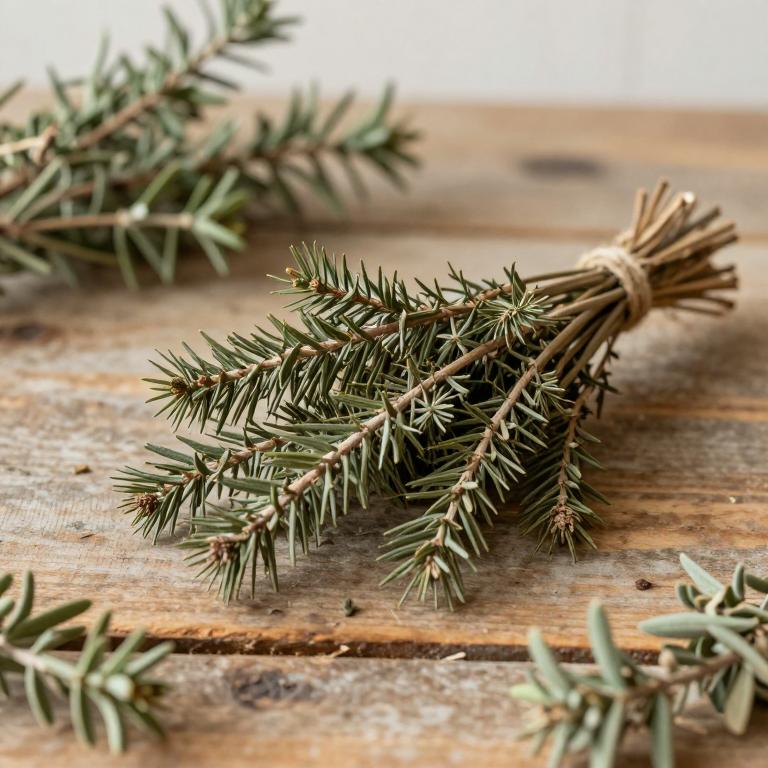
Names and Synonyms
Common Names
- Pinus pinaster pinaster
- Maritime Pine
Scientific Names
Accepted name
Pinus pinaster subsp. pinasterSynonyms
- Pinus halepensis var. maritima
- Pinus pinaster var. lemoniana
- Pinus pinaster subsp. acutisquama
- Pinus maritima var. major
- Pinus maritima var. minor
- Pinus pinaster var. acutisquama
- Pinus maritima var. glomerata
- Pinus pinaster var. pendula
- Pinus lemoniana
- Pinus syrtica
- Pinus nigrescens
- Pinus pinaster var. minor
- Pinus pinaster subsp. minor
Regional and Traditional Names
Spanish:
- Pino gallego
Sources: Wikidata, Catalogue of Life
Taxonomical Classification
This plant belongs to the kingdom Plantae and the phylum Streptophyta, falling under the class Equisetopsida and subclass Pinidae. Within the order Pinales and family Pinaceae, it is classified under the genus Pinus as the subspecies Pinus pineaster subsp. pineaster.
| Rank | Classification |
|---|---|
| Kingdom | Plantae |
| Phylum | Streptophyta |
| Class | Equisetopsida |
| Subclass | Pinidae |
| Order | Pinales |
| Family | Pinaceae |
| Genus | Pinus |
Sources: The World Checklist of Vascular Plants (WCVP)
Distribution
This plant exhibits a diverse range of habitats across several European regions. In Northern Europe, its presence is noted in both Great Britain and Ireland. Moving toward Middle Europe, the subspecies can also be found within Belgium. Its distribution continues into Southwestern Europe, where it is established in France. Finally, the geographical range extends further south to include the coastal areas of Portugal.
| Region | Area |
|---|---|
| Northern Europe | Great Britain |
| Northern Europe | Ireland |
| Middle Europe | Belgium |
| Southwestern Europe | France |
| Southwestern Europe | Portugal |
| Southwestern Europe | Spain |
| Southeastern Europe | Albania |
| Southeastern Europe | Greece |
| Southeastern Europe | Türkiye-in-Europe |
| Southeastern Europe | NW. Balkan Pen. |
Sources: The World Checklist of Vascular Plants (WCVP)
Chemicals
Pinus pinaster subsp. pinaster has 2 reported phytochemicals identified across 0 scientific publications and several other databases. The most consistently reported chemicals include Flavonoids, Procyanidins.
| Chemical | Supporting sources | Consensus |
|---|---|---|
| Flavonoids | 1 supporting sources | ★☆☆☆☆ |
| Procyanidins | 1 supporting sources | ★☆☆☆☆ |
Flavonoids
- Free radical biology & medicine
Procyanidins
- Free radical biology & medicine
Preparations
Pinus pinaster subsp. pinaster has 1 reported preparations identified across 0 scientific publications and several other databases. The most consistently reported preparations include water extract.
| Preparation | Supporting sources | Consensus |
|---|---|---|
| Water extract | 1 supporting sources | ★☆☆☆☆ |
Water extract
- Antioxidants (Basel, Switzerland)