Macedonian Pine
Pinus peuce · Accepted scientific name
Scientific literature: Very Sparse (5 studies) · ★☆☆☆☆
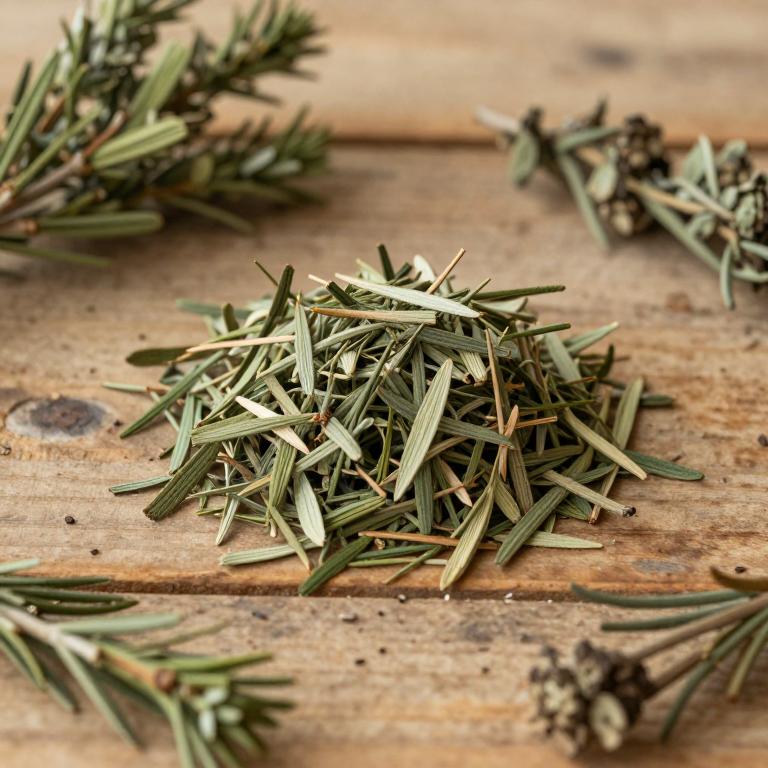
Macedonian Pine, scientifically known as Pinus peuce, is a majestic evergreen native to the high-altitude mountains of the Balkans. Renowned for its elegant, narrow silhouette, this resilient conifer offers medicinal potential through its resin and needles, which are traditionally valued for their soothing, antiseptic, and restorative botanical properties.
Names and Synonyms
Common Names
- Macedonian Pine
- Balkan Pine
- Greek stone pine
Scientific Names
Accepted name
Pinus peuceSynonyms
- Pinus excelsa var. peuce
- Strobus peuce
- Pinus cembra var. fruticosa
Regional and Traditional Names
Spanish:
- Pino macedonio
- Pino de Macedonia
- Pino de Macedonia
German:
- Rumelische Kiefer
- Rumelische Weymouthskiefer
- Mazedonien-Kiefer
- rumelische Kiefer
- rumelische Strobe
- Balkankiefer
- Mazedonien-Kiefer
- Mazedonische Kiefer
French:
- Pin de Macédoine
- Pin de Macedoine
- pin de Macédoine
- pin des Balkans
Sources: Wikidata, Catalogue of Life
Taxonomical Classification
This plant belongs to the kingdom Plantae and is classified under the phylum Streptophyta and class Equisetopsida. Within the subclass Pinidae and order Pinales, it is a member of the family Pinaceae. Finally, it is categorized under the genus Pinus.
| Rank | Classification |
|---|---|
| Kingdom | Plantae |
| Phylum | Streptophyta |
| Class | Equisetopsida |
| Subclass | Pinidae |
| Order | Pinales |
| Family | Pinaceae |
| Genus | Pinus |
Sources: The World Checklist of Vascular Plants (WCVP)
Distribution
This plant exhibits a specific distribution across several regions of Northern Europe. It can be found growing in the natural landscapes of Denmark. Additionally, its presence extends to the northern territories of Finland. The species is also documented within the borders of Norway and Sweden. Finally, this medicinal plant is known to inhabit parts of Great Britain.
| Region | Area |
|---|---|
| Northern Europe | Denmark |
| Northern Europe | Finland |
| Northern Europe | Great Britain |
| Northern Europe | Norway |
| Northern Europe | Sweden |
| Southeastern Europe | Albania |
| Southeastern Europe | Bulgaria |
| Southeastern Europe | Greece |
| Southeastern Europe | NW. Balkan Pen. |
Sources: The World Checklist of Vascular Plants (WCVP)
Botanical Identification
Life history
The life history of Pinus peuce is characterized by a perennial lifecycle, allowing the individual to persist through many growing seasons and adapt to the rigorous conditions of its high-altitude habitats. As a phanerophyte, its reproductive buds are located on elevated branches well above the ground, a structural adaptation that protects the plant's vital growing points from harsh environmental stressors. This phanerophyte life form ensures that the plant maintains a significant vertical presence, enabling it to compete effectively for light and withstand the climatic extremes typical of its ecological niche.
- Life form :
- phanerophyte
- Lifecycle :
- perennial
Morphology
The morphology of Pinus peuce is characterized by its growth form as a large, woody tree that is entirely self-supporting and non-climbing. As a terrestrial species, it is neither aquatic nor epiphytic, maintaining an independent existence without parasitic tendencies. The plant exhibits a robust, woody structure, reaching significant dimensions with a height that typically ranges from a minimum of 35 meters to a maximum of 40 meters.
- Aquatic :
- terrestrial
- Climber :
- self-supporting
- Epiphyte :
- terrestrial
- Growth form :
- tree
- Parasite :
- independent
- Plant height max:
- 40 m
- Plant height min:
- 35 m
- Woodiness :
- woody
Physiology
The physiology of Pinus peuce is characterized by specialized adaptations to high-altitude, subalpine environments, primarily governed by its metabolic processes. The plant utilizes a C3 photosynthetic pathway, which is typical for most gymnosperms, involving the direct fixation of atmospheric carbon dioxide via the enzyme RuBisCO within the mesophyll cells. To compensate for the physiological stresses of its montane habitat, such as intense UV radiation and seasonal water scarcity, the plant exhibits robust mechanisms for regulating gas exchange and stomatal conductance. Its physiological framework includes high levels of antioxidant activity to mitigate photoinhibition and a sophisticated hydraulic system designed to maintain water transport under freezing temperatures, ensuring efficient carbon assimilation despite the environmental constraints of its niche.
- Photosynthetic pathway :
- C3
Reproduction
Reproduction in Pinus peuce is facilitated through the production of cones that house specialized seeds, which exhibit specific morphological characteristics regarding their weight. The seeds produced by this species vary in size, with a recorded minimum seed mass of 0.03697 g and a maximum seed mass reaching up to 0.06 g. On average, the seed mass for this plant is approximately 0.0448814 g, reflecting a consistent range of reproductive output essential for its dispersal and establishment in its natural habitat.
- Seed mass max:
- 0.06 g
- Seed mass mean:
- 0.0448814 g
- Seed mass min:
- 0.03697 g
Sources: Global Inventory of Floras and Traits (GIFT)
Chemicals
Pinus peuce has 1 reported phytochemicals identified across 0 scientific publications and several other databases. The most consistently reported chemicals include Monoterpenes.
| Chemical | Supporting sources | Consensus |
|---|---|---|
| Monoterpenes | 1 supporting sources | ★☆☆☆☆ |
Monoterpenes
- Chemistry & biodiversity
Activities
Pinus peuce has 2 reported activities identified across 0 scientific publications and several other databases. The most consistently reported activities include Anticancer, Cytotoxic.
| Activity | Supporting sources | Consensus |
|---|---|---|
| Anticancer | 1 supporting sources | ★☆☆☆☆ |
| Cytotoxic | 1 supporting sources | ★☆☆☆☆ |
Anticancer
- Pharmaceutical biology
Cytotoxic
- Pharmaceutical biology
Conditions
Pinus peuce has 2 reported investigations on conditions identified across 0 scientific publications and several other databases. The most consistently reported conditions include Inflammation, cancer.
| Condition | Supporting sources | Consensus |
|---|---|---|
| Inflammation | 1 supporting sources | ★☆☆☆☆ |
| Cancer | 1 supporting sources | ★☆☆☆☆ |
Inflammation
- Pharmaceutical biology
Cancer
- Pharmaceutical biology