Japanese white pine
Pinus parviflora · Accepted scientific name
Scientific literature: Very Sparse (1 studies) · ★☆☆☆☆
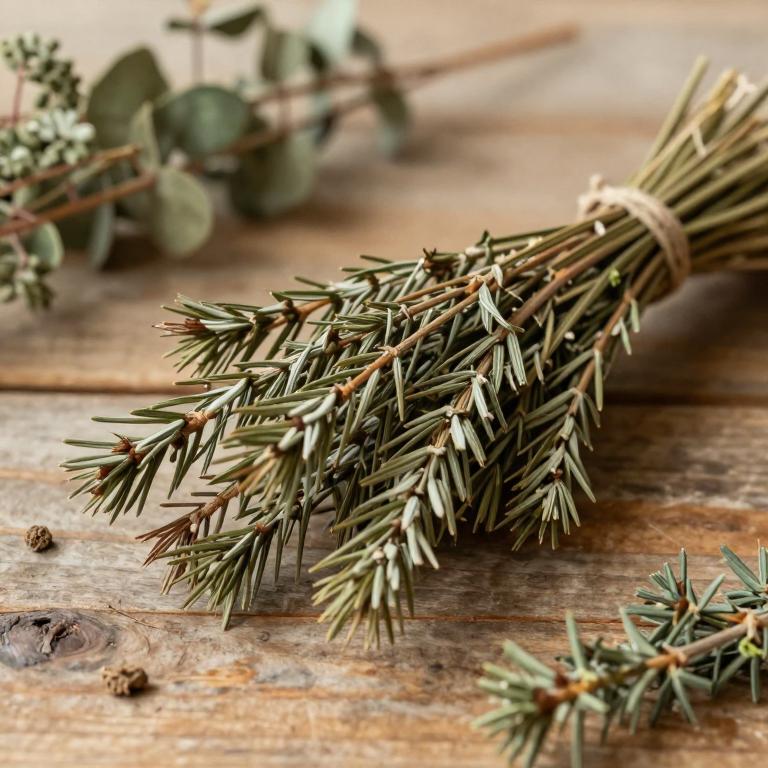
Japanese white pine, scientifically known as Pinus parviflora, is a revered evergreen native to East Asia. Renowned for its elegant, slender needles and nutritious seeds, it holds significant medicinal value. Traditionally used in holistic practices, its extracts are studied for antioxidant properties and their potential to support cognitive health.
- Family
- Pinaceae
- Native range
- Asia-Temperate
- Parts used
- Not available
- Common names
- Japanese White Pine · Five-Needle Pine · 1 more
- Scientific synonyms
- Pinus Cembra Var. Japonica · Strobus Parviflora
Names and Synonyms
Common Names
- Japanese White Pine
- five-needle pine
- bonsai tree
Scientific Names
Accepted name
Pinus parvifloraSynonyms
- Pinus cembra var. japonica
- Strobus parviflora
Regional and Traditional Names
Spanish:
- pino blanco japonés
- Pino blanco japonés
German:
- Mädchen-Kiefer
- Mädchenkiefer
- Mädchenkiefer
- Mädchen-Kiefer
French:
- Pin blanc du Japon
- Pin blanc du Japon
- Pin à cinq aiguilles
Sources: Wikidata, Catalogue of Life
Taxonomical Classification
This plant belongs to the kingdom Plantae and the phylum Streptophyta, falling under the class Equisetopsida and subclass Pinidae. It is further classified within the order Pinales and the family Pinaceae. Finally, it is categorized under the genus Pinus, specifically as the species Pinus parviflora.
| Rank | Classification |
|---|---|
| Kingdom | Plantae |
| Phylum | Streptophyta |
| Class | Equisetopsida |
| Subclass | Pinidae |
| Order | Pinales |
| Family | Pinaceae |
| Genus | Pinus |
Sources: The World Checklist of Vascular Plants (WCVP)
Distribution
This plant exhibits a wide geographical distribution across several key regions of Eastern Asia. In the Russian Far East, its presence can be specifically noted within the Kuril Islands. Moving southward, the species is also widely established throughout the various regions of Japan. Furthermore, the plant's natural range extends into the Korean Peninsula. Together, these locations highlight the specific ecological territories where Pinus parviflora thrives.
| Region | Area |
|---|---|
| Russian Far East | Kuril Is. |
| Eastern Asia | Japan |
| Eastern Asia | Korea |
Sources: The World Checklist of Vascular Plants (WCVP)
Botanical Identification
Life history
The life history of Pinus parviflora is characterized by its classification as a phanerophyte, specifically exhibiting traits of both phanerophyte and nanophanerophyte life forms. As a perennial conifer, it maintains its buds well above the ground level, allowing it to endure diverse environmental conditions and seasonal changes. The plant's development follows a long-term growth strategy where it establishes a robust woody structure, transitioning from a seedling to a mature tree that persists through many years. Its life cycle involves complex reproductive processes, typically relying on wind pollination and the production of cones to facilitate seed dispersal, ensuring the continuation of its lineage within its natural habitat.
- Life form :
- phanerophyte
Morphology
The morphology of Pinus parviflora is characterized by its stature as a large, self-supporting tree that exhibits a distinctly woody structure. As a terrestrial species, it does not inhabit aquatic or semiaquatic environments, nor does it function as an epiphyte or a climber, maintaining a robust and independent growth form. Being an independent organism, it lacks parasitic tendencies, relying instead on its substantial woody biomass to support its vertical development and architectural complexity.
- Aquatic :
- terrestrial
- Climber :
- self-supporting
- Epiphyte :
- terrestrial
- Growth form :
- tree
- Parasite :
- independent
- Woodiness :
- woody
Physiology
The physiology of Pinus parviflora is characterized by its specialized adaptations to temperate and subalpine environments, primarily driven by its carbon fixation mechanisms. The plant utilizes a C3 photosynthetic pathway, which involves the direct fixation of atmospheric carbon dioxide by the enzyme RuBisCO within the mesophyll cells. This metabolic process is integrated with a highly efficient water-use strategy typical of conifers, where needle-like leaves minimize transpirational water loss through a thick cuticle and sunken stomata. The physiological performance of its C3 pathway is closely linked to its seasonal rhythms, showing significant adjustments in enzymatic activity and stomatal conductance to manage light interception and temperature fluctuations. Furthermore, its physiological resilience is supported by robust tracheid systems and specialized resin ducts that aid in maintaining hydraulic conductivity and defense against environmental stressors, ensuring sustained metabolic function despite varying climatic conditions.
- Photosynthetic pathway :
- C3
Reproduction
The reproduction of Pinus parviflora is characterized by a complex reproductive cycle involving the development of woody cones and the production of winged seeds. The reproductive success of the species is closely linked to the physical properties of its seeds, which exhibit specific mass variations. On average, the seed mass is measured at 0.10227 g, reflecting the energy reserves allocated to each individual embryo. However, there is notable phenotypic plasticity or variation within the population, with seed masses ranging from a minimum of 0.0635 g to a maximum of 0.1163 g. This variation in seed mass can influence seedling vigor and the ability of the progeny to establish themselves in competitive forest environments.
- Seed mass max:
- 0.1163 g
- Seed mass mean:
- 0.10227 g
- Seed mass min:
- 0.0635 g
Sources: Global Inventory of Floras and Traits (GIFT)
Chemicals
Pinus parviflora has 1 reported phytochemicals identified across 0 scientific publications and several other databases. The most consistently reported chemicals include LIGNIN.
| Chemical | Supporting sources | Consensus |
|---|---|---|
| LIGNIN | 1 supporting sources | ★☆☆☆☆ |
LIGNIN
- Chemical & pharmaceutical bulletin