Austrian pine
Pinus nigra subsp. nigra · Accepted scientific name
Scientific literature: Very Sparse (19 studies) · ★☆☆☆☆
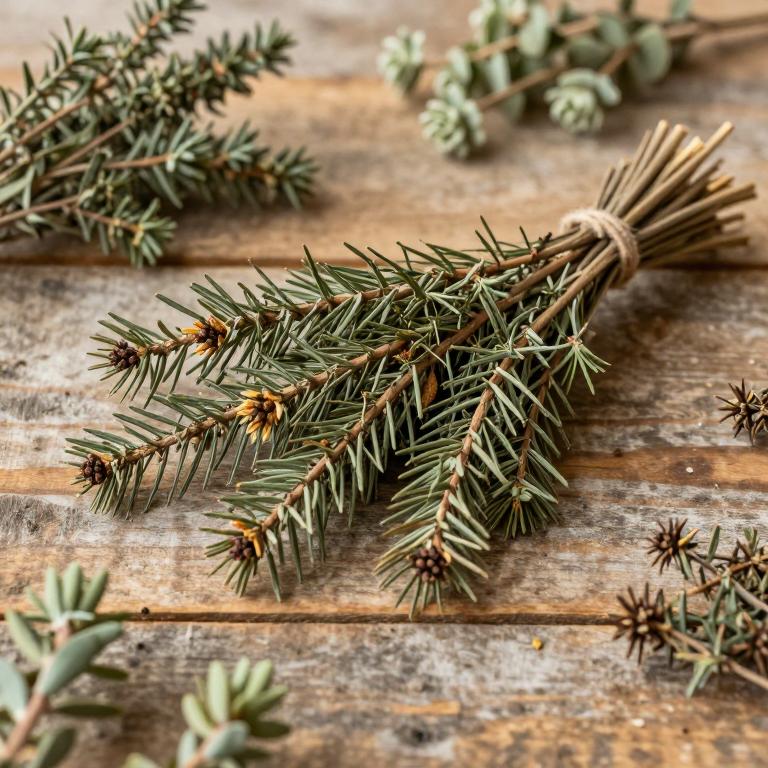
Austrian pine, scientifically known as Pinus nigra subsp. nigra, is a resilient evergreen valued for its robust structure and adaptability. While primarily ornamental, its resin and bark possess traditional medicinal properties, historically used for their antiseptic and anti-inflammatory qualities, making it a significant species in ethnobotanical studies.
Names and Synonyms
Common Names
- Austrian pine
- Austrian Pine
- Black Pine
Scientific Names
Accepted name
Pinus nigra subsp. nigraSynonyms
- Pinus laricio var. nigricans
- Pinus laricio var. austriaca
- Pinus laricio subsp. austriaca
- Pinus nigra var. austriaca
- Pinus nigra var. pyramidata
- Pinus nigra f. pygmaea
- Pinus nigra f. prostrata
- Pinus laricio subsp. nigricans
- Pinus laricio proles austriaca
- Pinus banatica
- Pinus nigra var. gocensis
- Pinus nigra var. banatica
- Pinus laricio var. pyramidata
- Pinus laricio var. pygmaea
- Pinus nigra f. pyramidalis
- Pinus nigricans
- Pinus austriaca
- Abies marylandica
- Abies novae-angliae
- Pinus nigra subsp. croatica
- Pinus nigra f. hornibrookiana
- Pinus laricio var. moseri
- Pinus nigra f. moseri
- Pinus laricio var. prostrata
Regional and Traditional Names
Spanish:
- pino negral de Austria
- Pino negral de Austria
German:
- Österreichische Schwarzkiefer
- Pin noir commun
- Schwarzföhre
- Schwarzkiefer
- Schwarz-Kiefer
French:
- pin noir d'Autriche
- pin noir commun
- pin noir
- Pin noir d'Autriche
Sources: Wikidata, Catalogue of Life
Taxonomical Classification
This plant belongs to the kingdom Plantae and the phylum Streptophyta. Within the class Equisetopsida and subclass Pinidae, it is classified under the order Pinales and the family Pinaceae. Ultimately, its taxonomic hierarchy identifies it under the genus Pinus as the subspecies Pinus nigra subsp. nigra.
| Rank | Classification |
|---|---|
| Kingdom | Plantae |
| Phylum | Streptophyta |
| Class | Equisetopsida |
| Subclass | Pinidae |
| Order | Pinales |
| Family | Pinaceae |
| Genus | Pinus |
Sources: The World Checklist of Vascular Plants (WCVP)
Distribution
This plant exhibits a specific distribution pattern focused primarily across Northern Europe. It can be found growing within the natural landscapes of Denmark and Great Britain. The species also extends its range into the island of Ireland. Furthermore, its presence is noted throughout the Scandinavian regions of Norway and Sweden. Together, these locations define the northern territories where this subspecies is established.
| Region | Area |
|---|---|
| Northern Europe | Denmark |
| Northern Europe | Great Britain |
| Northern Europe | Ireland |
| Northern Europe | Norway |
| Northern Europe | Sweden |
| Middle Europe | Austria |
| Middle Europe | Belgium |
| Middle Europe | Czechia-Slovakia |
| Middle Europe | Germany |
| Middle Europe | Hungary |
Sources: The World Checklist of Vascular Plants (WCVP)
Plant Parts
Pinus nigra subsp. nigra has 2 reported plant parts identified across 2 scientific publications and several other databases that are studied for medicinal purposes. The most consistently reported plant part include fruit, leaf.
| Plant part | Supporting sources | Consensus |
|---|---|---|
| Fruit | 1 supporting sources | ★☆☆☆☆ |
| Leaf | 1 supporting sources | ★☆☆☆☆ |
Fruit
- Jundishapur journal of natural pharmaceutical products
Leaf
- Jundishapur journal of natural pharmaceutical products
Chemicals
Pinus nigra subsp. nigra has 13 reported phytochemicals identified across 2 scientific publications and several other databases. The most consistently reported chemicals include (E)-Caryophyllene, DEHYDROABIETIC ACID, Germacrene D, Hydroxycinnamic Acids, LIMONENE.
| Chemical | Supporting sources | Consensus |
|---|---|---|
| (E)-Caryophyllene | 1 supporting sources | ★☆☆☆☆ |
| DEHYDROABIETIC ACID | 1 supporting sources | ★☆☆☆☆ |
| Germacrene D | 1 supporting sources | ★☆☆☆☆ |
| Hydroxycinnamic Acids | 1 supporting sources | ★☆☆☆☆ |
| LIMONENE | 1 supporting sources | ★☆☆☆☆ |
| Lignans | 1 supporting sources | ★☆☆☆☆ |
| MYRCENE | 1 supporting sources | ★☆☆☆☆ |
| NEOABIETIC ACID | 1 supporting sources | ★☆☆☆☆ |
| PALUSTRIC ACID | 1 supporting sources | ★☆☆☆☆ |
| PIMARIC ACID | 1 supporting sources | ★☆☆☆☆ |
(E)-Caryophyllene
- Pharmaceutics
DEHYDROABIETIC ACID
- Molecules (Basel, Switzerland)
Germacrene D
- Pharmaceutics
Hydroxycinnamic Acids
- Plants (Basel, Switzerland)
LIMONENE
- Pharmaceutics
Lignans
- Plants (Basel, Switzerland)
MYRCENE
- Pharmaceutics
NEOABIETIC ACID
- Molecules (Basel, Switzerland)
PALUSTRIC ACID
- Molecules (Basel, Switzerland)
PIMARIC ACID
- Molecules (Basel, Switzerland)
Preparations
Pinus nigra subsp. nigra has 4 reported preparations identified across 2 scientific publications and several other databases. The most consistently reported preparations include Balm, Methanol extracts of leaves and fruits, heartwood, resins.
| Preparation | Supporting sources | Consensus |
|---|---|---|
| Balm | 1 supporting sources | ★☆☆☆☆ |
| Methanol extracts of leaves and fruits | 1 supporting sources | ★☆☆☆☆ |
| Heartwood | 1 supporting sources | ★☆☆☆☆ |
| Resins | 1 supporting sources | ★☆☆☆☆ |
Balm
- Plants (Basel, Switzerland)
Methanol extracts of leaves and fruits
- Jundishapur journal of natural pharmaceutical products
Heartwood
- Molecules (Basel, Switzerland)
Resins
- Plants (Basel, Switzerland)