Pinus montana
Pinus mugo · Accepted scientific name
Scientific literature: Very Extensive (530 studies) · ★★★★★
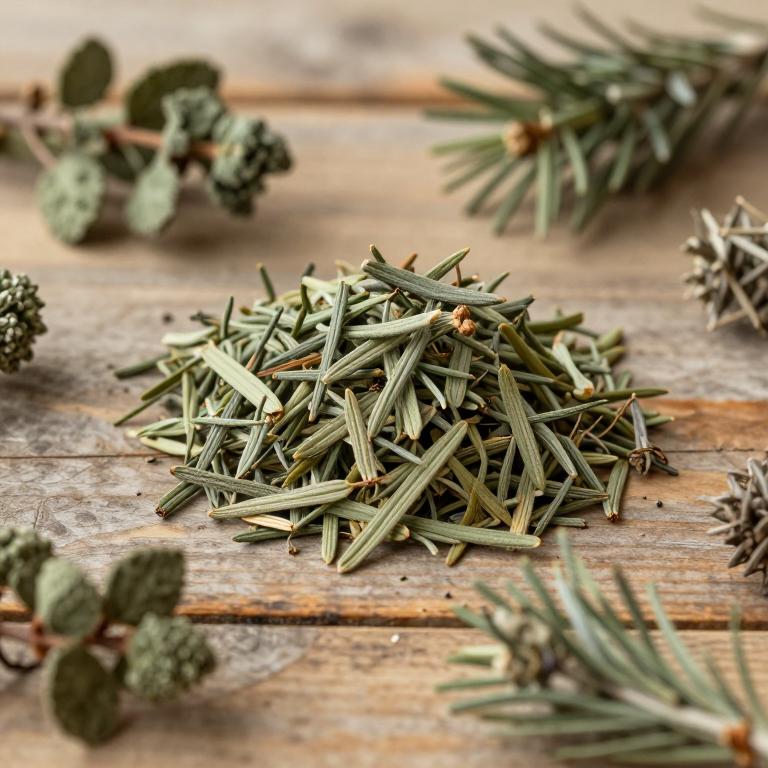
Pinus montana, scientifically known as Pinus mugo, is a resilient dwarf mountain pine native to Europe's high-altitude regions. Valued in traditional medicine, its resin and needles offer potent antioxidant, anti-inflammatory, and antimicrobial properties. This hardy shrub is frequently utilized in aromatherapy and topical remedies to support respiratory and joint health.
Names and Synonyms
Common Names
- Swiss mountain pine
- dwarf mountain pine
- mountain pine
- mugho pine
- mugo pine
- scrub mountain pine
- Dwarf Mountain-pine
Scientific Names
Accepted name
Pinus mugoSynonyms
- Pinus montana subsp. mughus
- Pinus mugo subsp. mughus
- Pinus sylvestris subsp. montana
- Pinus mugo f. slavinii
- Pinus montana subsp. prostrata
- Pinus montana
- Pinus pumilio var. oblongata
- Pinus mugo var. arborea
- Pinus mughus f. applanata
- Pinus sylvestris var. montana
- Pinus montana subsp. mughus
- Pinus mugo f. applanata
- Pinus montana var. mughus
- Pinus mugo var. mughus
- Pinus mughus
- Pinus mugo subsp. mughus
- Pinus sylvestris var. mugho
- Pinus sylvestris var. pumilio
- Pinus mughus var. pumilio
- Pinus montana f. slavinii
- Pinus montana var. pumilio
- Pinus mugo subsp. pumilio
- Pinus uncinata var. pumilio
- Pinus montana subsp. pumilio
- Pinus pumilio
- Pinus mugo var. pumilio
- Pinus mugo var. compacta
- Pinus pumilio var. fischeri
- Pinus mugo f. compacta
- Pinus pumilio var. rubriflora
- Pinus sudeticus
- Pinus mughus var. decumbens
- Pinus wettsteinii
- Pinus mughus var. impressa
- Pinus pumilio var. applanata
- Pinus pumilio var. gibba
- Pinus montana var. gibba
- Pinus montana var. impressa
- Pinus squamosa
- Pinus montana var. applanata
- Pinus mughus var. bicolor
- Pinus magellensis
- Pinus mughus var. brevispina
- Pinus carpathicus
- Pinus mughus var. depressa
- Pinus mughus var. laeta
- Pinus mughus var. leptoclada
- Pinus mughus var. longispina
- Pinus mughus var. lutescens
- Pinus mughus var. macroptera
- Pinus mughus var. rufa
- Pinus pumilio var. atrata
- Pinus pumilio var. cinnamomea
- Pinus pumilio var. echinata
- Pinus pumilio var. ferruginea
- Pinus pumilio var. fursa
- Pinus pumilio var. incurva
- Pinus pumilio var. limbata
- Pinus pumilio var. marginata
- Pinus pumilio var. nitida
- Pinus pumilio var. phaeoptera
- Pinus pumilio var. pura
- Pinus pumilio var. repressa
- Pinus pumilio var. revoluta
- Pinus pumilio var. striata
- Pinus pumilio var. turbinata
- Pinus pumilio var. variabilis
- Pinus pumilio var. virens
- Pinus × obliqua var. centrapedunculata
- Pinus montana var. centrapedunculata
- Pinus montana var. pyramidalis
- Pinus pumilio var. nasuta
- Pinus montana var. arborea
- Pinus montana subsp. arborea
- Pinus montana var. frutescens-erecta
- Pinus montana var. prostrata
- Pinus montana subsp. frutescens-erecta
- Pinus mugo var. nana
- Pinus mughus f. pumilio
- Pinus sylvestris subsp. pumilio
Regional and Traditional Names
Spanish:
- Pinus montana
- pino de montaña
- pino negro
German:
- Bergkiefer
- Latschenkiefer
- Legforche
- Krummholz-Kiefer
- Krüppelkiefer
- Pinus montana
- Latschen-Kiefer
- Bergföhre
- Berg-Kiefer
- Legföhre
- Legkiefer
- Bergkiefer
- Krummholzkiefer
- Latschenkiefer
- Gewöhnliche Krummholz-Kiefer
- Latsche
- Zwerg-Krummholzkiefer
- Berg-Foehre
French:
- pin des montagnes
- pin de montagnes
- pin de montagne
- pin buissonnant
- pin mugo
- Pin de montagne
Sources: Wikidata, Catalogue of Life
Taxonomical Classification
This plant belongs to the kingdom Plantae and the phylum Streptophyta, falling under the class Equisetopsida and subclass Pinidae. Within the order Pinales and family Pinaceae, it is classified under the genus Pinus. Specifically, Pinus mugo represents a distinct species within this botanical hierarchy.
| Rank | Classification |
|---|---|
| Kingdom | Plantae |
| Phylum | Streptophyta |
| Class | Equisetopsida |
| Subclass | Pinidae |
| Order | Pinales |
| Family | Pinaceae |
| Genus | Pinus |
Sources: The World Checklist of Vascular Plants (WCVP)
Distribution
This plant exhibits a specific distribution pattern across the northern regions of Europe. It can be found growing naturally within the landscapes of Denmark. Its presence extends further west to the islands of Great Britain and Ireland. Additionally, the species is well-established across the Scandinavian Peninsula. Specifically, you can locate these plants throughout the territories of Norway and Sweden.
| Region | Area |
|---|---|
| Northern Europe | Denmark |
| Northern Europe | Great Britain |
| Northern Europe | Ireland |
| Northern Europe | Norway |
| Northern Europe | Sweden |
| Middle Europe | Austria |
| Middle Europe | Czechia-Slovakia |
| Middle Europe | Germany |
| Middle Europe | Poland |
| Middle Europe | Switzerland |
Sources: The World Checklist of Vascular Plants (WCVP)
Botanical Identification
Ecology
The ecology of Pinus mugo is characterized by its specialized adaptation to montane environments, where it thrives in high-altitude ecosystems typically ranging from subalpine to alpine zones. This species is highly resilient to the harsh climatic conditions of mountain ranges, exhibiting a strong tolerance for extreme temperature fluctuations, heavy snow loads, and intense ultraviolet radiation. It frequently occupies rocky slopes, scree fields, and moraines, playing a crucial role in stabilizing soil and preventing erosion in fragile mountain terrains. As a pioneer species, it often colonizes nutrient-poor, acidic soils, contributing to primary succession by creating microhabitats that support diverse alpine flora and fauna. Its growth form—often appearing as a prostrate shrub in wind-exposed areas or a small tree in more sheltered spots—is an ecological strategy to minimize physical damage from wind and to utilize snow cover as thermal insulation during severe winters.
- Habitat :
- Montane
Life history
The life history of Pinus mugo is characterized by its status as a perennial species, ensuring its long-term persistence within its natural habitats. Depending on the specific environmental conditions and available space, its growth habit can transition between different life forms, manifesting as a phanerophyte when growing as a larger shrub or tree, or as a nanophanerophyte when maintaining a more stunted, low-growing stature. Throughout its existence, the plant maintains an evergreen deciduousness, retaining its needle-like foliage year-round to facilitate continuous photosynthetic potential.
- Deciduousness :
- evergreen
- Life form :
- nanophanerophyte
- Life form :
- phanerophyte
- Lifecycle :
- perennial
Morphology
The morphology of Pinus mugo is characterized by a woody growth form that can manifest as either a tree or a shrub. This plant is a self-supporting, terrestrial species that functions as an independent organism, rather than acting as a parasite or an epiphyte. In terms of stature, it exhibits significant variability in plant height, with minimum measurements starting at 1 m, a mean height of approximately 3.5 m, and reaching a maximum height of up to 6 m.
- Aquatic :
- terrestrial
- Climber :
- self-supporting
- Epiphyte :
- terrestrial
- Growth form :
- tree
- Growth form :
- shrub
- Parasite :
- independent
- Plant height max:
- 6 m
- Plant height mean:
- 3.5 m
- Plant height min:
- 1 m
- Woodiness :
- woody
Physiology
The physiology of Pinus mugo is characterized by a C3 photosynthetic pathway, which dictates its carbon fixation processes and energy production efficiency. The plant exhibits non-carnivorous nutritional behavior, relying on soil-based nutrient uptake rather than capturing prey, and it does not function as a nitrogen fixer. Its vegetative structure is defined by specific needle morphology, where the leaf length ranges from a minimum of 2.5 cm to a maximum of 7.5 cm. Throughout this growth range, the leaf width remains consistent, maintaining a mean and extreme value of 1.2 cm.
- Carnivory :
- non-carnivorous
- Leaf length max:
- 7.5 cm
- Leaf length min:
- 2.5 cm
- Leaf width mean:
- 1.2 cm
- Nitrogen fixer :
- no
- Photosynthetic pathway :
- C3
Reproduction
The reproduction of Pinus mugo is characterized by a strictly sexual process, as asexual reproduction is absent. The flowering period occurs primarily during the summer months, with flowering starting in June and concluding in July. The plant relies on abiotic pollination, specifically utilizing a wind-based pollination syndrome to facilitate fertilization; notably, self-fertilization is absent, ensuring genetic diversity through cross-pollination. Following successful fertilization, the plant produces cones (fruits) with a mean length of 4 cm and a mean width of 3.8 cm. The seeds produced are anemochorous, meaning they are dispersed by the wind. These seeds exhibit a varying mass, with a minimum weight of 0.00471 g, a mean weight of approximately 0.0082358 g, and a maximum weight of 0.08666 g.
- Dispersal syndrome :
- anemochorous
- Flowering time :
- Jun
- Flowering time :
- Jul
- Fruit length mean:
- 4 cm
- Fruit width mean:
- 3.8 cm
- Pollination syndrome :
- wind
- Pollination syndrome :
- abiotic
- Reproduction asexual :
- absent
- Seed mass max:
- 0.08666 g
- Seed mass mean:
- 0.00823583333333333 g
- Seed mass min:
- 0.00471 g
- Self fertilization :
- absent
Sources: Global Inventory of Floras and Traits (GIFT)
Chemicals
Pinus mugo has 64 reported phytochemicals identified across 0 scientific publications and several other databases. The most consistently reported chemicals include LIMONENE, MYRCENE, (E)-Caryophyllene, ALPHA-PHELLANDRENE, ALUMINUM.
| Chemical | Supporting sources | Consensus |
|---|---|---|
| LIMONENE | 2 supporting sources | ★☆☆☆☆ |
| MYRCENE | 2 supporting sources | ★☆☆☆☆ |
| (E)-Caryophyllene | 1 supporting sources | ★☆☆☆☆ |
| ALPHA-PHELLANDRENE | 1 supporting sources | ★☆☆☆☆ |
| ALUMINUM | 1 supporting sources | ★☆☆☆☆ |
| ARABINOGALACTAN | 1 supporting sources | ★☆☆☆☆ |
| Anisaldehyde | 1 supporting sources | ★☆☆☆☆ |
| Ash | 1 supporting sources | ★☆☆☆☆ |
| BARIUM | 1 supporting sources | ★☆☆☆☆ |
| BETA-PHELLANDRENE | 1 supporting sources | ★☆☆☆☆ |
LIMONENE
- Molecules (Basel, Switzerland)
- Pharmaceutics
MYRCENE
- Dr. Duke
- Pharmaceutics
(E)-Caryophyllene
- Pharmaceutics
ALPHA-PHELLANDRENE
- Dr. Duke
ALUMINUM
- Dr. Duke
ARABINOGALACTAN
- Dr. Duke
Anisaldehyde
- Dr. Duke
Ash
- Dr. Duke
BARIUM
- Dr. Duke
BETA-PHELLANDRENE
- Dr. Duke
Activities
Pinus mugo has 392 reported activities identified across 0 scientific publications and several other databases. The most consistently reported activities include Anticancer, Cytotoxic, Expectorant, (-)-Chronotropic, (-)-Inotropic.
| Activity | Supporting sources | Consensus |
|---|---|---|
| Anticancer | 2 supporting sources | ★☆☆☆☆ |
| Cytotoxic | 2 supporting sources | ★☆☆☆☆ |
| Expectorant | 2 supporting sources | ★☆☆☆☆ |
| (-)-Chronotropic | 1 supporting sources | ★☆☆☆☆ |
| (-)-Inotropic | 1 supporting sources | ★☆☆☆☆ |
| 11B-HSD-Inhibitor | 1 supporting sources | ★☆☆☆☆ |
| 5-Lipoxygenase-Inhibitor | 1 supporting sources | ★☆☆☆☆ |
| ACE-Inhibitor | 1 supporting sources | ★☆☆☆☆ |
| AP-1-Inhibitor | 1 supporting sources | ★☆☆☆☆ |
| ATPase-Inhibitor | 1 supporting sources | ★☆☆☆☆ |
Anticancer
- Dr. Duke
- Pharmaceutical biology
Cytotoxic
- Dr. Duke
- Pharmaceutical biology
Expectorant
- Dr. Duke
- Molecules (Basel, Switzerland)
(-)-Chronotropic
- Dr. Duke
(-)-Inotropic
- Dr. Duke
11B-HSD-Inhibitor
- Dr. Duke
5-Lipoxygenase-Inhibitor
- Dr. Duke
ACE-Inhibitor
- Dr. Duke
AP-1-Inhibitor
- Dr. Duke
ATPase-Inhibitor
- Dr. Duke
Conditions
Pinus mugo has 3 reported investigations on conditions identified across 0 scientific publications and several other databases. The most consistently reported conditions include Inflammation, cancer, expectorant.
| Condition | Supporting sources | Consensus |
|---|---|---|
| Inflammation | 1 supporting sources | ★☆☆☆☆ |
| Cancer | 1 supporting sources | ★☆☆☆☆ |
| Expectorant | 1 supporting sources | ★☆☆☆☆ |
Inflammation
- Pharmaceutical biology
Cancer
- Pharmaceutical biology
Expectorant
- Molecules (Basel, Switzerland)
Preparations
Pinus mugo has 2 reported preparations identified across 0 scientific publications and several other databases. The most consistently reported preparations include bark, bark extract.
| Preparation | Supporting sources | Consensus |
|---|---|---|
| Bark | 1 supporting sources | ★☆☆☆☆ |
| Bark extract | 1 supporting sources | ★☆☆☆☆ |
Bark
- Fungal systematics and evolution
Bark extract
- Wilderness & environmental medicine