Pinus lambertiana
Pinus lambertiana · Accepted scientific name
Scientific literature: Very Sparse (1 studies) · ★☆☆☆☆
scientifically known as Pinus lambertiana, is a majestic coniferous species native to Mexico. Renowned for its impressive stature, this evergreen offers significant ethnobotanical value. Its resin and various extracts are traditionally utilized in folk medicine for their antimicrobial and anti-inflammatory properties, highlighting its importance in natural therapeutic practices.
- Family
- Not available
- Native range
- Northern America
- Parts used
- Leaf
- Common names
- Not available
- Scientific synonyms
- Not available
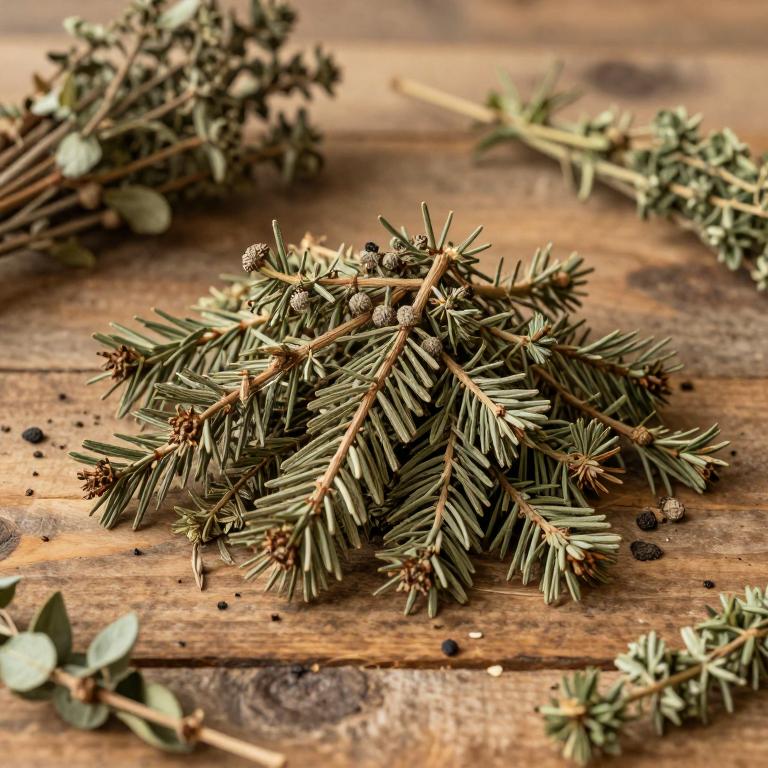
Names and Synonyms
Scientific Names
Accepted name
Pinus lambertianaDistribution
This plant exhibits a specific range across several regions of North America. In the Northwestern United States, its presence is noted within the state of Oregon. Moving toward the Southwest, it can be found growing in both California and Nevada. Its distribution extends further south into the country of Mexico. Specifically, it is located within the northwestern portion of the Mexican territory.
| Region | Area |
|---|---|
| Northwestern U.S.A. | Oregon |
| Southwestern U.S.A. | California |
| Southwestern U.S.A. | Nevada |
| Mexico | Mexico Northwest |
Sources: The World Checklist of Vascular Plants (WCVP)
Botanical Identification
Life history
The life history of Pinus lambertianiana is characterized by a perennial lifecycle, allowing the individual to persist and maintain its presence within its ecological niche over many years. As a phanerophyte, its regenerative buds are located high above the ground on woody branches, a structural adaptation that facilitates survival in its specific environmental conditions. This phanerophyte life form ensures that the plant's vital growth points are protected and positioned to optimize light interception and reproductive success throughout its long lifespan.
- Life form :
- phanerophyte
- Lifecycle :
- perennial
Morphology
The morphology of Pinus lambertiana is characterized by its stature as a large, woody tree that reaches a significant plant height, with a mean height of approximately 70 m. As a terrestrial species, it is entirely non-aquatic and functions as an independent organism, lacking any parasitic or epiphytic tendencies. The plant exhibits a self-supporting growth form, meaning it does not require external structures like lianas or vines for support, and its structural integrity is defined by its robust, woody composition.
- Aquatic :
- terrestrial
- Climber :
- self-supporting
- Epiphyte :
- terrestrial
- Growth form :
- tree
- Parasite :
- independent
- Plant height mean:
- 70 m
- Woodiness :
- woody
Physiology
The physiology of Pinus lambertianiana is characterized by a specialized metabolic framework optimized for coniferous survival, primarily utilizing a C3 photosynthetic pathway. This C3 mechanism involves the direct fixation of atmospheric carbon dioxide through the enzyme RuBisCO within the mesophyll cells, a process that is highly efficient under temperate to cool conditions but requires careful regulation of stomatal conductance to balance gas exchange with transpiration. To mitigate water loss in varying environmental conditions, the plant employs sclerophyllous needle-like leaves with a thick cuticle and sunken stomata, which serve to minimize photorespiration and maintain internal hydration. Furthermore, its physiological processes are heavily influenced by seasonal temperature fluctuations, necessitating robust mechanisms for cold tolerance and the management of osmotic potential to ensure continued metabolic activity and nutrient transport throughout its life cycle.
- Photosynthetic pathway :
- C3
Reproduction
The reproduction of Pinus lambertianiana is characterized by specific seed morphological traits and specialized dispersal mechanisms. The seeds produced by this species exhibit a relatively consistent mass, with a calculated mean seed mass of approximately 0.214164375 g. The individual seed weights fluctuate within a defined range, reaching a minimum of 0.18 g and a maximum of 0.25 g. Regarding the movement of offspring from the parent plant, the species follows an anemochorous dispersal syndrome, relying primarily on wind to transport its seeds to new locations.
- Dispersal syndrome :
- anemochorous
- Seed mass max:
- 0.25 g
- Seed mass mean:
- 0.214164375 g
- Seed mass min:
- 0.18 g
Sources: Global Inventory of Floras and Traits (GIFT)
Plant Parts
Pinus lambertiana has 1 reported plant parts identified across 1 scientific publications and several other databases that are studied for medicinal purposes. The most consistently reported plant part include leaf.
| Plant part | Supporting sources | Consensus |
|---|---|---|
| Leaf | 1 supporting sources | ★☆☆☆☆ |
Leaf
- Molecules (Basel, Switzerland)
Preparations
Pinus lambertiana has 1 reported preparations identified across 1 scientific publications and several other databases. The most consistently reported preparations include leaf essential oils.
| Preparation | Supporting sources | Consensus |
|---|---|---|
| Leaf essential oils | 1 supporting sources | ★☆☆☆☆ |
Leaf essential oils
- Molecules (Basel, Switzerland)