Pinus leucodermis
Pinus heldreichii · Accepted scientific name
Scientific literature: Very Sparse (9 studies) · ★☆☆☆☆
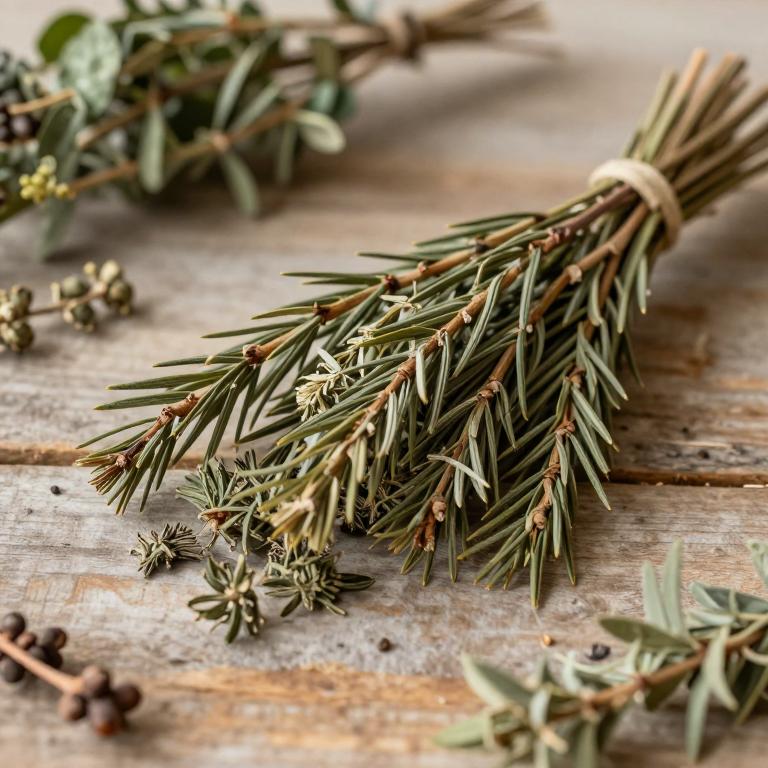
Pinus leucodermis, scientifically known as Pinus heldreichii, is a majestic coniferous species native to the Balkan Peninsula. Renowned for its remarkable longevity and resilience in rocky, high-altitude terrains, this evergreen provides significant ecological value. Its resin and wood possess traditional medicinal properties, often utilized in various herbal remedies.
Names and Synonyms
Common Names
- Bosnian Pine
- Heldreich's Pine
- Heldreich pine
- pale-bark pine
- Balkan pine
- graybark pine
- snakeskin pine
Scientific Names
Accepted name
Pinus heldreichiiSynonyms
- Pinus laricio var. heldreichii
- Pinus heldreichii var. pancicii
- Pinus laricio var. leucodermis
- Pinus heldreichii subsp. leucodermis
- Pinus nigra var. leucodermis
- Pinus heldreichii f. vivipara
- Pinus heldreichii var. leucodermis
- Pinus leucodermis
- Pinus laricio var. pindica
- Pinus pindica
Regional and Traditional Names
Spanish:
- Pino de los Balcanes
- Pinus leucodermis
- Pino de los Balcanes
German:
- Schlangenhaut-Kiefer
- Panzerkiefer
- Loricakiefer
- Pinus leucodermis
- Schlangenhautkiefer
- Lorica-Kiefer
- Panzerkiefer
- Schlangenhautkiefer
- Loricakiefer
- Schlangenhaut-Kiefer
French:
- Pin de Bosnie
- Pinus leucodermis
- pin blanc de Bosnie
- Pin de Bosnie
Sources: Wikidata, Catalogue of Life
Taxonomical Classification
This plant belongs to the kingdom Plantae and the phylum Streptophyta. Within the class Equisetopsida and subclass Pinidae, it is classified under the order Pinales and the family Pinaceae. Finally, it is identified by the genus Pinus.
| Rank | Classification |
|---|---|
| Kingdom | Plantae |
| Phylum | Streptophyta |
| Class | Equisetopsida |
| Subclass | Pinidae |
| Order | Pinales |
| Family | Pinaceae |
| Genus | Pinus |
Sources: The World Checklist of Vascular Plants (WCVP)
Distribution
This plant is primarily distributed across several regions within Southeastern Europe. Its natural habitat includes the mountainous areas of Albania and Bulgaria. Furthermore, it can be found growing throughout various parts of Greece. The species also extends its range into Italy, occupying specific ecological niches there. Finally, its distribution encompasses the northwestern Balkan Peninsula.
| Region | Area |
|---|---|
| Southeastern Europe | Albania |
| Southeastern Europe | Bulgaria |
| Southeastern Europe | Greece |
| Southeastern Europe | Italy |
| Southeastern Europe | NW. Balkan Pen. |
Sources: The World Checklist of Vascular Plants (WCVP)
Botanical Identification
Life history
The life history of Pinus heldreichii is characterized by a perennial lifecycle, allowing the individual to persist across many years and adapt to the harsh, high-altitude environments it inhabits. As a phanerophyte, its reproductive shoots and vital meristematic tissues are elevated well above the ground, protected by its woody structure and needle-like foliage. This phanerophyte life form is fundamental to its survival in rocky, exposed terrains, ensuring that its growth remains resilient against seasonal climatic fluctuations and extreme weather conditions.
- Life form :
- phanerophyte
- Lifecycle :
- perennial
Morphology
The morphology of Pinus heldreichii is characterized by its growth form as a large, woody tree that functions as a self-supporting, independent organism. It is a terrestrial species, lacking aquatic or epiphytic tendencies, and typically reaches a plant height ranging from a minimum of 10 meters to a maximum of 30 meters. As a robust woody perennial, it does not exhibit climbing behavior, instead maintaining a stable, upright structure characteristic of its tree growth form.
- Aquatic :
- terrestrial
- Climber :
- self-supporting
- Epiphyte :
- terrestrial
- Growth form :
- tree
- Parasite :
- independent
- Plant height max:
- 30 m
- Plant height min:
- 10 m
- Woodiness :
- woody
Physiology
The physiology of Pinus heldreichii is characterized by specialized adaptations to high-altitude, Mediterranean-type environments, most notably its reliance on the C3 photosynthetic pathway. As a gymnosperm, its carbon fixation process occurs via the Calvin cycle within the mesophyll cells, a mechanism typical of most coniferous species that requires careful regulation of stomatal conductance to balance carbon dioxide uptake against transpirational water loss. To survive in rocky, often xeric limestone substrates, the plant exhibits significant physiological plasticity, employing xeromorphic leaf structures such as thick cuticles and sunken stomata to minimize water loss during periods of high evaporative demand. Its metabolic processes are further optimized for temperature fluctuations, allowing for efficient enzymatic activity across a range of montane thermal gradients. Furthermore, the plant's resource allocation strategy prioritizes long-term structural integrity and slow, steady biomass accumulation, which is supported by its efficient, albeit slower, C3-driven primary productivity.
- Photosynthetic pathway :
- C3
Reproduction
Reproduction in Pinus heldreichii is facilitated through the production of seeds that exhibit specific morphological characteristics essential for its dispersal and establishment. The seed mass of this species is highly consistent, with a calculated mean seed mass of 0.02207625 g. Within the observed population, the individual seed masses fluctuate within a very narrow range, reaching a maximum value of 0.02262 g and a minimum value of 0.02159 g. This uniformity in seed mass suggests a stable reproductive strategy optimized for the environmental conditions in which the species thrives.
- Seed mass max:
- 0.02262 g
- Seed mass mean:
- 0.02207625 g
- Seed mass min:
- 0.02159 g
Sources: Global Inventory of Floras and Traits (GIFT)
Chemicals
Pinus heldreichii has 3 reported phytochemicals identified across 0 scientific publications and several other databases. The most consistently reported chemicals include (E)-Caryophyllene, LIMONENE, Sesquiterpenes.
| Chemical | Supporting sources | Consensus |
|---|---|---|
| (E)-Caryophyllene | 1 supporting sources | ★☆☆☆☆ |
| LIMONENE | 1 supporting sources | ★☆☆☆☆ |
| Sesquiterpenes | 1 supporting sources | ★☆☆☆☆ |
(E)-Caryophyllene
- Pharmaceutical biology
LIMONENE
- Pharmaceutical biology
Sesquiterpenes
- Chemistry & biodiversity
Activities
Pinus heldreichii has 2 reported activities identified across 0 scientific publications and several other databases. The most consistently reported activities include Anticancer, Cytotoxic.
| Activity | Supporting sources | Consensus |
|---|---|---|
| Anticancer | 1 supporting sources | ★☆☆☆☆ |
| Cytotoxic | 1 supporting sources | ★☆☆☆☆ |
Anticancer
- Pharmaceutical biology
Cytotoxic
- Pharmaceutical biology
Conditions
Pinus heldreichii has 2 reported investigations on conditions identified across 0 scientific publications and several other databases. The most consistently reported conditions include Inflammation, cancer.
| Condition | Supporting sources | Consensus |
|---|---|---|
| Inflammation | 1 supporting sources | ★☆☆☆☆ |
| Cancer | 1 supporting sources | ★☆☆☆☆ |
Inflammation
- Pharmaceutical biology
Cancer
- Pharmaceutical biology