Aleppo Pine
Pinus halepensis · Accepted scientific name
Scientific literature: Very Sparse (47 studies) · ★☆☆☆☆
Aleppo Pine, scientifically known as Pinus halepensis, is a resilient coniferous tree native to the Mediterranean region. Renowned for its aromatic resin and essential oils, it holds significant medicinal value. Traditionally, its extracts are utilized for their antiseptic, anti-inflammatory, and expectorant properties, supporting respiratory and skin health.
- Family
- Pinaceae
- Native range
- Europe
- Parts used
- Fruit · Leaf
- Common names
- Aleppo Pine · Jerusalem Pine
- Scientific synonyms
- Pinus Halepensis Var. Genuensis · Pinus Halepensis Subsp. Ceciliae · 14 more
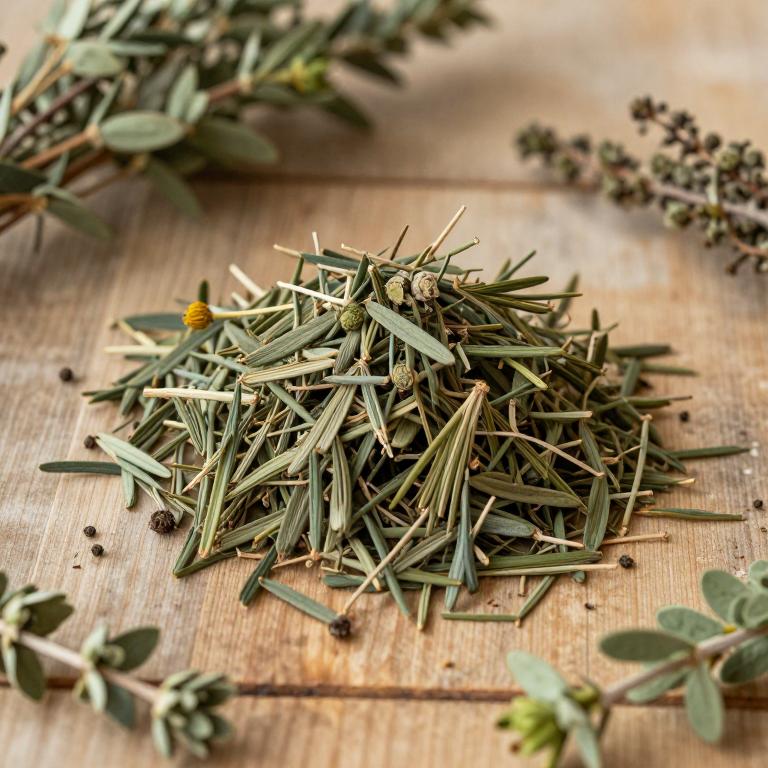
Names and Synonyms
Common Names
- Aleppo Pine
- Jerusalem pine
Scientific Names
Accepted name
Pinus halepensisSynonyms
- Pinus halepensis var. genuensis
- Pinus halepensis subsp. ceciliae
- Pinus halepensis var. minor
- Pinus ceciliae
- Pinus halepensis var. carica
- Pinus carica
- Pinus halepensis var. pendula
- Pinus arabica
- Pinus halepensis var. ceciliae
- Pinus hispanica
- Pinus genuensis
- Pinus paroliniana
- Pinus parolinii
- Pinus penicillus
- Pinus pseudohalepensis
- Pinus loiseleuriana
Regional and Traditional Names
Spanish:
- Pinus halepensis var minor
- Pinus carica
- Pincarrasco
- Pinus alepensis
- Pino blanco
- Pinus halepensis var. carica
- Pinus ceciliae
- Pinus halepensis var carica
- Pino de Jerusalén
- Pinos carrascos
- Pinus halepensis var genuensis
- Pinus abasica
- Pinus pityusa
- Pinus loiseleuriana
- Pino de Jerusalen
- Pinus halepensis var abasica
- Pino Carrasco
- Pino de Alepo
- Pino Carrasco
- Pino de Alepo
German:
- Aleppo-Kiefer
- Aleppokiefer
- Seekiefer
French:
- Pin d’Alep
- Pin d'Alep
- Pins d'Alep
- Pin blanc de Provence
- Pin d'Alep
Sources: Wikidata, Catalogue of Life
Taxonomical Classification
This plant, Pinus halepensis, belongs to the kingdom Plantae and is classified under the phylum Streptophyta. Within the class Equisetopsida and subclass Pinidae, it is further organized into the order Pinales and the family Pinaceae. Finally, it is categorized under the genus Pinus.
| Rank | Classification |
|---|---|
| Kingdom | Plantae |
| Phylum | Streptophyta |
| Class | Equisetopsida |
| Subclass | Pinidae |
| Order | Pinales |
| Family | Pinaceae |
| Genus | Pinus |
Sources: The World Checklist of Vascular Plants (WCVP)
Distribution
This plant, known as Pinus halepensis, is widely distributed across several regions in Southwestern Europe. Its presence is notably documented within the Balearic Islands, which form part of its Mediterranean range. The species also thrives in the coastal and mountainous landscapes of Corsica. Furthermore, it can be found growing throughout various territories in mainland France. Finally, the plant's geographical reach extends to the island of Sardinia and the coastal areas of Portugal.
| Region | Area |
|---|---|
| Southwestern Europe | Baleares |
| Southwestern Europe | Corse |
| Southwestern Europe | France |
| Southwestern Europe | Portugal |
| Southwestern Europe | Sardegna |
| Southwestern Europe | Spain |
| Southeastern Europe | Albania |
| Southeastern Europe | Greece |
| Southeastern Europe | Italy |
| Southeastern Europe | Sicilia |
Sources: The World Checklist of Vascular Plants (WCVP)
Botanical Identification
Ecology
The ecology of Pinus halepensis is characterized by its remarkable adaptability to diverse topographical settings, spanning a vast elevational gradient from sea level up to a maximum of 1700 m AMSL. It frequently establishes itself in coastal habitats, where it must withstand saline influences and maritime conditions. Throughout its natural distribution, the species maintains an average elevation of approximately 942 m AMSL, reflecting its capacity to thrive in both low-lying Mediterranean environments and higher, more rugged mountainous terrains.
- Elevational range max:
- 1700 m AMSL
- Elevational range mean:
- 942 m AMSL
- Elevational range min:
- 0 m AMSL
- Habitat :
- Coastal
Life history
The life history of Pinus halepensis is characterized by its status as a perennial species, ensuring its presence in the ecosystem over many successive growing seasons. As a phanerophyte, the plant maintains its photosynthetic organs on elevated woody stems, a structural adaptation that defines its life form. Throughout its existence, it remains evergreen, retaining its needle-like foliage year-round rather than undergoing seasonal shedding. This hardy species is capable of achieving a significant longevity, with a typical lifespan reaching approximately 150 years, allowing it to establish a stable and long-term presence within its natural habitat.
- Deciduousness :
- evergreen
- Life form :
- phanerophyte
- Lifecycle :
- perennial
- Lifespan :
- 150
Morphology
The morphology of Pinus halepensis is characterized by its growth form as a woody tree that functions as a self-supporting, independent organism. This species is strictly terrestrial in its habitat and does not exhibit any epiphytic or parasitic tendencies. In terms of stature, the plant displays significant vertical development, with heights typically ranging from a minimum of 5 m to a maximum of 25 m, maintaining an average height of approximately 15 m.
- Aquatic :
- terrestrial
- Climber :
- self-supporting
- Epiphyte :
- terrestrial
- Growth form :
- tree
- Parasite :
- independent
- Plant height max:
- 25 m
- Plant height mean:
- 15 m
- Plant height min:
- 5 m
- Woodiness :
- woody
Physiology
The physiology of Pinus halepensis is characterized by a specialized photosynthetic process and distinct morphological adaptations for resource management. It utilizes the C3 photosynthetic pathway to convert light energy into chemical energy. The foliage is composed of acicular leaves, which are structurally optimized for moisture retention and environmental resilience. These needles exhibit significant dimensional variation, with leaf lengths ranging from a minimum of 7 cm to a maximum of 16 cm. The width of the leaves is consistently narrow, maintaining a mean and maximum width of 0.1 cm, with a minimum width recorded at 0.06 cm. Furthermore, the leaf thickness ranges between 0.4 mm and 0.6 mm, contributing to its structural integrity. In terms of nutrient cycling, the plant does not function as a nitrogen fixer, relying instead on external soil nitrogen availability to support its physiological processes.
- Leaf form :
- acicular
- Leaf length max:
- 16 cm
- Leaf length min:
- 7 cm
- Leaf thickness max:
- 0.6 mm
- Leaf thickness min:
- 0.4 mm
- Leaf width mean:
- 0.1 cm
- Leaf width min:
- 0.06 cm
- Nitrogen fixer :
- no
- Photosynthetic pathway :
- C3
Reproduction
The reproduction of Pinus halepensis is characterized by a monoecious sexual reproductive system, as asexual reproduction is absent. The flowering process typically commences in February and concludes in May, featuring brown-colored flowers. As an abiotic pollinator, the plant relies on a wind-based pollination syndrome to facilitate fertilization. Following successful pollination, the plant develops a cone-type fruit. These cones exhibit significant morphological variation, with fruit lengths ranging from a minimum of 4 cm to a maximum of 10 cm (averaging 8.7 cm), and widths ranging from 2.5 cm to 4.2 cm (averaging 4 cm). The seeds produced within these cones possess a mean mass of approximately 0.0228 g, with individual seed masses fluctuating between a minimum of 0.01619 g and a maximum of 0.0447 g. Finally, the dispersal of the species is achieved through an anemochorous syndrome, utilizing the wind to distribute seeds away from the parent plant.
- Dispersal syndrome :
- anemochorous
- Flower colour :
- brown
- Flowering time :
- Feb
- Flowering time :
- May
- Fruit length max:
- 10 cm
- Fruit length mean:
- 8.7 cm
- Fruit length min:
- 4 cm
- Fruit type :
- cone
- Fruit width max:
- 4.2 cm
- Fruit width mean:
- 4 cm
- Fruit width min:
- 2.5 cm
- Pollination syndrome :
- wind
- Pollination syndrome :
- abiotic
- Reproduction asexual :
- absent
- Reproduction sexual :
- monoecious
- Seed mass max:
- 0.0447 g
- Seed mass mean:
- 0.022811111 g
- Seed mass min:
- 0.01619 g
Sources: Global Inventory of Floras and Traits (GIFT)
Plant Parts
Pinus halepensis has 2 reported plant parts identified across 2 scientific publications and several other databases that are studied for medicinal purposes. The most consistently reported plant part include fruit, leaf.
| Plant part | Supporting sources | Consensus |
|---|---|---|
| Fruit | 1 supporting sources | ★☆☆☆☆ |
| Leaf | 1 supporting sources | ★☆☆☆☆ |
Fruit
- Jundishapur journal of natural pharmaceutical products
Leaf
- Jundishapur journal of natural pharmaceutical products
Chemicals
Pinus halepensis has 15 reported phytochemicals identified across 2 scientific publications and several other databases. The most consistently reported chemicals include (E)-Caryophyllene, Caryophyllene, Fatty acids, Flavonoids, Germacrene D.
| Chemical | Supporting sources | Consensus |
|---|---|---|
| (E)-Caryophyllene | 1 supporting sources | ★☆☆☆☆ |
| Caryophyllene | 1 supporting sources | ★☆☆☆☆ |
| Fatty acids | 1 supporting sources | ★☆☆☆☆ |
| Flavonoids | 1 supporting sources | ★☆☆☆☆ |
| Germacrene D | 1 supporting sources | ★☆☆☆☆ |
| LIMONENE | 1 supporting sources | ★☆☆☆☆ |
| MYRCENE | 1 supporting sources | ★☆☆☆☆ |
| PROTOCATECHUIC ALDEHYDE | 1 supporting sources | ★☆☆☆☆ |
| Steroids | 1 supporting sources | ★☆☆☆☆ |
| Terpenoids | 1 supporting sources | ★☆☆☆☆ |
(E)-Caryophyllene
- Pharmaceutics
Caryophyllene
- International journal of environmental health research
Fatty acids
- Journal of ethnopharmacology
Flavonoids
- Journal of ethnopharmacology
Germacrene D
- Pharmaceutics
LIMONENE
- Pharmaceutics
MYRCENE
- Pharmaceutics
PROTOCATECHUIC ALDEHYDE
- Chemistry & biodiversity
Steroids
- Journal of ethnopharmacology
Terpenoids
- Journal of ethnopharmacology
Activities
Pinus halepensis has 11 reported activities identified across 2 scientific publications and several other databases. The most consistently reported activities include Antibacterial, Antioxidant, Anticoagulant, Antidiabetic, Antifungal.
| Activity | Supporting sources | Consensus |
|---|---|---|
| Antibacterial | 2 supporting sources | ★☆☆☆☆ |
| Antioxidant | 2 supporting sources | ★☆☆☆☆ |
| Anticoagulant | 1 supporting sources | ★☆☆☆☆ |
| Antidiabetic | 1 supporting sources | ★☆☆☆☆ |
| Antifungal | 1 supporting sources | ★☆☆☆☆ |
| Antimicrobial | 1 supporting sources | ★☆☆☆☆ |
| Antiparasitic | 1 supporting sources | ★☆☆☆☆ |
| Antiseptic | 1 supporting sources | ★☆☆☆☆ |
| Astringent | 1 supporting sources | ★☆☆☆☆ |
| Cytotoxic | 1 supporting sources | ★☆☆☆☆ |
Antibacterial
- Journal of ethnopharmacology
- Chemistry & biodiversity
Antioxidant
- Journal of ethnopharmacology
- Chemistry & biodiversity
Anticoagulant
- Journal of ethnopharmacology
Antidiabetic
- Journal of ethnopharmacology
Antifungal
- Journal of ethnopharmacology
Antimicrobial
- Journal of ethnopharmacology
Antiparasitic
- Journal of ethnopharmacology
Antiseptic
- Journal of ethnopharmacology
Astringent
- Journal of ethnopharmacology
Cytotoxic
- Journal of ethnopharmacology
Conditions
Pinus halepensis has 13 reported investigations on conditions identified across 2 scientific publications and several other databases. The most consistently reported conditions include Parkinson's disease, antiseptic, astringent, breast cancer, cough.
| Condition | Supporting sources | Consensus |
|---|---|---|
| Parkinson's disease | 1 supporting sources | ★☆☆☆☆ |
| Antiseptic | 1 supporting sources | ★☆☆☆☆ |
| Astringent | 1 supporting sources | ★☆☆☆☆ |
| Breast cancer | 1 supporting sources | ★☆☆☆☆ |
| Cough | 1 supporting sources | ★☆☆☆☆ |
| Diabetes mellitus | 1 supporting sources | ★☆☆☆☆ |
| Diarrhea | 1 supporting sources | ★☆☆☆☆ |
| Hemorrhoids | 1 supporting sources | ★☆☆☆☆ |
| Hypertension | 1 supporting sources | ★☆☆☆☆ |
| Neurodegenerative disorders | 1 supporting sources | ★☆☆☆☆ |
Parkinson's disease
- Journal of ethnopharmacology
Antiseptic
- Journal of ethnopharmacology
Astringent
- Journal of ethnopharmacology
Breast cancer
- International journal of environmental health research
Cough
- Journal of ethnopharmacology
Diabetes mellitus
- Journal of ethnopharmacology
Diarrhea
- Journal of ethnopharmacology
Hemorrhoids
- Journal of ethnopharmacology
Hypertension
- Journal of ethnopharmacology
Neurodegenerative disorders
- Journal of ethnopharmacology
Preparations
Pinus halepensis has 4 reported preparations identified across 2 scientific publications and several other databases. The most consistently reported preparations include Aqueous and ethanolic extracts, EO, Methanol extracts of leaves and fruits, essential oils obtained from the cones.
| Preparation | Supporting sources | Consensus |
|---|---|---|
| Aqueous and ethanolic extracts | 1 supporting sources | ★☆☆☆☆ |
| Eo | 1 supporting sources | ★☆☆☆☆ |
| Methanol extracts of leaves and fruits | 1 supporting sources | ★☆☆☆☆ |
| Essential oils obtained from the cones | 1 supporting sources | ★☆☆☆☆ |
Aqueous and ethanolic extracts
- Journal of applied biomaterials & functional materials
Eo
- Pharmaceutics
Methanol extracts of leaves and fruits
- Jundishapur journal of natural pharmaceutical products
Essential oils obtained from the cones
- Journal of ethnopharmacology