slash pine
Pinus elliottii · Accepted scientific name
Scientific literature: Sparse (99 studies) · ★★☆☆☆
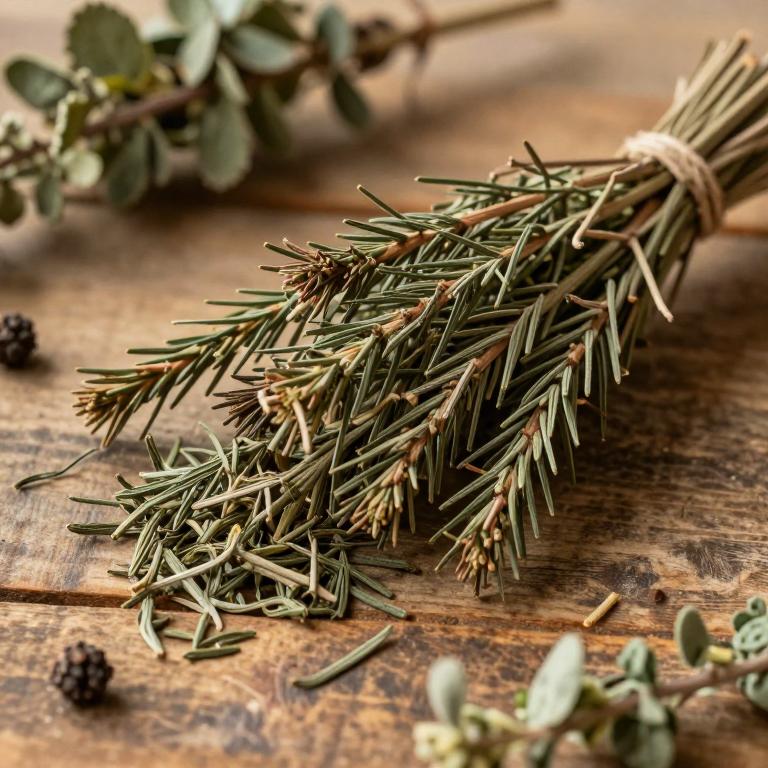
Slash pine, scientifically known as Pinus elliottii, is a versatile conifer native to the southeastern United States. Renowned for its resinous properties, it holds significant medicinal potential. Historically, its extracts have been utilized for their antimicrobial and anti-inflammatory qualities, offering valuable insights into natural therapeutic applications and pharmacology.
- Family
- Not available
- Native range
- Africa
- Parts used
- Not available
- Common names
- Not available
- Scientific synonyms
- Not available
Names and Synonyms
Scientific Names
Accepted name
Pinus elliottiiRegional and Traditional Names
Spanish:
- Pino elioti
French:
- Pin d'Elliott
- Pin à aiguilles longues
Sources: Wikidata
Distribution
This plant exhibits a widespread geographical distribution across several distinct regions. In Southern Africa, it can be found growing within the Free State province. Its presence extends to the Western Indian Ocean, specifically on the island of Mauritius. In Australia, the species is established in both New South Wales and Queensland. Finally, it is also located within the Southwestern Pacific, specifically in New Caledonia.
| Region | Area |
|---|---|
| Southern Africa | Free State |
| Western Indian Ocean | Mauritius |
| Australia | New South Wales |
| Australia | Queensland |
| Southwestern Pacific | New Caledonia |
| North-Central Pacific | Hawaii |
| Southeastern U.S.A. | Alabama |
| Southeastern U.S.A. | Florida |
| Southeastern U.S.A. | Georgia |
| Southeastern U.S.A. | Louisiana |
Sources: The World Checklist of Vascular Plants (WCVP)
Botanical Identification
Ecology
The ecology of Pinus elliotii is characterized by its presence in diverse landscapes, including Áreas Antrópicas, Campos de Altitude, Campos Rupestres, Cerrado (latu sensu), and Floresta Ombrófila Mista. This species thrives within a specific altitudinal gradient, typically occupying high-altitude environments with an elevational range spanning from 1500 m AMSL to a maximum of 2000 m AMSL.
- Elevational range max:
- 2000 m AMSL
- Elevational range min:
- 1500 m AMSL
- Habitat :
- Área Antrópica, Campo de Altitude, Campo Rupestre, Cerrado (lato sensu), Floresta Ombrófila Mista
Life history
The life history of Pinus elliotii is characterized by a perennial lifecycle, allowing the individual to persist and grow through many successive years. As a phanerophyte, specifically classified under both phanerophyte and nanophanerophyte growth forms, its reproductive shoots are elevated well above the ground on woody stems. The species maintains an evergreen deciduousness, ensuring that its foliage remains functional and present throughout all seasons rather than shedding leaves annually.
- Deciduousness :
- evergreen
- Life form :
- phanerophyte
- Lifecycle :
- perennial
Morphology
The morphology of Pinus elliotii is characterized by its growth form as a woody tree that is entirely self-supporting and independent, rather than functioning as a climber, parasite, or epiphyte. As a terrestrial species, it lacks aquatic or semiaquatic adaptations. The plant exhibits significant vertical development, with a height range spanning from a minimum of 4 m to a maximum of 30 m, maintaining an average height of approximately 27.5 m.
- Aquatic :
- terrestrial
- Climber :
- self-supporting
- Epiphyte :
- terrestrial
- Growth form :
- tree
- Parasite :
- independent
- Plant height max:
- 30 m
- Plant height mean:
- 27.5 m
- Plant height min:
- 4 m
- Woodiness :
- woody
Physiology
The physiology of Pinus elliotii is characterized by a C3 photosynthetic pathway, which dictates its carbon fixation processes and metabolic efficiency. The plant does not exhibit succulence, lacking the specialized water-storage tissues found in succulent species, and it does not function as a nitrogen fixer, meaning it relies on external soil nutrient availability rather than symbiotic nitrogen-fixing bacteria. Structurally, the plant maintains a stem specific density (SSD) with a mean value of 446 mg/cm³, a physiological metric that reflects its wood density and overall structural integrity.
- Nitrogen fixer :
- no
- Photosynthetic pathway :
- C3
- Stem specific density (SSD) mean:
- 446 mg/cm³
- Succulence :
- no
Reproduction
The reproduction of Pinus elliotii is characterized by an abiotic pollination syndrome, specifically relying on wind to facilitate the transfer of pollen. The reproductive process results in the production of seeds with varying physical properties, exhibiting a seed mass that ranges from a minimum of 0.02645 g to a maximum of 0.04545 g, with an average seed mass of approximately 0.03322033325 g. Following fertilization, the plant utilizes an anemochorous dispersal syndrome, meaning the seeds are primarily dispersed by the wind to colonize new areas.
- Dispersal syndrome :
- anemochorous
- Pollination syndrome :
- wind
- Pollination syndrome :
- abiotic
- Seed mass max:
- 0.04545 g
- Seed mass mean:
- 0.03322033325 g
- Seed mass min:
- 0.02645 g
Sources: Global Inventory of Floras and Traits (GIFT)
Chemicals
Pinus elliottii has 23 reported phytochemicals identified across 0 scientific publications and several other databases. The most consistently reported chemicals include ABIETIC ACID, BETA-PINENE, Borneol, CADINENE, CAMPHENE.
| Chemical | Supporting sources | Consensus |
|---|---|---|
| ABIETIC ACID | 1 supporting sources | ★☆☆☆☆ |
| BETA-PINENE | 1 supporting sources | ★☆☆☆☆ |
| Borneol | 1 supporting sources | ★☆☆☆☆ |
| CADINENE | 1 supporting sources | ★☆☆☆☆ |
| CAMPHENE | 1 supporting sources | ★☆☆☆☆ |
| Creosol | 1 supporting sources | ★☆☆☆☆ |
| DEHYDROABIETIC ACID | 1 supporting sources | ★☆☆☆☆ |
| Dipentene | 1 supporting sources | ★☆☆☆☆ |
| EO | 1 supporting sources | ★☆☆☆☆ |
| ISOPIMARIC ACID | 1 supporting sources | ★☆☆☆☆ |
ABIETIC ACID
- Dr. Duke
BETA-PINENE
- Dr. Duke
Borneol
- Dr. Duke
CADINENE
- Dr. Duke
CAMPHENE
- Dr. Duke
Creosol
- Dr. Duke
DEHYDROABIETIC ACID
- Dr. Duke
Dipentene
- Dr. Duke
EO
- Dr. Duke
ISOPIMARIC ACID
- Dr. Duke
Activities
Pinus elliottii has 74 reported activities identified across 0 scientific publications and several other databases. The most consistently reported activities include (-)-Chronotropic, (-)-Inotropic, Allelochemic, Allelopathic, Allergenic.
| Activity | Supporting sources | Consensus |
|---|---|---|
| (-)-Chronotropic | 1 supporting sources | ★☆☆☆☆ |
| (-)-Inotropic | 1 supporting sources | ★☆☆☆☆ |
| Allelochemic | 1 supporting sources | ★☆☆☆☆ |
| Allelopathic | 1 supporting sources | ★☆☆☆☆ |
| Allergenic | 1 supporting sources | ★☆☆☆☆ |
| Analgesic | 1 supporting sources | ★☆☆☆☆ |
| Anesthetic | 1 supporting sources | ★☆☆☆☆ |
| AntiMS | 1 supporting sources | ★☆☆☆☆ |
| Antiacetylcholine | 1 supporting sources | ★☆☆☆☆ |
| Antibacterial | 1 supporting sources | ★☆☆☆☆ |
(-)-Chronotropic
- Dr. Duke
(-)-Inotropic
- Dr. Duke
Allelochemic
- Dr. Duke
Allelopathic
- Dr. Duke
Allergenic
- Dr. Duke
Analgesic
- Dr. Duke
Anesthetic
- Dr. Duke
AntiMS
- Dr. Duke
Antiacetylcholine
- Dr. Duke
Antibacterial
- Dr. Duke
Conditions
Pinus elliottii has 1 reported investigations on conditions identified across 0 scientific publications and several other databases. The most consistently reported conditions include E. coli.
| Condition | Supporting sources | Consensus |
|---|---|---|
| E. coli | 1 supporting sources | ★☆☆☆☆ |
E. coli
- In vivo (Athens, Greece)