lodgepole pine
Pinus contorta · Accepted scientific name
Scientific literature: Very Sparse (7 studies) · ★☆☆☆☆
Lodgepole pine, scientifically known as Pinus contorta, is a versatile coniferous species native to North America. Beyond its ecological significance, this hardy tree holds medicinal potential. Historically, various parts of the pine have been utilized in traditional remedies to treat respiratory ailments, skin conditions, and to promote overall wellness.
- Family
- Pinaceae
- Native range
- Europe
- Parts used
- Not available
- Common names
- Lodgepole Pine · Bolander Beach Pine · 6 more
- Scientific synonyms
- Not available
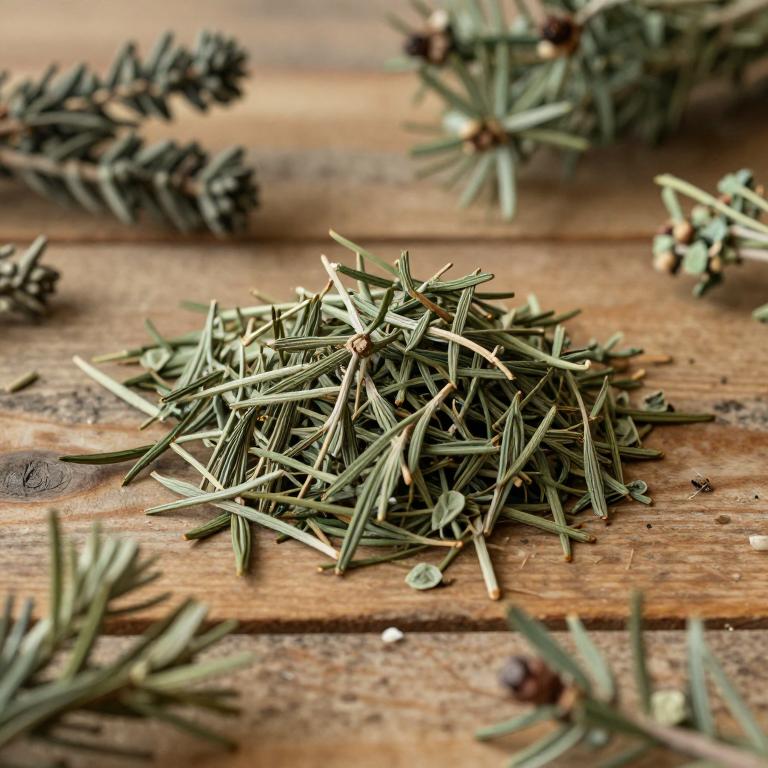
Names and Synonyms
Common Names
- lodgepole pine
- Bolander Beach Pine
- Bolander's Beach Pine
- Shore Pine
- Tamarack Pine
- contorta pine
- twisted pine
- scrub pine
Scientific Names
Accepted name
Pinus contortaRegional and Traditional Names
Spanish:
- pino contorto costero
- pino contorto
- pino contorto de hoja ancha
- pino de Murray
- pino de San Pedro Mártir
German:
- Küsten-Kiefer
- Dreh-Kiefer
- Drehkiefer
- Küstenkiefer
- Drehkiefer
- Dreh-Kiefer
- Küstenkiefer
- Küsten-Kiefer
French:
- pin tordu
- pin tordu
Sources: Wikidata, Catalogue of Life
Taxonomical Classification
This plant belongs to the kingdom Plantae and is classified under the phylum Streptophyta within the class Equisetopsida. It is further categorized under the subclass Pinidae and the order Pinales, belonging to the family Pinaceae. Ultimately, its taxonomic identity is defined by the genus Pinus.
| Rank | Classification |
|---|---|
| Kingdom | Plantae |
| Phylum | Streptophyta |
| Class | Equisetopsida |
| Subclass | Pinidae |
| Order | Pinales |
| Family | Pinaceae |
| Genus | Pinus |
Sources: The World Checklist of Vascular Plants (WCVP)
Distribution
This plant exhibits a specific geographical presence within several regions of Northern Europe. Its distribution can be traced across the island of Iceland and throughout the territories of Denmark and Finland. Furthermore, it is found within the coastal and maritime environments of the Faroe Islands. The range also extends to the diverse landscapes found in Great Britain. Together, these locations define the northern European reaches where the species is documented.
| Region | Area |
|---|---|
| Northern Europe | Denmark |
| Northern Europe | Finland |
| Northern Europe | Føroyar |
| Northern Europe | Great Britain |
| Northern Europe | Iceland |
| Northern Europe | Ireland |
| Northern Europe | Norway |
| Northern Europe | Sweden |
| Middle Europe | Czechia-Slovakia |
| Middle Europe | Germany |
Sources: The World Checklist of Vascular Plants (WCVP)
Botanical Identification
Ecology
The ecology of Pinus contorta is characterized by its adaptability to diverse environmental conditions, though it is frequently documented occupying lowland habitats where it can establish robust populations. In these lowland regions, the species interacts with specific soil compositions and moisture regimes that support its growth cycles and reproductive strategies. The plant's distribution is influenced by its ability to tolerate varying degrees of nutrient availability and its capacity to compete within complex forest structures. By occupying these lower elevations, Pinus contorta plays a critical role in local ecosystem dynamics, contributing to soil stabilization and providing essential microhabitats for various associated flora and fauna within its ecological niche.
- Habitat :
- Lowland
Life history
The life history of Pinus contorta is characterized by its nature as a perennial species, allowing it to persist in its environment over long durations. As a phanerophyte, it maintains its buds well above the ground, typically growing into a large tree structure. The plant exhibits an evergreen deciduousness, meaning it retains its foliage throughout the year rather than shedding it seasonally. Under various ecological conditions, it can be classified as either a phanerophyte or a nanophanerophyte depending on its growth habit and height. With a significant lifespan, individuals can live for approximately 120 years, contributing to the long-term stability of its native ecosystems.
- Deciduousness :
- evergreen
- Life form :
- phanerophyte
- Lifecycle :
- perennial
- Lifespan :
- 120
Morphology
The morphology of Pinus contorta is characterized by a woody growth form, specifically functioning as a self-supporting tree. It is a terrestrial species that grows independently, lacking any parasitic or epiphytic tendencies. The plant exhibits significant variation in stature, with heights ranging from a minimum of 6 m to a maximum of 50 m, maintaining an average plant height of approximately 23.17 m.
- Aquatic :
- terrestrial
- Climber :
- self-supporting
- Epiphyte :
- terrestrial
- Growth form :
- tree
- Parasite :
- independent
- Plant height max:
- 50 m
- Plant height mean:
- 23.1666666666667 m
- Plant height min:
- 6 m
- Woodiness :
- woody
Physiology
The physiology of Pinus contorta is characterized by a C3 photosynthetic pathway, utilizing standard carbon fixation mechanisms to support its metabolic processes. As a non-carnivorous species, it derives all necessary nutrients through soil absorption rather than capturing prey, and it does not function as a nitrogen fixer, relying instead on available soil nitrogen. Its foliar morphology is defined by needle-like leaves that exhibit specific dimensions, with a leaf length ranging from a minimum of 3 cm to a maximum of 7 cm. The leaf width remains highly consistent across its development, maintaining a mean, minimum, and maximum value of 1.2 cm.
- Carnivory :
- non-carnivorous
- Leaf length max:
- 7 cm
- Leaf length min:
- 3 cm
- Leaf width mean:
- 1.2 cm
- Nitrogen fixer :
- no
- Photosynthetic pathway :
- C3
Reproduction
The reproduction of Pinus contorta is characterized by a sexual process, as asexual reproduction is absent. The flowering cycle typically begins in May and concludes in June. The plant relies on abiotic pollination, specifically utilizing a wind-driven pollination syndrome to facilitate fertilization. Following pollination, the development of the fruit results in structures with a mean length of 3.5 cm and a mean width of 2.7 cm. The seeds produced exhibit significant variability in mass, ranging from a minimum of 0.00171 g to a maximum of 5.75256 g, with a calculated mean seed mass of approximately 0.067465055 g. Dispersal is achieved through an anemochorous syndrome, meaning the seeds are dispersed by the wind.
- Dispersal syndrome :
- anemochorous
- Flowering time :
- May
- Flowering time :
- Jun
- Fruit length mean:
- 3.5 cm
- Fruit width mean:
- 2.7 cm
- Pollination syndrome :
- wind
- Pollination syndrome :
- abiotic
- Reproduction asexual :
- absent
- Seed mass max:
- 5.75256 g
- Seed mass mean:
- 0.067465055 g
- Seed mass min:
- 0.00171 g
Sources: Global Inventory of Floras and Traits (GIFT)
Chemicals
Pinus contorta has 2 reported phytochemicals identified across 0 scientific publications and several other databases. The most consistently reported chemicals include Pinosylvin, Pinosylvin monomethyl ether.
| Chemical | Supporting sources | Consensus |
|---|---|---|
| Pinosylvin | 1 supporting sources | ★☆☆☆☆ |
| Pinosylvin monomethyl ether | 1 supporting sources | ★☆☆☆☆ |
Pinosylvin
- Journal of industrial microbiology & biotechnology
Pinosylvin monomethyl ether
- Journal of industrial microbiology & biotechnology
Conditions
Pinus contorta has 4 reported investigations on conditions identified across 0 scientific publications and several other databases. The most consistently reported conditions include Aspergillus fumigatus, Candida albicans, Pseudomonas aeruginosa, Staphylococcus aureus.
| Condition | Supporting sources | Consensus |
|---|---|---|
| Aspergillus fumigatus | 1 supporting sources | ★☆☆☆☆ |
| Candida albicans | 1 supporting sources | ★☆☆☆☆ |
| Pseudomonas aeruginosa | 1 supporting sources | ★☆☆☆☆ |
| Staphylococcus aureus | 1 supporting sources | ★☆☆☆☆ |
Aspergillus fumigatus
- Journal of ethnopharmacology
Candida albicans
- Journal of ethnopharmacology
Pseudomonas aeruginosa
- Journal of ethnopharmacology
Staphylococcus aureus
- Journal of ethnopharmacology
Preparations
Pinus contorta has 1 reported preparations identified across 0 scientific publications and several other databases. The most consistently reported preparations include Pitch preparations.
| Preparation | Supporting sources | Consensus |
|---|---|---|
| Pitch preparations | 1 supporting sources | ★☆☆☆☆ |
Pitch preparations
- Journal of ethnopharmacology