Caribbean pine
Pinus caribaea · Accepted scientific name
Scientific literature: Very Sparse (2 studies) · ★☆☆☆☆
Caribbean pine, scientifically known as Pinus caribaea, is a resilient conifer native to the Lesser Antilles. Renowned for its ecological importance, this species offers significant medicinal potential. Its resin and bark contain bioactive compounds traditionally utilized for their antimicrobial and anti-inflammatory properties, serving as a vital natural resource.
- Family
- Pinaceae
- Native range
- Africa
- Parts used
- Not available
- Common names
- Caribbean Pine · Nicaragua Pine · 2 more
- Scientific synonyms
- Not available
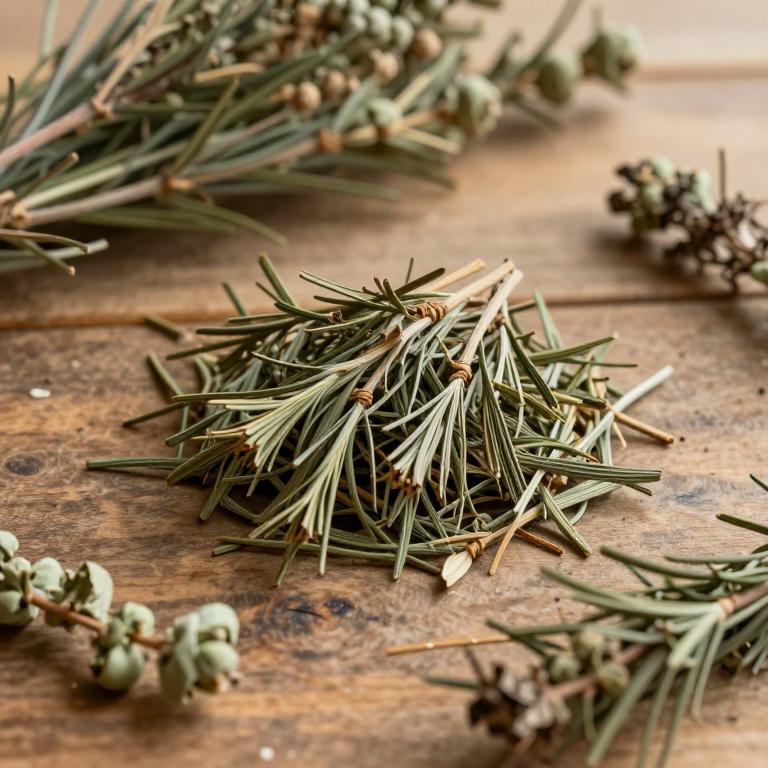
Names and Synonyms
Common Names
- Caribbean Pine
- Nicaragua Pine
- Pitch Pine
- slash pine
Scientific Names
Accepted name
Pinus caribaeaRegional and Traditional Names
Spanish:
- Pinus taeda var heterophylla
- Pinus taeda var. heterophylla
- Pinus hondurensis
- Pino de la Costa
- Pino Macho
- Pino Macho
- Pino de la Costa
- Pino
- Pino caribeño
German:
- Karibische Kiefer
- karibische Kiefer
French:
- pin des Caraïbes
- Pin caraïbe
Sources: Wikidata, Catalogue of Life
Taxonomical Classification
This plant belongs to the kingdom Plantae and the phylum Streptophyta, specifically situated within the class Equisetopsida and subclass Pinidae. It is further classified under the order Pinales and the family Pinaceae. Finally, its taxonomic identity is defined by the genus Pinus, specifically as the species Pinus caribaea.
| Rank | Classification |
|---|---|
| Kingdom | Plantae |
| Phylum | Streptophyta |
| Class | Equisetopsida |
| Subclass | Pinidae |
| Order | Pinales |
| Family | Pinaceae |
| Genus | Pinus |
Sources: The World Checklist of Vascular Plants (WCVP)
Distribution
This plant exhibits a diverse global presence across several distinct tropical regions. In West Tropical Africa, its range includes the nation of Gambia. Moving toward the Indian Subcontinent, it can be found growing in Bangladesh. Its distribution extends significantly into the Southwestern Pacific, where it inhabits Fiji and Niue. Additionally, the species is documented within the territory of New Caledonia.
| Region | Area |
|---|---|
| West Tropical Africa | Gambia |
| Indian Subcontinent | Bangladesh |
| Southwestern Pacific | Fiji |
| Southwestern Pacific | Niue |
| Southwestern Pacific | New Caledonia |
| Southwestern Pacific | Vanuatu |
| Southwestern Pacific | Wallis-Futuna Is. |
| South-Central Pacific | Cook Is. |
| South-Central Pacific | Tubuai Is. |
| Mexico | Mexico Southeast |
Sources: The World Checklist of Vascular Plants (WCVP)
Botanical Identification
Ecology
The ecology of Pinus caribaea is characterized by a broad adaptive capacity across diverse topographical gradients, ranging from sea level up to an elevation of 2300 m AMSL. This species demonstrates significant resilience and versatility in its preferred environments, frequently establishing itself within Cerrado (latu sensu) ecosystems as well as in anthropized areas (Área Antrópica). Its ability to colonize both natural savanna landscapes and human-modified habitats allows it to persist across varied soil types and disturbance regimes within its altitudinal range.
- Elevational range max:
- 2300 m AMSL
- Elevational range min:
- 0 m AMSL
- Habitat :
- Área Antrópica, Cerrado (lato sensu)
Life history
The life history of Pinus caribaea is characterized by its nature as a perennial species, allowing it to persist in its ecosystem over many years. As a phanerophyte, its buds are located high above the ground on woody branches, a structural adaptation that facilitates its growth into significant arboreal forms. This plant maintains an evergreen deciduousness, ensuring that its foliage remains functional throughout various seasons rather than shedding leaves annually. Throughout its developmental stages, it functions as a phanerophyte, utilizing its elevated shoot system to optimize light interception and survival within its natural habitat.
- Deciduousness :
- evergreen
- Life form :
- phanerophyte
- Lifecycle :
- perennial
Morphology
The morphology of Pinus caribaea is characterized by a woody growth form, specifically classified as a tree. It is a self-supporting organism that functions as an independent species, neither acting as a parasite nor as an epiphyte, maintaining a strictly terrestrial existence. In terms of stature, the plant exhibits significant vertical development, with a height ranging from a minimum of 20 m to a maximum of 30 m, maintaining an average plant height of approximately 30 m.
- Aquatic :
- terrestrial
- Climber :
- self-supporting
- Epiphyte :
- terrestrial
- Growth form :
- tree
- Parasite :
- independent
- Plant height mean:
- 30 m
- Plant height min:
- 20 m
- Woodiness :
- woody
Physiology
The physiology of Pinus caribaea is characterized by a C3 photosynthetic pathway, which dictates its carbon fixation processes and metabolic efficiency. Its foliage consists of needle-like leaves that exhibit significant morphological variation, with lengths ranging from a minimum of 1.5 cm to a maximum of 28 cm, and widths maintained within a narrow range between 0.14 cm and 0.18 cm. The plant does not exhibit succulence, nor does it function as a nitrogen fixer, meaning it relies on external soil nutrient availability rather than symbiotic nitrogen fixation. Furthermore, the structural integrity of the plant is supported by its wood density, which maintains a mean stem specific density (SSD) of 630 mg/cm³.
- Leaf length max:
- 28 cm
- Leaf length min:
- 1.5 cm
- Leaf width max:
- 0.18 cm
- Leaf width min:
- 0.14 cm
- Nitrogen fixer :
- no
- Photosynthetic pathway :
- C3
- Stem specific density (SSD) mean:
- 630 mg/cm³
- Succulence :
- no
Reproduction
The reproduction of Pinus caribaea is characterized by an abiotic pollination syndrome, specifically relying on the wind to facilitate the transfer of pollen. Following successful fertilization, the plant produces seeds that vary in weight, with a mean seed mass of approximately 0.01759847225 g, ranging from a minimum of 0.01163 g to a maximum of 0.02595 g. These seeds exhibit specific morphological dimensions, reaching a maximum length of 6 mm and a maximum width of 4 mm. For the distribution of offspring, the species utilizes an anemochorous dispersal syndrome, meaning the seeds are primarily dispersed by the wind to colonize new areas.
- Dispersal syndrome :
- anemochorous
- Pollination syndrome :
- wind
- Pollination syndrome :
- abiotic
- Seed length max:
- 6 mm
- Seed mass max:
- 0.02595 g
- Seed mass mean:
- 0.01759847225 g
- Seed mass min:
- 0.01163 g
- Seed width max:
- 4 mm
Sources: Global Inventory of Floras and Traits (GIFT)
Activities
Pinus caribaea has 1 reported activities identified across 0 scientific publications and several other databases. The most consistently reported activities include Antigenotoxic.
| Activity | Supporting sources | Consensus |
|---|---|---|
| Antigenotoxic | 1 supporting sources | ★☆☆☆☆ |
Antigenotoxic
- International journal of radiation biology
Conditions
Pinus caribaea has 1 reported investigations on conditions identified across 0 scientific publications and several other databases. The most consistently reported conditions include gamma-rays.
| Condition | Supporting sources | Consensus |
|---|---|---|
| Gamma-rays | 1 supporting sources | ★☆☆☆☆ |
Gamma-rays
- International journal of radiation biology