jack pine
Pinus banksiana · Accepted scientific name
Scientific literature: Very Sparse (3 studies) · ★☆☆☆☆
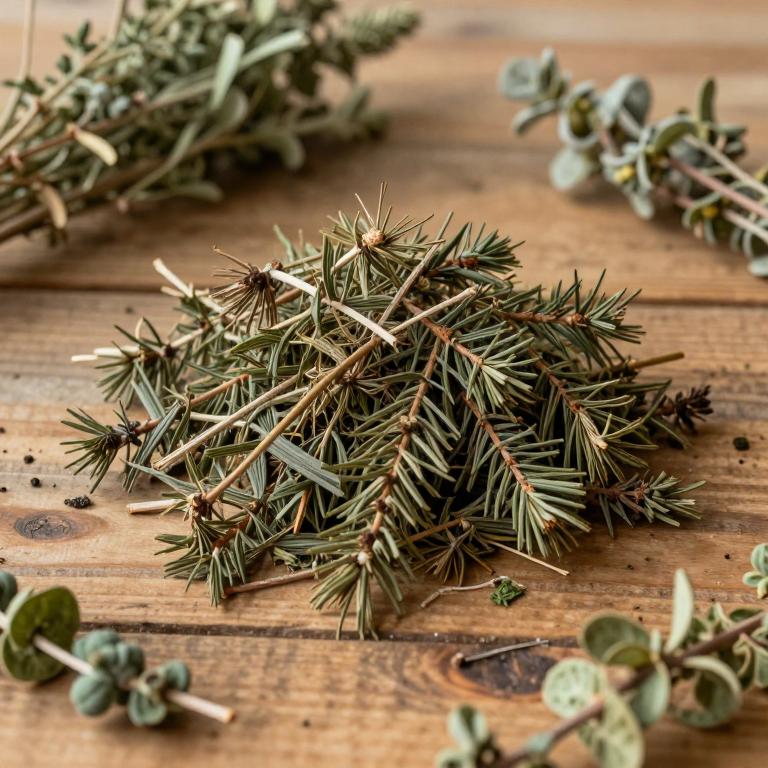
Jack pine, scientifically known as Pinus banksiana, is a resilient coniferous species native to North America. Beyond its ecological role in forest regeneration, it holds medicinal significance. Traditionally, its resin and needles have been utilized for their antiseptic properties and to alleviate respiratory ailments through various topical and aromatic applications.
Names and Synonyms
Common Names
- Banksian pine
- Hudson Bay pine
- gray pine
- jack pine
- scrub pine
- Black Pine
Scientific Names
Accepted name
Pinus banksianaSynonyms
- Pinus sylvestris var. divaricata
- Pinus banksiana f. annae
- Pinus banksiana f. procumbens
- Pinus hudsonica
- Pinus divaricata
- Pinus rupestris
- Pinus divaricata f. procumbens
Regional and Traditional Names
Spanish:
- Pino de Banks
- Pino de Banks
German:
- Banks-Kiefer
- Banks Kiefer
- Banks Kiefer
- Banks-Kiefer
French:
- Pin gris
- Pin de Banks
- cyprès
- pin chétif
- pin de Banks
- pin gris
Sources: Wikidata, Catalogue of Life
Taxonomical Classification
This plant belongs to the kingdom Plantae and is classified under the phylum Streptophyta and the class Equisetopsida. Within the subclass Pinidae and the order Pinales, it is a member of the family Pinaceae. Finally, it is categorized under the genus Pinus.
| Rank | Classification |
|---|---|
| Kingdom | Plantae |
| Phylum | Streptophyta |
| Class | Equisetopsida |
| Subclass | Pinidae |
| Order | Pinales |
| Family | Pinaceae |
| Genus | Pinus |
Sources: The World Checklist of Vascular Plants (WCVP)
Distribution
This plant, known as Pinus banksiana, displays a specific distribution across several regions in Europe. In Northern Europe, its presence can be documented in Denmark, Norway, and Sweden. Moving toward the center of the continent, it is also found within Middle Europe. Specifically, the species inhabits parts of Austria within this central zone. Additionally, its range extends through the territories of Czechia-Slovakia.
| Region | Area |
|---|---|
| Northern Europe | Denmark |
| Northern Europe | Norway |
| Northern Europe | Sweden |
| Middle Europe | Austria |
| Middle Europe | Czechia-Slovakia |
| Middle Europe | Germany |
| Middle Europe | Hungary |
| Southwestern Europe | Spain |
| Southeastern Europe | Romania |
| Eastern Europe | Baltic States |
Sources: The World Checklist of Vascular Plants (WCVP)
Botanical Identification
Ecology
The ecology of Pinus banksiana is characterized by its significant adaptability to various environmental conditions, though it frequently establishes itself within lowland habitats. This species thrives in a wide range of soil types, from sandy and nutrient-poor substrates to more complex wetland margins, often playing a pioneering role in successional landscapes. In lowland areas, it must contend with higher moisture levels and potentially periodic flooding, yet its robust root system and ability to tolerate acidic soil conditions allow it to maintain dominance in these niches. The plant is frequently found in post-fire landscapes, as its serotinous cones facilitate regeneration by releasing seeds following disturbances, a trait that allows it to colonize both dry uplands and moist lowland depressions effectively. Its presence is deeply intertwined with the availability of sunlight and the specific moisture gradients of its ecosystem, often forming dense stands that influence the local microclimate and nutrient cycling.
- Habitat :
- Lowland
Life history
The life history of Pinus banksiana is characterized by its status as a perennial organism with a robust lifespan that typically reaches approximately 80 years. As a phanerophyte, the species maintains its photosynthetic organs on elevated structures, specifically functioning as a phanerophyte to thrive in its natural habitats. The plant exhibits an evergreen deciduousness, meaning it retains its needles throughout the year, providing continuous foliage rather than shedding it seasonally. This long-lived, perennial lifecycle allows the species to establish a stable presence within its ecosystem, characterized by its enduring woody structure and consistent vegetative cover.
- Deciduousness :
- evergreen
- Life form :
- phanerophyte
- Lifecycle :
- perennial
- Lifespan :
- 80
Morphology
The morphology of Pinus banksiana is characterized by a woody growth form, specifically classified as a tree. As a self-supporting organism, it does not function as a climber or a liana, and it maintains an independent existence rather than acting as a parasite or an epiphyte, residing in terrestrial habitats. The plant exhibits significant variation in its stature, with a minimum height of 5 m, a mean height of 19 m, and a maximum height reaching up to 20 m.
- Aquatic :
- terrestrial
- Climber :
- self-supporting
- Epiphyte :
- terrestrial
- Growth form :
- tree
- Parasite :
- independent
- Plant height max:
- 20 m
- Plant height mean:
- 19 m
- Plant height min:
- 5 m
- Woodiness :
- woody
Physiology
The physiology of Pinus banksiana is characterized by a C3 photosynthetic pathway, a standard metabolic process for most coniferous species that facilitates carbon fixation through the Calvin cycle. The plant is non-carnivorous and does not possess the biological mechanisms to fix nitrogen, relying instead on soil nutrient availability. Its foliar morphology is highly specialized, featuring narrow, needle-like leaves with a consistent width of 0.2 cm (ranging from a minimum to a maximum of 0.2 cm) and a maximum leaf length of 3 cm. These structural dimensions contribute to a mean Specific Leaf Area (SLA) of 262 cm²/g, reflecting the density and resource-use efficiency of its photosynthetic tissues.
- Carnivory :
- non-carnivorous
- Leaf length max:
- 3 cm
- Leaf width mean:
- 0.2 cm
- Nitrogen fixer :
- no
- Photosynthetic pathway :
- C3
- Specific Leaf Area (SLA) mean:
- 262 cm²/g
Reproduction
The reproduction of Pinus banksiana is characterized by a purely sexual process, as asexual reproduction is absent in this species. The flowering period typically begins in May and concludes in June, utilizing an abiotic pollination syndrome specifically driven by the wind. Following successful pollination, the plant produces fruit (cones) with a mean length of 4.4 cm and a mean width of 2.1 cm. The resulting seeds are quite small, featuring a minimum mass of 0.0027 g, a mean mass of approximately 0.0034568635 g, and a maximum mass of 0.004 g. These seeds are dispersed through an anemochorous syndrome, relying on wind to transport them to new locations.
- Dispersal syndrome :
- anemochorous
- Flowering time :
- May
- Flowering time :
- Jun
- Fruit length mean:
- 4.4 cm
- Fruit width mean:
- 2.1 cm
- Pollination syndrome :
- wind
- Pollination syndrome :
- abiotic
- Reproduction asexual :
- absent
- Seed mass max:
- 0.004 g
- Seed mass mean:
- 0.0034568635 g
- Seed mass min:
- 0.0027 g
Sources: Global Inventory of Floras and Traits (GIFT)
Chemicals
Pinus banksiana has 2 reported phytochemicals identified across 0 scientific publications and several other databases. The most consistently reported chemicals include Pinosylvin, Pinosylvin monomethyl ether.
| Chemical | Supporting sources | Consensus |
|---|---|---|
| Pinosylvin | 1 supporting sources | ★☆☆☆☆ |
| Pinosylvin monomethyl ether | 1 supporting sources | ★☆☆☆☆ |
Pinosylvin
- Journal of industrial microbiology & biotechnology
Pinosylvin monomethyl ether
- Journal of industrial microbiology & biotechnology
Preparations
Pinus banksiana has 2 reported preparations identified across 0 scientific publications and several other databases. The most consistently reported preparations include bark extracts, ethanolic extracts.
| Preparation | Supporting sources | Consensus |
|---|---|---|
| Bark extracts | 1 supporting sources | ★☆☆☆☆ |
| Ethanolic extracts | 1 supporting sources | ★☆☆☆☆ |
Bark extracts
- Antioxidants (Basel, Switzerland)
Ethanolic extracts
- Canadian journal of physiology and pharmacology