Pinus albicaulis
Pinus albicaulis · Accepted scientific name
Scientific literature: Very Sparse (1 studies) · ★☆☆☆☆
, scientifically known as Pinus albicaualis, is a resilient coniferous species native to the high-altitude regions of the Alps. Renowned for its aromatic resin and robust timber, it serves various medicinal purposes, including antiseptic applications. This hardy evergreen plays a vital role in mountain ecosystems and traditional herbal remedies.
- Family
- Not available
- Native range
- Northern America
- Parts used
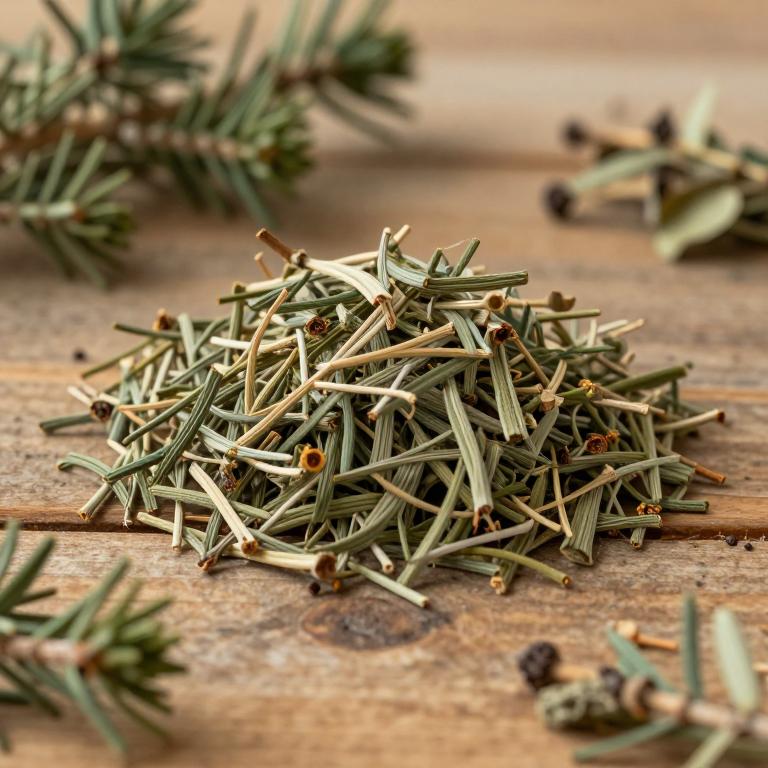
- Leaf
- Common names
- Not available
- Scientific synonyms
- Not available
Names and Synonyms
Scientific Names
Accepted name
Pinus albicaulisDistribution
This plant is primarily distributed across the mountainous regions of Western Canada and the Northwestern United States. In Canada, its range extends through the provinces of Alberta and British Columbia. Moving south into the United States, it can be found within the state of Idaho. The species also inhabits the rugged landscapes of Montana. Additionally, its geographical presence continues into the state of Oregon.
| Region | Area |
|---|---|
| Western Canada | Alberta |
| Western Canada | British Columbia |
| Northwestern U.S.A. | Idaho |
| Northwestern U.S.A. | Montana |
| Northwestern U.S.A. | Oregon |
| Northwestern U.S.A. | Washington |
| Northwestern U.S.A. | Wyoming |
| Southwestern U.S.A. | California |
| Southwestern U.S.A. | Nevada |
Sources: The World Checklist of Vascular Plants (WCVP)
Botanical Identification
Life history
The life history of Pinus albicaulis is characterized by a perennial lifecycle, allowing the species to persist in its high-altitude habitats over many years. As a woody gymnosperm, it exhibits a phanerophyte life form, maintaining its photosynthetic organs on elevated branches above the ground level. While its structural classification can vary depending on environmental stressors and specific growth stages, it is fundamentally recognized as a phanerophyte, though in certain extreme alpine conditions or stunted growth forms, it may exhibit characteristics consistent with a nanophanerophyte.
- Life form :
- nanophanerophyte
- Life form :
- phanerophyte
- Lifecycle :
- perennial
Morphology
The morphology of Pinus albicaulis is characterized by a woody growth form, specifically functioning as a self-supporting tree. It reaches an average plant height of approximately 20 m and exhibits a terrestrial lifestyle, existing neither as an aquatic nor a semiaquatic organism. As a self-supporting species, it does not function as a climber, liana, or vine, nor does it act as an epiphyte. Furthermore, the plant is an independent organism, lacking any parasitic tendencies.
- Aquatic :
- terrestrial
- Climber :
- self-supporting
- Epiphyte :
- terrestrial
- Growth form :
- tree
- Parasite :
- independent
- Plant height mean:
- 20 m
- Woodiness :
- woody
Physiology
The physiology of Pinus albicaulis is characterized by specialized adaptations to high-altitude, montane environments, most notably through its use of the C3 photosynthetic pathway. As a C3 plant, its carbon fixation process occurs primarily via the Calvin cycle, where the enzyme Rubisco captures atmospheric carbon dioxide directly within the mesophyll cells. To mitigate the physiological stresses of its alpine habitat—such as intense solar radiation, fluctuating temperatures, and seasonal water scarcity—the species exhibits specific morphological and metabolic adjustments. Its needle-like leaves are designed to minimize transpirational water loss through a thick waxy cuticle and sunken stomata, which helps regulate gas exchange while maintaining turgor pressure. Furthermore, the plant's metabolic processes are tuned to endure significant thermal shifts, employing biochemical mechanisms to protect cellular structures during freezing temperatures, ensuring that the C3 photosynthetic machinery remains functional during the brief, intense growing seasons characteristic of its native range.
- Photosynthetic pathway :
- C3
Reproduction
The reproduction of Pinus albicaulis involves a complex dispersal mechanism and specific seed characteristics that facilitate its propagation. The species exhibits a multifaceted dispersal syndrome, utilizing anemochorous, zoochorous, autochorous, hydrochorous, and unspecialized methods to spread its progeny across various environments. In terms of seed morphology, the plant produces seeds with a highly specific mass profile; the average seed mass is approximately 0.137332143 g, with individual seed weights ranging from a minimum of 0.125 g to a maximum of 0.17544 g.
- Dispersal syndrome :
- zoochorous
- Seed mass max:
- 0.17544 g
- Seed mass mean:
- 0.137332143 g
- Seed mass min:
- 0.125 g
Sources: Global Inventory of Floras and Traits (GIFT)
Plant Parts
Pinus albicaulis has 1 reported plant parts identified across 1 scientific publications and several other databases that are studied for medicinal purposes. The most consistently reported plant part include leaf.
| Plant part | Supporting sources | Consensus |
|---|---|---|
| Leaf | 1 supporting sources | ★☆☆☆☆ |
Leaf
- Molecules (Basel, Switzerland)
Preparations
Pinus albicaulis has 1 reported preparations identified across 1 scientific publications and several other databases. The most consistently reported preparations include leaf essential oils.
| Preparation | Supporting sources | Consensus |
|---|---|---|
| Leaf essential oils | 1 supporting sources | ★☆☆☆☆ |
Leaf essential oils
- Molecules (Basel, Switzerland)