lesser burnet-saxifrage
Pimpinella saxifraga · Accepted scientific name
Scientific literature: Very Sparse (6 studies) · ★☆☆☆☆
Lesser burnet-saxifrage, scientifically known as Pimpinella saxifraga, is a perennial herb cherished in traditional medicine. Often found in rocky alpine habitats, it possesses unique bioactive properties. Historically utilized for its restorative qualities, this plant offers intriguing potential for modern herbal studies, particularly regarding its soothing and therapeutic applications.
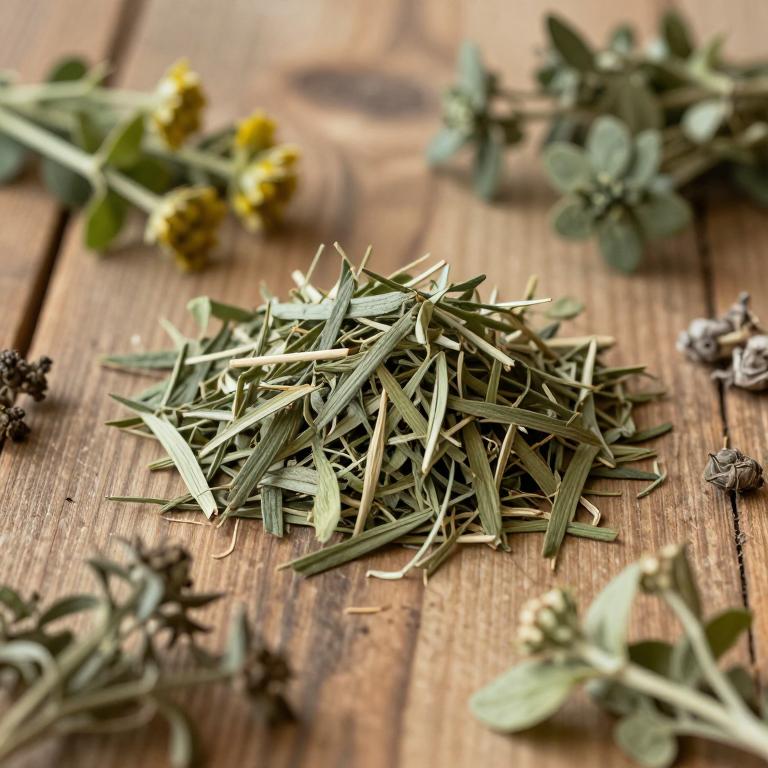
Names and Synonyms
Common Names
- lesser burnet-saxifrage
- solid-stem burnet-saxifrage
- Burnet-Saxifrage
- pimpinella
- burnet saxifrage
Scientific Names
Accepted name
Pimpinella saxifragaSynonyms
- Apium saxifragum
- Tragoselinum saxifragum
- Carum saxifraga
Regional and Traditional Names
Spanish:
- Pimpinela blanca
- Pimpinela blanca
German:
- Kleine Bibernelle
- Gemeine Bibernelle
- Bockwurz
- Bumbernell
- Stein-Bibernelle
- Steinbrechwurz
- Steinpetersilie
- Pfefferkraut
- Petit boucage
- Artengruppe Kleine Pimpinelle
- Kleine Bibernelle
- Gewoehnliche Kleine Bibernelle
French:
- petit boucage
- boucage saxifrage
- petit boucage
- petite pimprenelle
Sources: Wikidata, Catalogue of Life
Taxonomical Classification
This plant belongs to the kingdom Plantae and is classified under the phylum Streptophyta and class Equisetopsida. Within the subclass Magnoliidae, it is organized under the order Apiales and the family Apiaceae. Finally, it is specifically identified by the genus Pimpinella.
| Rank | Classification |
|---|---|
| Kingdom | Plantae |
| Phylum | Streptophyta |
| Class | Equisetopsida |
| Subclass | Magnoliidae |
| Order | Apiales |
| Family | Apiaceae |
| Genus | Pimpinella |
Sources: The World Checklist of Vascular Plants (WCVP)
Distribution
This plant exhibits a specific distribution pattern throughout the northern regions of Europe. It can be found growing naturally across the coastal and inland landscapes of Denmark. Its presence extends further north into the territories of Norway and Finland. Additionally, the species is well-established within the British Isles, specifically in Great Britain and Ireland. Together, these locations define its primary geographical range within the northern continent.
| Region | Area |
|---|---|
| Northern Europe | Denmark |
| Northern Europe | Finland |
| Northern Europe | Great Britain |
| Northern Europe | Ireland |
| Northern Europe | Norway |
| Northern Europe | Sweden |
| Middle Europe | Austria |
| Middle Europe | Belgium |
| Middle Europe | Czechia-Slovakia |
| Middle Europe | Germany |
Sources: The World Checklist of Vascular Plants (WCVP)
Botanical Identification
Ecology
The ecology of Pimpinella saxifraga is characterized by its ability to thrive in diverse and often transitional environments, ranging from disturbed lowland areas to high-altitude terrains. It is commonly found inhabiting crop fields and forest edges, where it benefits from the varying light availability and soil compositions found at the boundaries of different ecosystems. Furthermore, the species demonstrates significant ecological plasticity by colonizing mountainous regions, allowing it to adapt to the cooler temperatures and rugged topographical features typical of alpine or sub-alpine zones. This wide distribution across varied landscapes suggests a robust capacity to occupy various niches within temperate and montane ecosystems.
- Habitat :
- crop fields, forest edges, mountains
Life history
The life history of Pimpinella saxifraga is characterized by its status as a perennial plant, allowing it to persist through multiple growing seasons. As a hemicryptophyte, its perennable buds are located at or just below the soil surface, protected by leaf litter or snow during unfavorable conditions. The species exhibits a deciduous nature, shedding its foliage during its dormant period to conserve energy and withstand seasonal shifts. This combination of a perennial lifecycle, a hemicryptophytic life form, and deciduous behavior dictates its survival strategy within its natural habitat.
- Deciduousness :
- deciduous
- Life form :
- hemicryptophyte
- Lifecycle :
- perennial
Morphology
The morphology of Pimpinella saxifraga is characterized by its growth form as a non-woody herb and specifically a forb. This self-supporting plant typically exhibits a terrestrial habit, functioning as an independent organism rather than a parasite or epiphyte. In terms of stature, it is a relatively low-growing species with a plant height that ranges from a minimum of 0.15 m to a maximum of 0.9 m, maintaining an average height of approximately 0.413 m.
- Aquatic :
- terrestrial
- Climber :
- self-supporting
- Epiphyte :
- terrestrial
- Growth form :
- herb
- Growth form :
- forb
- Parasite :
- independent
- Plant height max:
- 0.9 m
- Plant height mean:
- 0.413 m
- Plant height min:
- 0.15 m
- Woodiness :
- non-woody
Physiology
The physiology of Pimpinella saxifraga is characterized by a C3 photosynthetic pathway, which is typical for many temperate herbaceous species operating under standard atmospheric conditions. The plant exhibits a non-carnivorous nutritional strategy, relying entirely on autotrophic processes and soil-based nutrient uptake rather than the capture of prey. Morphologically, its foliage displays a mean leaf size of approximately 26.095 cm², a dimension that contributes to its overall surface area for light interception. Furthermore, the plant maintains a mean Specific Leaf Area (SLA) of 157.97 cm²/g, reflecting the structural relationship between its leaf mass and its surface area, which is an important indicator of its resource acquisition efficiency and leaf thickness.
- Carnivory :
- non-carnivorous
- Leaf size mean:
- 26.095 cm²
- Photosynthetic pathway :
- C3
- Specific Leaf Area (SLA) mean:
- 157.97 cm²/g
Reproduction
The reproduction of Pimpinella saxifraga is characterized by a sexual reproductive cycle involving biotic pollination and specialized seed dispersal. The flowering period typically begins in June and concludes in August. During this time, the plant utilizes a biotic pollination syndrome, specifically attracting insects such as bees to facilitate fertilization; notably, the capacity for self-fertilization is present within the species. Following successful pollination, the plant produces dry fruits. The resulting seeds are quite small, with a mean mass of approximately 0.001161375 g (ranging from a minimum of 0.00107 g to a maximum of 0.00169 g) and a consistent seed volume of 0.38 mm³. These seeds are dispersed via an anemochorous syndrome, relying on wind for movement. Furthermore, asexual reproduction is absent in this species, making sexual processes the primary means of propagation.
- Dispersal syndrome :
- anemochorous
- Flowering time :
- Jun
- Flowering time :
- Aug
- Fruit dryness :
- dry
- Pollination syndrome :
- insect
- Pollination syndrome :
- bee
- Pollination syndrome :
- biotic
- Reproduction asexual :
- absent
- Seed mass max:
- 0.00169 g
- Seed mass mean:
- 0.001161375 g
- Seed mass min:
- 0.00107 g
- Seed volume max:
- 0.38 mm³
- Self fertilization :
- present
Sources: Global Inventory of Floras and Traits (GIFT)
Activities
Pimpinella saxifraga has 2 reported activities identified across 0 scientific publications and several other databases. The most consistently reported activities include Antibacterial, Antioxidant.
| Activity | Supporting sources | Consensus |
|---|---|---|
| Antibacterial | 1 supporting sources | ★☆☆☆☆ |
| Antioxidant | 1 supporting sources | ★☆☆☆☆ |
Antibacterial
- Molecules (Basel, Switzerland)
Antioxidant
- Molecules (Basel, Switzerland)
Conditions
Pimpinella saxifraga has 4 reported investigations on conditions identified across 0 scientific publications and several other databases. The most consistently reported conditions include cancer, diuresis, hypertension, respiratory diseases.
| Condition | Supporting sources | Consensus |
|---|---|---|
| Cancer | 1 supporting sources | ★☆☆☆☆ |
| Diuresis | 1 supporting sources | ★☆☆☆☆ |
| Hypertension | 1 supporting sources | ★☆☆☆☆ |
| Respiratory diseases | 1 supporting sources | ★☆☆☆☆ |
Cancer
- Molecules (Basel, Switzerland)
Diuresis
- Molecules (Basel, Switzerland)
Hypertension
- Molecules (Basel, Switzerland)
Respiratory diseases
- Molecules (Basel, Switzerland)