Pimpinella pruatjan
Pimpinella pruatjan · Accepted scientific name
Scientific literature: Very Sparse (7 studies) · ★☆☆☆☆
Pimpinella pruatjan, scientifically known as Pimpinella pruatjan, is a versatile medicinal herb valued in traditional wellness practices. Renowned for its potent bioactive compounds, this plant offers significant therapeutic potential, particularly for its antioxidant and anti-inflammatory properties. It serves as a vital natural resource for holistic health and pharmacology.
- Family
- Apiaceae
- Native range
- Asia-Tropical
- Parts used
- Not available
- Common names
- Not available
- Scientific synonyms
- Pimpinella Pruatjan Var. Prolifera · Pimpinella Pruatjan Var. Depressa · 4 more
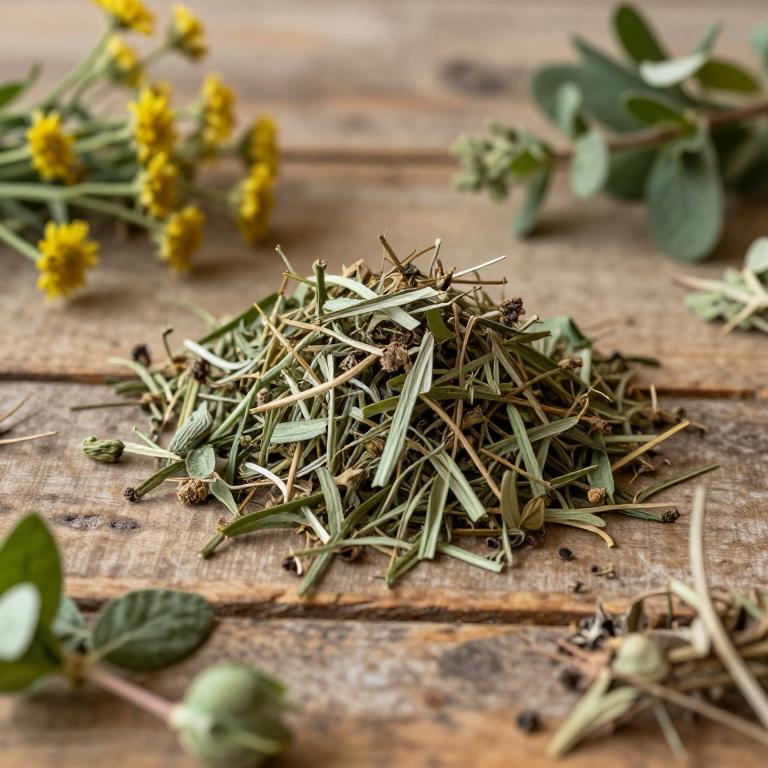
Names and Synonyms
Scientific Names
Accepted name
Pimpinella pruatjanSynonyms
- Pimpinella pruatjan var. prolifera
- Pimpinella pruatjan var. depressa
- Heterachaena alpina
- Anisometros alpina
- Pimpinella leeuwenii
- Carum panatjan
Sources: Wikidata
Taxonomical Classification
This plant belongs to the kingdom Plantae and is classified within the phylum Streptophyta and the class Equisetopsida. Further taxonomic descent places it in the subclass Magnoliidae and the order Apiales, within the family Apiaceae. Finally, it is specifically identified under the genus Pimpinella.
| Rank | Classification |
|---|---|
| Kingdom | Plantae |
| Phylum | Streptophyta |
| Class | Equisetopsida |
| Subclass | Magnoliidae |
| Order | Apiales |
| Family | Apiaceae |
| Genus | Pimpinella |
Sources: The World Checklist of Vascular Plants (WCVP)
Distribution
This plant is a medicinal species primarily found within the Malesian botanical region. Its specific geographical distribution is concentrated in the island of Jawa. Within this Indonesian territory, it thrives in unique local ecosystems that support its growth. Because its range is so localized, it is considered a regional component of the area's biodiversity. Understanding this limited habitat is essential for the conservation of the species.
| Region | Area |
|---|---|
| Malesia | Jawa |
Sources: The World Checklist of Vascular Plants (WCVP)
Botanical Identification
Life history
The life history of Pimpinella pruatjan is characterized by its status as a perennial plant, allowing it to persist through multiple growing seasons. In terms of its structural growth strategy and survival mechanisms, the species is classified as a hemicryptophyte, meaning its perennable buds are located at or just below the soil surface, protected by leaf litter or soil during unfavorable conditions. This life form, categorized both as a hemicryptophyte and more specifically as a hemi-cryptophyte, ensures its ability to regenerate and endure seasonal environmental shifts throughout its extended lifecycle.
- Life form :
- hemicryptophyte
- Lifecycle :
- perennial
Morphology
The morphology of Pimpinella pruatjan is characterized by a relatively compact growth habit, with the plant height typically ranging from a minimum of 0.05 m to a maximum of 0.3 m. As a member of the Apiaceae family, its structural form is defined by its herbaceous nature and specific vegetative architecture. The plant exhibits a low-growing stature, which influences its overall density and spatial footprint within its natural habitat. The stem and foliage development are consistent with this height range, supporting the reproductive structures that emerge within this modest vertical scale.
- Plant height max:
- 0.3 m
- Plant height min:
- 0.05 m
Physiology
The physiology of Pimpinella pruatjan is fundamentally characterized by its utilization of the C3 photosynthetic pathway, a process in which carbon dioxide is fixed directly into a three-carbon compound during the Calvin cycle. This metabolic strategy implies that the plant's primary carbon fixation occurs via the enzyme RuBisCO within the mesophyll cells, a mechanism typical of many members of the Apiaceae family that thrive in temperate to subtropical environments. As a C3 plant, its physiological efficiency is highly dependent on environmental variables such as light intensity, temperature, and water availability, as the pathway is susceptible to photorespiration when stomatal conductance decreases under heat or drought stress. The plant's metabolic processes are geared towards the synthesis of various secondary metabolites, which are integrated into its physiological framework to assist in defense and adaptation. Consequently, its gas exchange dynamics and water-use efficiency are governed by the inherent constraints of the C3 pathway, influencing its overall growth patterns and resource allocation strategies.
- Photosynthetic pathway :
- C3
Reproduction
The reproduction of Pimpinella pruatjan is characterized by a specific seasonal flowering cycle that facilitates its reproductive success. The flowering process typically commences in July, marking the beginning of its reproductive phase. This period of floral activity continues through the late summer and early autumn months, eventually reaching its conclusion in October. This seasonal window ensures that the plant undergoes its pollination and subsequent seed development during a defined interval within the annual cycle.
- Flowering time :
- Jul
- Flowering time :
- Oct
Sources: Global Inventory of Floras and Traits (GIFT)
Chemicals
Pimpinella pruatjan has 5 reported phytochemicals identified across 0 scientific publications and several other databases. The most consistently reported chemicals include Flavonoids, Glycoside, Saponins, Steroid, Tannins.
| Chemical | Supporting sources | Consensus |
|---|---|---|
| Flavonoids | 1 supporting sources | ★☆☆☆☆ |
| Glycoside | 1 supporting sources | ★☆☆☆☆ |
| Saponins | 1 supporting sources | ★☆☆☆☆ |
| Steroid | 1 supporting sources | ★☆☆☆☆ |
| Tannins | 1 supporting sources | ★☆☆☆☆ |
Flavonoids
- Tropical life sciences research
Glycoside
- Tropical life sciences research
Saponins
- Tropical life sciences research
Steroid
- Tropical life sciences research
Tannins
- Tropical life sciences research
Activities
Pimpinella pruatjan has 2 reported activities identified across 0 scientific publications and several other databases. The most consistently reported activities include Antibacterial, Aphrodisiac.
| Activity | Supporting sources | Consensus |
|---|---|---|
| Antibacterial | 1 supporting sources | ★☆☆☆☆ |
| Aphrodisiac | 1 supporting sources | ★☆☆☆☆ |
Antibacterial
- Tropical life sciences research
Aphrodisiac
- Tropical life sciences research