Pimpinella aromatica
Pimpinella aromatica · Accepted scientific name
Scientific literature: Very Extensive (1052 studies) · ★★★★★
Pimpinella aromatica, is a fragrant perennial herb belonging to the Apiaceae family. Renowned for its aromatic essential oils, this medicinal plant has been traditionally used to support digestive health and reduce inflammation. Its unique chemical profile offers significant therapeutic potential in holistic wellness and natural pharmaceutical research today.
- Family
- Apiaceae
- Native range
- Asia-Temperate
- Parts used
- Fruit · Seed
- Common names
- Not available
- Scientific synonyms
- Pimpinella Schatilensis · Tragium Aromaticum · 1 more
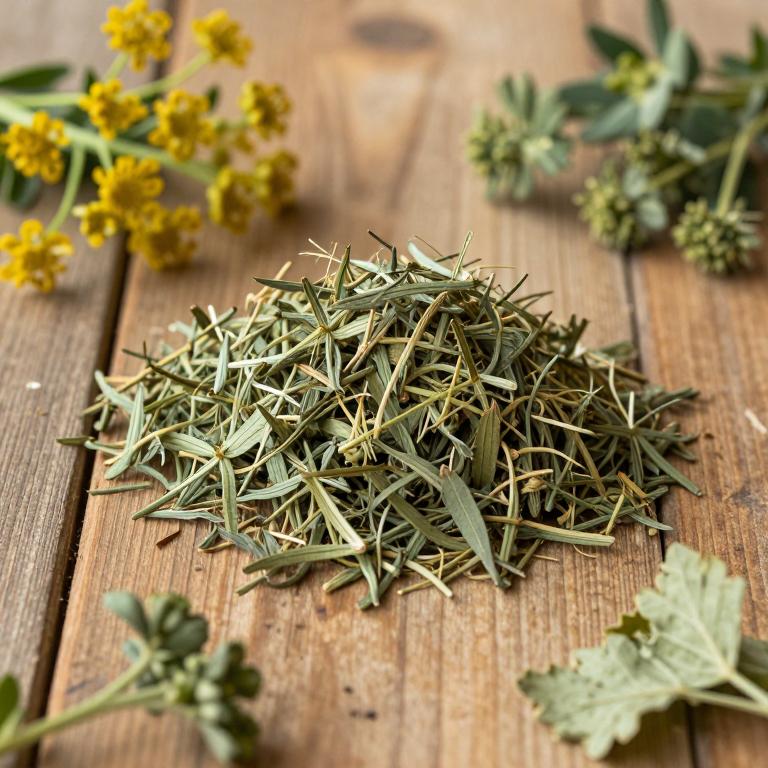
Names and Synonyms
Scientific Names
Accepted name
Pimpinella aromaticaSynonyms
- Pimpinella schatilensis
- Tragium aromaticum
- Pimpinella cappadocica var. iberica
Sources: Wikidata, Catalogue of Life
Taxonomical Classification
This plant belongs to the kingdom Plantae and is classified within the phylum Streptophyta and the class Equisetopsida. It is further categorized under the subclass Magnoliidae and the order Apiales, falling into the family Apiaceae. Finally, it is identified by its genus, Pimpinella.
| Rank | Classification |
|---|---|
| Kingdom | Plantae |
| Phylum | Streptophyta |
| Class | Equisetopsida |
| Subclass | Magnoliidae |
| Order | Apiales |
| Family | Apiaceae |
| Genus | Pimpinella |
Sources: The World Checklist of Vascular Plants (WCVP)
Distribution
This plant is primarily found across the diverse landscapes of the Caucasus region. Its natural range extends through the rugged terrain of the North Caucasus. Additionally, it can be located within the mountainous areas of the Transcaucasus. The species also maintains a significant presence in Western Asia, specifically within the borders of Türkiye. Consequently, its distribution is concentrated within these specific ecological zones.
| Region | Area |
|---|---|
| Caucasus | North Caucasus |
| Caucasus | Transcaucasus |
| Western Asia | Türkiye |
Sources: The World Checklist of Vascular Plants (WCVP)
Botanical Identification
Ecology
The ecology of Pimpinella aromatica is characterized by its preference for rugged, high-altitude terrains, specifically thriving within mountainous regions. It is commonly found colonizing shrubberies and stony places, where it adapts to the challenging conditions of rocky substrates and sparse vegetation. These environments typically provide the well-drained soil and specific microclimates necessary for its growth, allowing the species to establish itself amidst the physical complexity of montane landscapes and scrubland ecosystems.
- Habitat :
- mountains, shrubberies, stony places
Life history
The life history of Pimpinella aromatica is characterized by a biennial lifecycle, meaning the plant typically completes its biological development over a period of two years. During its first year of growth, the plant focuses on vegetative development, establishing a robust root system and producing a basal rosette of leaves. In its second year, the plant undergoes a reproductive phase, transitioning from vegetative growth to the development of an inflorescence, where it produces flowers and eventually seeds to ensure the continuation of the species. Following the successful dispersal of seeds, the individual plant completes its life cycle.
- Lifecycle :
- biennial
Morphology
The morphology of Pimpinella aromatica is characterized by its herbaceous growth form, presenting as a non-woody plant. It typically reaches a height ranging from a minimum of 0.2 m to a maximum of 0.7 m. As a herb, the plant lacks woody tissue, maintaining a soft, flexible structure throughout its stature.
- Growth form :
- herb
- Plant height max:
- 0.7 m
- Plant height min:
- 0.2 m
- Woodiness :
- non-woody
Reproduction
The reproduction of Pimpinella aromatica is characterized by a specific seasonal flowering window and the production of extremely lightweight seeds. The flowering process is concentrated during the month of July, with both the onset and the conclusion of the blooming period occurring within this month. Following successful pollination, the plant produces seeds that are remarkably uniform in size; the seed mass is highly consistent, with a mean, maximum, and minimum value all recorded at 0.00053 g. This minimal seed mass suggests a reproductive strategy focused on high-volume dispersal of very fine seeds.
- Flowering time :
- Jul
- Seed mass mean:
- 0.00053 g
Sources: Global Inventory of Floras and Traits (GIFT)
Plant Parts
Pimpinella aromatica has 3 reported plant parts identified across 7 scientific publications and several other databases that are studied for medicinal purposes. The most consistently reported plant part include fruit, seed, leaf.
| Plant part | Supporting sources | Consensus |
|---|---|---|
| Fruit | 3 supporting sources | ★★☆☆☆ |
| Seed | 3 supporting sources | ★★☆☆☆ |
| Leaf | 1 supporting sources | ★☆☆☆☆ |
Fruit
- Journal of research in medical sciences : the official journal of Isfahan University of Medical Sciences
- Scientific reports
- Plants (Basel, Switzerland)
Seed
- Journal of plant research
- Biomedical chromatography : BMC
- Phytotherapy research : PTR
Leaf
- Journal of plant research
Chemicals
Pimpinella aromatica has 174 reported phytochemicals identified across 7 scientific publications and several other databases. The most consistently reported chemicals include ANETHOLE, CHLOROGENIC ACID, Estragole, Flavonoids, Linalool.
| Chemical | Supporting sources | Consensus |
|---|---|---|
| ANETHOLE | 11 supporting sources | ★★★★★ |
| CHLOROGENIC ACID | 3 supporting sources | ★★☆☆☆ |
| Estragole | 3 supporting sources | ★★☆☆☆ |
| Flavonoids | 3 supporting sources | ★★☆☆☆ |
| Linalool | 3 supporting sources | ★★☆☆☆ |
| trans-Anethole | 3 supporting sources | ★★☆☆☆ |
| Ash | 2 supporting sources | ★☆☆☆☆ |
| CALCIUM | 2 supporting sources | ★☆☆☆☆ |
| Dianethole | 2 supporting sources | ★☆☆☆☆ |
| FAT | 2 supporting sources | ★☆☆☆☆ |
ANETHOLE
- Dr. Duke
- Journal of chromatography. A
- PloS one
- Advances in experimental medicine and biology
- Dental research journal
View 6 additional sources
- Reviews on recent clinical trials
- Scientific reports
- Phytochemistry
- Journal of separation science
- Journal of ethnopharmacology
- Plants (Basel, Switzerland)
CHLOROGENIC ACID
- Dr. Duke
- Chemistry & biodiversity
- Scientific reports
Estragole
- Dr. Duke
- Journal of chromatography. A
- Reviews on recent clinical trials
Flavonoids
- Saudi journal of biological sciences
- Biology
- Scientific reports
Linalool
- Dr. Duke
- Bioresource technology
- Journal of separation science
trans-Anethole
- Dr. Duke
- Molecules (Basel, Switzerland)
- Plants (Basel, Switzerland)
Ash
- Dr. Duke
- Chemistry & biodiversity
CALCIUM
- Dr. Duke
- Chemistry & biodiversity
Dianethole
- Dr. Duke
- Journal of ethnopharmacology
FAT
- Dr. Duke
- Chemistry & biodiversity
Activities
Pimpinella aromatica has 705 reported activities identified across 7 scientific publications and several other databases. The most consistently reported activities include Antibacterial, Antioxidant, Antimicrobial, Antiproliferative, Anticancer.
| Activity | Supporting sources | Consensus |
|---|---|---|
| Antibacterial | 5 supporting sources | ★★★☆☆ |
| Antioxidant | 5 supporting sources | ★★★☆☆ |
| Antimicrobial | 4 supporting sources | ★★☆☆☆ |
| Antiproliferative | 3 supporting sources | ★★☆☆☆ |
| Anticancer | 2 supporting sources | ★☆☆☆☆ |
| Anticonvulsant | 2 supporting sources | ★☆☆☆☆ |
| Antidiabetic | 2 supporting sources | ★☆☆☆☆ |
| Antifungal | 2 supporting sources | ★☆☆☆☆ |
| Antiulcer | 2 supporting sources | ★☆☆☆☆ |
| Neuroprotective | 2 supporting sources | ★☆☆☆☆ |
Antibacterial
- Dr. Duke
- Molecules (Basel, Switzerland)
- Dental research journal
- Folia medica
- Journal of ethnopharmacology
Antioxidant
- Dr. Duke
- Plants (Basel, Switzerland)
- Iranian journal of basic medical sciences
- Molecules (Basel, Switzerland)
- Nephrology (Carlton, Vic.)
Antimicrobial
- Dental research journal
- Molecules (Basel, Switzerland)
- Folia medica
- Scientific reports
Antiproliferative
- Dr. Duke
- Molecules (Basel, Switzerland)
- Foods (Basel, Switzerland)
Anticancer
- Dr. Duke
- Journal of ethnopharmacology
Anticonvulsant
- Dr. Duke
- BioMed research international
Antidiabetic
- Dr. Duke
- Advances in experimental medicine and biology
Antifungal
- Dental research journal
- Folia medica
Antiulcer
- Dr. Duke
- Journal of ethnopharmacology
Neuroprotective
- Dr. Duke
- Advances in experimental medicine and biology
Preparations
Pimpinella aromatica has 14 reported preparations identified across 7 scientific publications and several other databases. The most consistently reported preparations include essential oils, essential oil, Essential oils, methanolic extract, P. anisum oil.
| Preparation | Supporting sources | Consensus |
|---|---|---|
| Essential oils | 4 supporting sources | ★★☆☆☆ |
| Essential oil | 3 supporting sources | ★★☆☆☆ |
| Essential oils | 2 supporting sources | ★☆☆☆☆ |
| Methanolic extract | 2 supporting sources | ★☆☆☆☆ |
| P. anisum oil | 1 supporting sources | ★☆☆☆☆ |
| Pimpinella anisum extract | 1 supporting sources | ★☆☆☆☆ |
| Aqueous and organic extracts | 1 supporting sources | ★☆☆☆☆ |
| Chloroformic extracts | 1 supporting sources | ★☆☆☆☆ |
| Ethanolic extracts | 1 supporting sources | ★☆☆☆☆ |
| Extract | 1 supporting sources | ★☆☆☆☆ |
Essential oils
- Plants (Basel, Switzerland)
- Molecules (Basel, Switzerland)
- Phytotherapy research : PTR
- Pakistan journal of pharmaceutical sciences
Essential oil
- Journal of research in medical sciences : the official journal of Isfahan University of Medical Sciences
- Chemistry & biodiversity
- Folia medica
Essential oils
- Bioresource technology
- Plants (Basel, Switzerland)
Methanolic extract
- Journal of wound care
- Scientific reports
P. anisum oil
- Ultrastructural pathology
Pimpinella anisum extract
- Journal of ethnopharmacology
Aqueous and organic extracts
- Molecules (Basel, Switzerland)
Chloroformic extracts
- Pakistan journal of pharmaceutical sciences
Ethanolic extracts
- Molecules (Basel, Switzerland)
Extract
- Journal of wound care