allspice
Pimenta · Accepted scientific name
Scientific literature: Very Sparse (26 studies) · ★☆☆☆☆
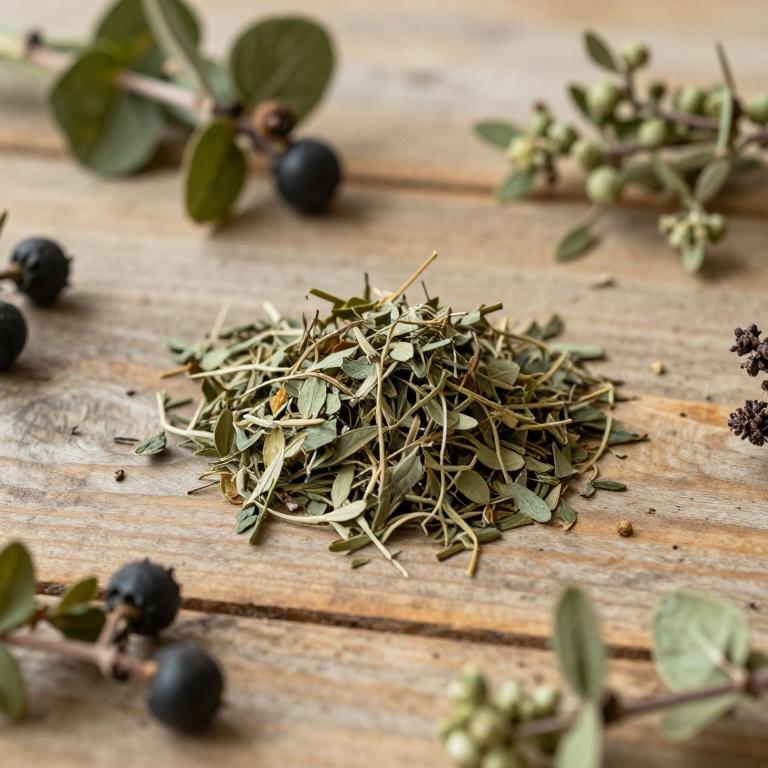
Allspice, scientifically known as Pimenta, is a versatile medicinal plant prized for its aromatic berries. Rich in essential oils like eugenol, it offers powerful antioxidant, anti-inflammatory, and antimicrobial properties. Traditionally used to soothe digestive issues and alleviate pain, this potent botanical serves as a natural remedy in holistic wellness.
- Family
- Myrtaceae
- Native range
- Africa
- Parts used
- Fruit · Leaf
- Common names
- Allspice
- Scientific synonyms
- Cryptorhiza · Krokia · 6 more
Names and Synonyms
Common Names
- allspice
Scientific Names
Accepted name
PimentaSynonyms
- Cryptorhiza
- Krokia
- Myrtekmania
- Mentodendron
- Evanesca
- Pseudocaryophyllus
- Amomis
- Pimentus
Regional and Traditional Names
Spanish:
- Pseudocaryophyllus
- Mentodendron
- Cryptorhiza
- Myrtekmania
- Evanesca
- Pimentus
- Krokia
- Pimientas
Sources: Wikidata, Catalogue of Life
Taxonomical Classification
This plant belongs to the kingdom Plantae and the phylum Streptophyta, falling under the class Equisetopsida and subclass Magnoliidae. It is further classified within the order Myrtales and the family Myrtaceae. Specifically, it is identified by its genus, Pimenta.
| Rank | Classification |
|---|---|
| Kingdom | Plantae |
| Phylum | Streptophyta |
| Class | Equisetopsida |
| Subclass | Magnoliidae |
| Order | Myrtales |
| Family | Myrtaceae |
| Genus | Pimenta |
Sources: The World Checklist of Vascular Plants (WCVP)
Distribution
This plant exhibits a diverse geographical distribution spanning several major oceanic regions. Within the Western Indian Ocean, it can be found growing in the Comoros. Its presence extends to the Indian Subcontinent, specifically within the borders of India. In the South-Central Pacific, the species inhabits both the Cook Islands and the Society Islands. Finally, its range reaches into the Northwestern Pacific, where it is located among the Caroline Islands.
| Region | Area |
|---|---|
| Western Indian Ocean | Comoros |
| Indian Subcontinent | India |
| South-Central Pacific | Cook Is. |
| South-Central Pacific | Society Is. |
| Northwestern Pacific | Caroline Is. |
| Northwestern Pacific | Marianas |
| North-Central Pacific | Hawaii |
| Southeastern U.S.A. | Florida |
| Mexico | Mexico Gulf |
| Mexico | Mexico Southwest |
Sources: The World Checklist of Vascular Plants (WCVP)
Plant Parts
Pimenta has 2 reported plant parts identified across 2 scientific publications and several other databases that are studied for medicinal purposes. The most consistently reported plant part include fruit, leaf.
| Plant part | Supporting sources | Consensus |
|---|---|---|
| Fruit | 1 supporting sources | ★☆☆☆☆ |
| Leaf | 1 supporting sources | ★☆☆☆☆ |
Fruit
- Current drug targets
Leaf
- Current drug targets
Activities
Pimenta has 11 reported activities identified across 2 scientific publications and several other databases. The most consistently reported activities include Analgesic, Anticancer, Antihypertensive, Antimicrobial, Antioxidant.
| Activity | Supporting sources | Consensus |
|---|---|---|
| Analgesic | 1 supporting sources | ★☆☆☆☆ |
| Anticancer | 1 supporting sources | ★☆☆☆☆ |
| Antihypertensive | 1 supporting sources | ★☆☆☆☆ |
| Antimicrobial | 1 supporting sources | ★☆☆☆☆ |
| Antioxidant | 1 supporting sources | ★☆☆☆☆ |
| Antipyretic | 1 supporting sources | ★☆☆☆☆ |
| Antiviral | 1 supporting sources | ★☆☆☆☆ |
| Anxiolytic | 1 supporting sources | ★☆☆☆☆ |
| Diuretic | 1 supporting sources | ★☆☆☆☆ |
| Hypoglycemic | 1 supporting sources | ★☆☆☆☆ |
Analgesic
- Chemistry & biodiversity
Anticancer
- Chemistry & biodiversity
Antihypertensive
- Chemistry & biodiversity
Antimicrobial
- Chemistry & biodiversity
Antioxidant
- Chemistry & biodiversity
Antipyretic
- Chemistry & biodiversity
Antiviral
- Chemistry & biodiversity
Anxiolytic
- Chemistry & biodiversity
Diuretic
- Chemistry & biodiversity
Hypoglycemic
- Chemistry & biodiversity
Conditions
Pimenta has 9 reported investigations on conditions identified across 2 scientific publications and several other databases. The most consistently reported conditions include analgesic, antihypertensive, antioxidant, antipyretic, antiviral.
| Condition | Supporting sources | Consensus |
|---|---|---|
| Analgesic | 1 supporting sources | ★☆☆☆☆ |
| Antihypertensive | 1 supporting sources | ★☆☆☆☆ |
| Antioxidant | 1 supporting sources | ★☆☆☆☆ |
| Antipyretic | 1 supporting sources | ★☆☆☆☆ |
| Antiviral | 1 supporting sources | ★☆☆☆☆ |
| Anxiolytic | 1 supporting sources | ★☆☆☆☆ |
| Diuretic | 1 supporting sources | ★☆☆☆☆ |
| Hypoglycemic | 1 supporting sources | ★☆☆☆☆ |
| Sedative | 1 supporting sources | ★☆☆☆☆ |
Analgesic
- Chemistry & biodiversity
Antihypertensive
- Chemistry & biodiversity
Antioxidant
- Chemistry & biodiversity
Antipyretic
- Chemistry & biodiversity
Antiviral
- Chemistry & biodiversity
Anxiolytic
- Chemistry & biodiversity
Diuretic
- Chemistry & biodiversity
Hypoglycemic
- Chemistry & biodiversity
Sedative
- Chemistry & biodiversity