Pimenta pseudocaryophyllus
Pimenta pseudocaryophyllus · Accepted scientific name
Scientific literature: Very Sparse (9 studies) · ★☆☆☆☆
Pimenta pseudocaryophyllus, scientifically known as Pimenta pseudocaryophyllus, is a medicinal shrub native to South American forests. Renowned for its potent essential oils, this aromatic plant offers significant antimicrobial and anti-inflammatory properties. It is frequently utilized in traditional medicine to treat various ailments, showcasing its profound therapeutic potential.
- Family
- Myrtaceae
- Native range
- Southern America
- Parts used
- Leaf
- Common names
- Not available
- Scientific synonyms
- Eugenia Pseudocaryophyllus · Pseudocaryophyllus Sericeus · 1 more
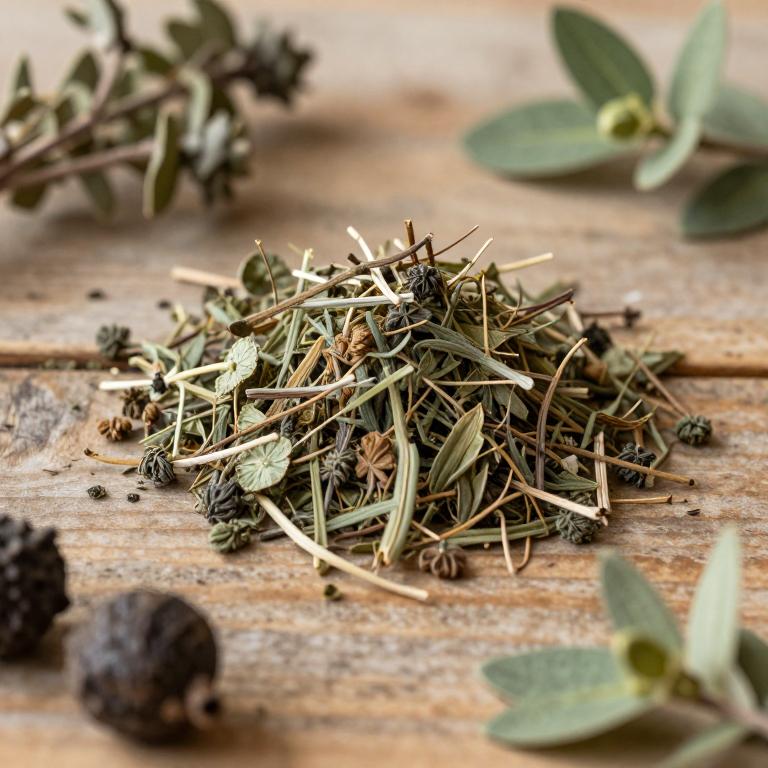
Names and Synonyms
Scientific Names
Accepted name
Pimenta pseudocaryophyllusSynonyms
- Eugenia pseudocaryophyllus
- Pseudocaryophyllus sericeus
- Myrtus pseudocaryophyllus
Sources: Wikidata, Catalogue of Life
Taxonomical Classification
This plant belongs to the kingdom Plantae and the phylum Streptophyta, falling under the class Equisetopsida and subclass Magnoliidae. Within the order Myrtales, it is classified under the family Myrtaceae and is specifically identified by the genus Pimenta.
| Rank | Classification |
|---|---|
| Kingdom | Plantae |
| Phylum | Streptophyta |
| Class | Equisetopsida |
| Subclass | Magnoliidae |
| Order | Myrtales |
| Family | Myrtaceae |
| Genus | Pimenta |
Sources: The World Checklist of Vascular Plants (WCVP)
Distribution
This plant is widely distributed across several key regions of Western South America, most notably within Bolivia. In Brazil, its presence is extensive, spanning multiple distinct geographical zones. It can be found throughout the West-Central region of the country. Additionally, its range extends into the Northeast and Southeast territories of Brazil. Finally, the species is also documented residing in the southern parts of Brazil.
| Region | Area |
|---|---|
| Western South America | Bolivia |
| Brazil | Brazil West-Central |
| Brazil | Brazil Northeast |
| Brazil | Brazil Southeast |
| Brazil | Brazil South |
Sources: The World Checklist of Vascular Plants (WCVP)
Botanical Identification
Ecology
The ecology of Pimenta pseudocaryophyllus is characterized by a broad adaptability to diverse Brazilian ecosystems, ranging from coastal environments to high-altitude formations. It inhabits a wide variety of habitats, including Restinga, Cerrado (latu sensu), and Seasonal Semi-deciduous Forests (Floresta Estacional Semi-decidual), as well as both Ombrophilous Forests (Floresta Ombrófila) and Mixed Ombrophilous Forests (Floresta Ombrófila Mista). Furthermore, the species is found in specialized high-elevation environments such as Campo de Altitude and Campo Rupestre. This environmental flexibility is reflected in its significant elevational distribution, spanning from sea level (0 m AMSL) up to a maximum altitude of 1200 m AMSL.
- Elevational range max:
- 1200 m AMSL
- Elevational range min:
- 0 m AMSL
- Habitat :
- Campo de Altitude, Campo Rupestre, Cerrado (lato sensu), Floresta Estacional Semidecidual, Floresta Ombrófila (= Floresta Pluvial), Floresta Ombrófila Mista, Restinga
Life history
The life history of Pimenta pseudocaryophyllus is characterized by its long-term survival as a perennial organism, allowing it to persist in its ecosystem through multiple growing seasons. Structurally, the plant exhibits distinct life forms depending on its developmental stage and environmental niche, manifesting as a phanerophyte, where its buds are elevated well above the ground, and also functioning as a nanophanerophyte, characterized by its relatively small, woody growth habit.
- Life form :
- nanophanerophyte
- Life form :
- phanerophyte
- Lifecycle :
- perennial
Morphology
The morphology of Pimenta pseudocaryophyllus is characterized by a versatile growth habit that can manifest as either a shrub or a tree, exhibiting significant structural diversity. This woody species displays a substantial stature, with a mean plant height of approximately 7 meters, though it is capable of reaching a maximum height of up to 17 meters. While it can function as a self-supporting plant, it also exhibits liana-like climbing characteristics. The plant is strictly terrestrial in its ecological niche, functioning as an independent organism rather than a parasite or an epiphyte.
- Aquatic :
- terrestrial
- Climber :
- liana
- Climber :
- self-supporting
- Epiphyte :
- terrestrial
- Growth form :
- tree
- Growth form :
- shrub
- Parasite :
- independent
- Plant height max:
- 17 m
- Plant height mean:
- 7 m
- Woodiness :
- woody
Physiology
The physiology of Pimenta pseudocaryophyllus is characterized by its specific metabolic and nutritional processes, most notably its utilization of the C3 photosynthetic pathway for carbon fixation. This metabolic strategy involves the direct fixation of atmospheric carbon dioxide through the enzyme RuBisCO, a common trait among many woody tropical species that dictates its efficiency in varying light and moisture conditions. Regarding its nutrient acquisition, the plant does not function as a nitrogen fixer; it lacks the specialized symbiotic relationships with nitrogen-fixing bacteria required to convert atmospheric nitrogen into usable forms, meaning it relies instead on the uptake of nitrates and ammonium from the soil through its root system.
- Nitrogen fixer :
- no
- Photosynthetic pathway :
- C3
Sources: Global Inventory of Floras and Traits (GIFT)
Plant Parts
Pimenta pseudocaryophyllus has 1 reported plant parts identified across 1 scientific publications and several other databases that are studied for medicinal purposes. The most consistently reported plant part include leaf.
| Plant part | Supporting sources | Consensus |
|---|---|---|
| Leaf | 1 supporting sources | ★☆☆☆☆ |
Leaf
- Journal of ethnopharmacology
Chemicals
Pimenta pseudocaryophyllus has 3 reported phytochemicals identified across 1 scientific publications and several other databases. The most consistently reported chemicals include (E)-Methyl isoeugenol, OLEANOLIC ACID, eugenol.
| Chemical | Supporting sources | Consensus |
|---|---|---|
| (E)-Methyl isoeugenol | 1 supporting sources | ★☆☆☆☆ |
| OLEANOLIC ACID | 1 supporting sources | ★☆☆☆☆ |
| eugenol | 1 supporting sources | ★☆☆☆☆ |
(E)-Methyl isoeugenol
- Journal of ethnopharmacology
OLEANOLIC ACID
- Journal of ethnopharmacology
eugenol
- Acta pharmaceutica (Zagreb, Croatia)
Activities
Pimenta pseudocaryophyllus has 2 reported activities identified across 1 scientific publications and several other databases. The most consistently reported activities include Diuretic, Tranquilizer.
| Activity | Supporting sources | Consensus |
|---|---|---|
| Diuretic | 1 supporting sources | ★☆☆☆☆ |
| Tranquilizer | 1 supporting sources | ★☆☆☆☆ |
Diuretic
- Journal of ethnopharmacology
Tranquilizer
- Journal of ethnopharmacology
Conditions
Pimenta pseudocaryophyllus has 2 reported investigations on conditions identified across 1 scientific publications and several other databases. The most consistently reported conditions include aphrodisiac, diuretic.
| Condition | Supporting sources | Consensus |
|---|---|---|
| Aphrodisiac | 1 supporting sources | ★☆☆☆☆ |
| Diuretic | 1 supporting sources | ★☆☆☆☆ |
Aphrodisiac
- Journal of ethnopharmacology
Diuretic
- Journal of ethnopharmacology
Preparations
Pimenta pseudocaryophyllus has 5 reported preparations identified across 1 scientific publications and several other databases. The most consistently reported preparations include dichloromethane fraction, essential oil, ethanolic leaf extract, infusion, tea.
| Preparation | Supporting sources | Consensus |
|---|---|---|
| Dichloromethane fraction | 1 supporting sources | ★☆☆☆☆ |
| Essential oil | 1 supporting sources | ★☆☆☆☆ |
| Ethanolic leaf extract | 1 supporting sources | ★☆☆☆☆ |
| Infusion | 1 supporting sources | ★☆☆☆☆ |
| Tea | 1 supporting sources | ★☆☆☆☆ |
Dichloromethane fraction
- Journal of ethnopharmacology
Essential oil
- Acta pharmaceutica (Zagreb, Croatia)
Ethanolic leaf extract
- Journal of ethnopharmacology
Infusion
- Journal of ethnopharmacology
Tea
- Journal of ethnopharmacology