Hieracium pilosella
Pilosella officinarum · Accepted scientific name
Scientific literature: Very Sparse (5 studies) · ★☆☆☆☆
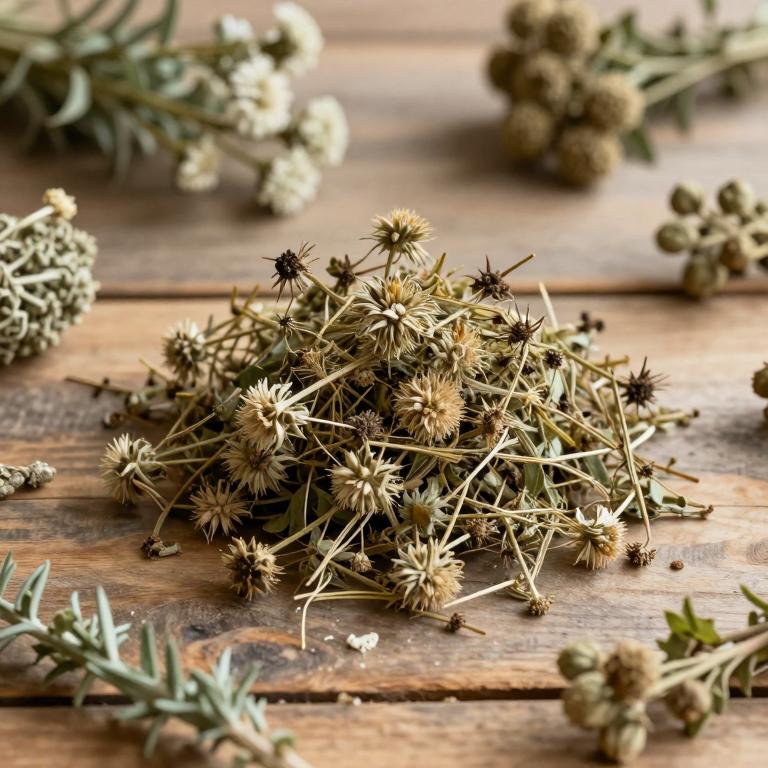
Hieracium pilosella, scientifically known as Pilosella officinarum, is a perennial herb renowned in traditional herbalism for its diuretic properties. Often called mouse-ear hawkweed, this plant is frequently utilized to support kidney health and manage fluid retention. Its delicate, hairy leaves and yellow blooms make it a distinctive botanical specimen.
- Family
- Asteraceae
- Native range
- Europe
- Parts used
- Not available
- Common names
- Not available
- Scientific synonyms
- Hieracium Pilosella
Names and Synonyms
Scientific Names
Accepted name
Pilosella officinarumSynonyms
- Hieracium pilosella
Regional and Traditional Names
German:
- Hieracium pilosella
Sources: Wikidata, Catalogue of Life
Taxonomical Classification
This plant belongs to the kingdom Plantae and is classified within the phylum Streptophyta and the class Equisetopsida. Following the subclass Magnoliidae, it is organized under the order Asterales and the family Asteraceae. Finally, its specific taxonomic identity is established within the genus Pilosella.
| Rank | Classification |
|---|---|
| Kingdom | Plantae |
| Phylum | Streptophyta |
| Class | Equisetopsida |
| Subclass | Magnoliidae |
| Order | Asterales |
| Family | Asteraceae |
| Genus | Pilosella |
Sources: The World Checklist of Vascular Plants (WCVP)
Distribution
This plant exhibits a specific distribution pattern across several regions of Northern Europe. It can be found growing naturally within the territories of Denmark and Finland. Additionally, its presence extends to the islands of Great Britain and Ireland. The species is also documented throughout the landscapes of Norway. Collectively, these locations highlight its preference for northern European environments.
| Region | Area |
|---|---|
| Northern Europe | Denmark |
| Northern Europe | Finland |
| Northern Europe | Great Britain |
| Northern Europe | Ireland |
| Northern Europe | Norway |
| Northern Europe | Sweden |
| Middle Europe | Austria |
| Middle Europe | Belgium |
| Middle Europe | Czechia-Slovakia |
| Middle Europe | Germany |
Sources: The World Checklist of Vascular Plants (WCVP)
Botanical Identification
Ecology
The ecology of Pilosella officinarum is characterized by its adaptation to specific altitudinal and geological conditions, typically occupying an elevational range that extends from sea level (0 m AMSL) up to a maximum of 500 m AMSL. It is most commonly found colonizing rugged landscapes, specifically within mountains and stony places where the substrate provides the necessary drainage and mineral composition for its growth. Furthermore, the species does not engage in mycorrhizal associations, as it lacks the requirement for symbiotic mycorrhiza to facilitate nutrient uptake in its preferred environments.
- Elevational range max:
- 500 m AMSL
- Elevational range min:
- 0 m AMSL
- Habitat :
- mountains, stony places
- Mycorrhiza :
- no
Life history
The life history of Pilosella officinarum is characterized by its status as a perennial plant, allowing it to persist through multiple growing seasons. It functions as a hemicryptophyte, a life form where the perennating buds are located at or just below the soil surface, protected by leaf litter or debris. This species maintains an evergreen nature, retaining its foliage to facilitate continuous physiological processes.
- Deciduousness :
- evergreen
- Life form :
- hemicryptophyte
- Lifecycle :
- perennial
Morphology
The morphology of Pilosella officinarum is characterized by its growth form as a non-woody herb, specifically classified as a forb. This plant is a self-supporting organism that does not exhibit climbing behavior, such as a liana or vine, nor does it function as a parasite or an epiphyte, as it is strictly terrestrial in its habitat. Its stature is relatively diminutive, with a plant height that typically ranges from a minimum of 0.02 m to a maximum of 0.4 m, maintaining a mean height of approximately 0.06 m.
- Aquatic :
- terrestrial
- Climber :
- self-supporting
- Epiphyte :
- terrestrial
- Growth form :
- herb
- Growth form :
- forb
- Parasite :
- independent
- Plant height max:
- 0.4 m
- Plant height mean:
- 0.06 m
- Plant height min:
- 0.02 m
- Woodiness :
- non-woody
Physiology
The physiology of Pilosella officinarum is characterized by a C3 photosynthetic pathway, a standard mechanism for carbon fixation in most temperate herbaceous plants. As a non-carnivorous species, it relies on soil-based nutrient uptake and does not function as a nitrogen fixer. The plant's leaf morphology exhibits significant variability, with leaf lengths ranging from a minimum of 0.25 cm to a maximum of 3.8 cm. The leaf width follows a similar range, starting from a minimum of 0.04 cm, with a mean width of 1 cm and a maximum width of 1.2 cm. These dimensions contribute to a mean leaf size of 0.86 cm². Furthermore, the plant maintains a mean Specific Leaf Area (SLA) of 191 cm²/g, reflecting its leaf mass distribution and resource acquisition strategy.
- Carnivory :
- non-carnivorous
- Leaf length max:
- 3.8 cm
- Leaf length min:
- 0.25 cm
- Leaf size mean:
- 0.86 cm²
- Leaf width max:
- 1.2 cm
- Leaf width mean:
- 1 cm
- Leaf width min:
- 0.04 cm
- Nitrogen fixer :
- no
- Photosynthetic pathway :
- C3
- Specific Leaf Area (SLA) mean:
- 191 cm²/g
Reproduction
The reproduction of Pilosella officiinarum is characterized by a combination of sexual and asexual strategies. The flowering period typically begins in May and concludes in July, during which the plant utilizes biotic pollination syndromes, specifically relying on insects to facilitate fertilization. Self-fertilization is present within the species, ensuring reproductive success. The resulting fruit is a dry achene that is indehiscent in nature. The seeds produced are quite small, with a mean mass of approximately 0.000218 g (ranging from 0.0001 g to 0.00027 g), a mean length of 2 mm, and a mean width of 0.5 mm, resulting in a consistent seed volume of 0.17 mm³. Dispersal is primarily anemochorous, meaning the seeds are distributed by the wind. Additionally, the plant possesses the ability for asexual reproduction, providing an alternative pathway for propagation and colonization.
- Dehiscence :
- indehiscent
- Dispersal syndrome :
- anemochorous
- Flowering time :
- May
- Flowering time :
- Jul
- Fruit dryness :
- dry
- Fruit type :
- achene
- Pollination syndrome :
- insect
- Pollination syndrome :
- biotic
- Reproduction asexual :
- present
- Seed length mean:
- 2 mm
- Seed mass max:
- 0.00027 g
- Seed mass mean:
- 0.000218458333333333 g
- Seed mass min:
- 1e-04 g
- Seed volume max:
- 0.17 mm³
- Seed width mean:
- 0.5 mm
- Self fertilization :
- present
Sources: Global Inventory of Floras and Traits (GIFT)
Chemicals
Pilosella officinarum has 3 reported phytochemicals identified across 0 scientific publications and several other databases. The most consistently reported chemicals include Flavonoids, Umbelliferone, caffeoylquinic acid.
| Chemical | Supporting sources | Consensus |
|---|---|---|
| Flavonoids | 1 supporting sources | ★☆☆☆☆ |
| Umbelliferone | 1 supporting sources | ★☆☆☆☆ |
| caffeoylquinic acid | 1 supporting sources | ★☆☆☆☆ |
Flavonoids
- Journal of pharmaceutical and biomedical analysis
Umbelliferone
- Journal of pharmaceutical and biomedical analysis
caffeoylquinic acid
- Phytochemical analysis : PCA
Activities
Pilosella officinarum has 1 reported activities identified across 0 scientific publications and several other databases. The most consistently reported activities include Diuretic.
| Activity | Supporting sources | Consensus |
|---|---|---|
| Diuretic | 1 supporting sources | ★☆☆☆☆ |
Diuretic
- Journal of pharmaceutical and biomedical analysis
Conditions
Pilosella officinarum has 1 reported investigations on conditions identified across 0 scientific publications and several other databases. The most consistently reported conditions include diuretic effects.
| Condition | Supporting sources | Consensus |
|---|---|---|
| Diuretic effects | 1 supporting sources | ★☆☆☆☆ |
Diuretic effects
- Journal of ethnopharmacology
Preparations
Pilosella officinarum has 1 reported preparations identified across 0 scientific publications and several other databases. The most consistently reported preparations include aqueous extracts.
| Preparation | Supporting sources | Consensus |
|---|---|---|
| Aqueous extracts | 1 supporting sources | ★☆☆☆☆ |
Aqueous extracts
- International journal of molecular sciences