Camel’s foot
Piliostigma thonningii · Accepted scientific name
Scientific literature: Very Sparse (19 studies) · ★☆☆☆☆
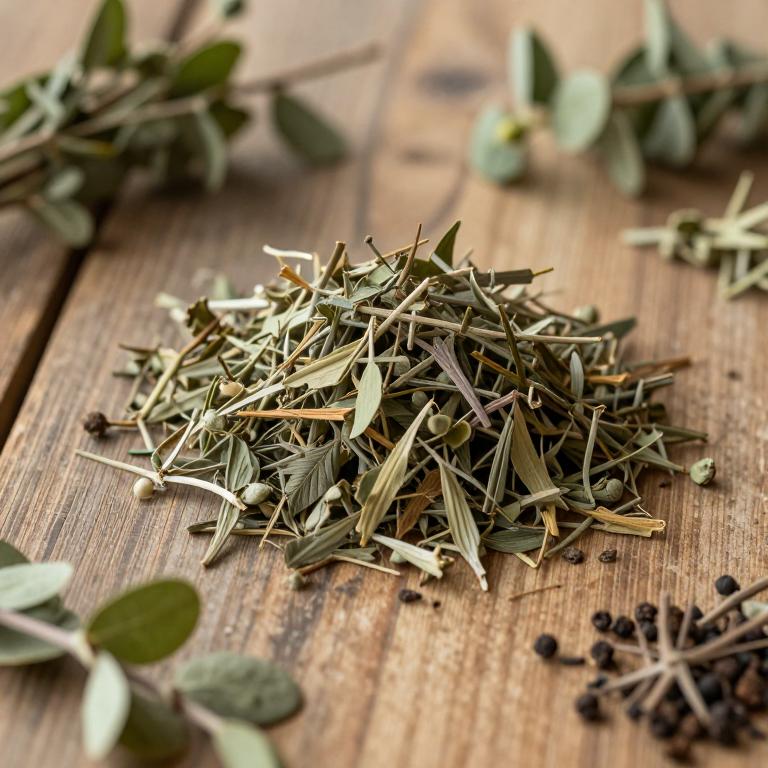
Camel's foot, scientifically known as Piliostigma thonningii, is a versatile medicinal plant widely utilized in traditional African medicine. Renowned for its potent therapeutic properties, it is frequently employed to treat various ailments, including inflammation, skin infections, and gastrointestinal issues, offering a natural approach to enhancing overall human wellness.
Names and Synonyms
Common Names
- Camel’s foot
- Monkey bread
- kao
- Bauhinia
- Camelfoot
- Camels-Foot
- Picture-Frame Tree
- Rhodesian Bauhinia
- camels-foot monkeybread
Scientific Names
Accepted name
Piliostigma thonningiiSynonyms
- Bauhinia tamarindacea
- Piliostigma pyrrhocarpum
- Bauhinia thonningii
- Bauhinia pyrrhocarpa
- Bauhinia abyssinica
- Bauhinia reticulata var. rubiginosa
- Bauhinia articulata
Regional and Traditional Names
German:
- Kamelfuss
Sources: Wikidata, Catalogue of Life
Taxonomical Classification
This plant belongs to the kingdom Plantae and is classified under the phylum Streptophyta and class Equisetopsida. Within the subclass Magnoliidae, it falls under the order Fabales and the family Fabaceae. Ultimately, its taxonomic identity is defined by its placement in the genus Piliostigma.
| Rank | Classification |
|---|---|
| Kingdom | Plantae |
| Phylum | Streptophyta |
| Class | Equisetopsida |
| Subclass | Magnoliidae |
| Order | Fabales |
| Family | Fabaceae |
| Genus | Piliostigma |
Sources: The World Checklist of Vascular Plants (WCVP)
Distribution
This plant is widely distributed across several countries within the West Tropical Africa region. Its presence is documented in Benin, where it plays a role in the local ecosystem. The species can also be found in the landscapes of Burkina and the Gambia. Furthermore, its geographical reach extends into the nation of Ghana. Finally, the distribution of this medicinal plant includes the coastal area of Guinea-Bissau.
| Region | Area |
|---|---|
| West Tropical Africa | Benin |
| West Tropical Africa | Burkina |
| West Tropical Africa | Gambia |
| West Tropical Africa | Ghana |
| West Tropical Africa | Guinea-Bissau |
| West Tropical Africa | Guinea |
| West Tropical Africa | Ivory Coast |
| West Tropical Africa | Mali |
| West Tropical Africa | Nigeria |
| West Tropical Africa | Niger |
Sources: The World Checklist of Vascular Plants (WCVP)
Botanical Identification
Ecology
The ecology of Piliostigma thonningii is characterized by its specific adaptation to semi-arid environments, primarily thriving within the Acacia-Commiphora bushland habitat. This species occupies a distinct altitudinal gradient, establishing itself across a diverse range of elevations that stretch from a minimum of 250 m AMSL to a maximum of 1525 m AMSL. Its presence in these bushland ecosystems suggests a specialized ability to coexist with other drought-tolerant flora typical of these specific topographic and vegetation zones.
- Elevational range max:
- 1525 m AMSL
- Elevational range min:
- 250 m AMSL
- Habitat :
- Acacia-Commiphora bushland
Life history
The life history of Pilostigma thonningii is characterized by its status as a perennial organism, allowing it to persist in its environment over multiple growing seasons. In terms of its structural growth strategy, the plant is classified as a phanerophyte, specifically exhibiting the traits of a phanerophyte in both its primary and secondary life form classifications. This indicates that its perennating buds are located high above the ground on aerial shoots, a characteristic typical of woody or robustly branched plant forms that maintain their survival through seasonal changes by protecting their regenerative tissues in elevated positions.
- Life form :
- phanerophyte
- Lifecycle :
- perennial
Morphology
The morphology of Pilostigma thonnningii is characterized by its growth form as a woody tree. It functions as an independent organism rather than a parasite or epiphyte, maintaining a strictly terrestrial existence. The plant exhibits a self-supporting structure, categorized as a self-supporting climber rather than a liana or vine. In terms of stature, the plant displays significant vertical variability, with heights ranging from a minimum of 1 meter to a maximum of 13 meters, resulting in an average plant height of approximately 7.67 meters.
- Aquatic :
- terrestrial
- Climber :
- self-supporting
- Epiphyte :
- terrestrial
- Growth form :
- tree
- Parasite :
- independent
- Plant height max:
- 13 m
- Plant height mean:
- 7.66666666666667 m
- Plant height min:
- 1 m
- Woodiness :
- woody
Physiology
The physiology of Pilosigmatia thonnigii is characterized by a C3 photosynthetic pathway, which dictates its carbon fixation process through the direct carboxylation of ribulose-1,5-bisphosphate by the enzyme RuBisCO. This metabolic strategy implies that the plant relies on standard stomatal regulation to manage gas exchange and transpiration, typically performing most efficiently in environments with moderate temperature and moisture levels. Furthermore, the species functions as a nitrogen fixer, possessing the biological capability to convert atmospheric nitrogen into bioavailable forms, a process that enhances its nutrient uptake efficiency and allows for survival in nitrogen-limited substrates.
- Nitrogen fixer :
- yes
- Photosynthetic pathway :
- C3
Reproduction
The reproduction of Pilostigma thonnningii is characterized by a biotic pollination syndrome, specifically relying on insects such as bees to facilitate the transfer of pollen. The plant exhibits an absence of self-fertilization, suggesting a reliance on cross-pollination to maintain genetic diversity. Upon successful fertilization, the plant produces dry fruits that utilize an autochorous dispersal syndrome, meaning the seeds are dispersed by the plant's own mechanisms. The resulting seeds are relatively small and uniform in volume, with a consistent seed volume of 170 mm³. Regarding seed mass, the plant produces seeds ranging from a minimum of 0.08691 g to a maximum of 0.143 g, with an average seed mass of approximately 0.1281433335 g.
- Dispersal syndrome :
- autochorous
- Fruit dryness :
- dry
- Pollination syndrome :
- insect
- Pollination syndrome :
- bee
- Pollination syndrome :
- biotic
- Seed mass max:
- 0.143 g
- Seed mass mean:
- 0.1281433335 g
- Seed mass min:
- 0.08691 g
- Seed volume max:
- 170 mm³
- Self fertilization :
- absent
Sources: Global Inventory of Floras and Traits (GIFT)
Plant Parts
Piliostigma thonningii has 2 reported plant parts identified across 3 scientific publications and several other databases that are studied for medicinal purposes. The most consistently reported plant part include leaf, stem.
| Plant part | Supporting sources | Consensus |
|---|---|---|
| Leaf | 2 supporting sources | ★☆☆☆☆ |
| Stem | 1 supporting sources | ★☆☆☆☆ |
Leaf
- The Journal of steroid biochemistry and molecular biology
- ISRN pharmacology
Stem
- Fitoterapia
Chemicals
Piliostigma thonningii has 4 reported phytochemicals identified across 3 scientific publications and several other databases. The most consistently reported chemicals include Alepterolic acid, Flavonoids, Proanthocyanidins, polyphenols.
| Chemical | Supporting sources | Consensus |
|---|---|---|
| Alepterolic acid | 1 supporting sources | ★☆☆☆☆ |
| Flavonoids | 1 supporting sources | ★☆☆☆☆ |
| Proanthocyanidins | 1 supporting sources | ★☆☆☆☆ |
| polyphenols | 1 supporting sources | ★☆☆☆☆ |
Alepterolic acid
- Medicinal chemistry research : an international journal for rapid communications on design and mechanisms of action of biologically active agents
Flavonoids
- Journal of ethnopharmacology
Proanthocyanidins
- Phytotherapy research : PTR
polyphenols
- Journal of ethnopharmacology
Activities
Piliostigma thonningii has 2 reported activities identified across 3 scientific publications and several other databases. The most consistently reported activities include Analgesic, Antioxidant.
| Activity | Supporting sources | Consensus |
|---|---|---|
| Analgesic | 1 supporting sources | ★☆☆☆☆ |
| Antioxidant | 1 supporting sources | ★☆☆☆☆ |
Analgesic
- Evidence-based complementary and alternative medicine : eCAM
Antioxidant
- Journal of ethnopharmacology
Conditions
Piliostigma thonningii has 8 reported investigations on conditions identified across 3 scientific publications and several other databases. The most consistently reported conditions include Pneumococcus, Streptococcus pneumoniae, cancer, malaria, pneumococcal infections.
| Condition | Supporting sources | Consensus |
|---|---|---|
| Pneumococcus | 1 supporting sources | ★☆☆☆☆ |
| Streptococcus pneumoniae | 1 supporting sources | ★☆☆☆☆ |
| Cancer | 1 supporting sources | ★☆☆☆☆ |
| Malaria | 1 supporting sources | ★☆☆☆☆ |
| Pneumococcal infections | 1 supporting sources | ★☆☆☆☆ |
| Respiratory infections | 1 supporting sources | ★☆☆☆☆ |
| Sprains | 1 supporting sources | ★☆☆☆☆ |
| Wounds | 1 supporting sources | ★☆☆☆☆ |
Pneumococcus
- African journal of traditional, complementary, and alternative medicines : AJTCAM
Streptococcus pneumoniae
- African journal of traditional, complementary, and alternative medicines : AJTCAM
Cancer
- Journal of ethnopharmacology
Malaria
- Frontiers in pharmacology
Pneumococcal infections
- African journal of traditional, complementary, and alternative medicines : AJTCAM
Respiratory infections
- Frontiers in pharmacology
Sprains
- Evidence-based complementary and alternative medicine : eCAM
Wounds
- Evidence-based complementary and alternative medicine : eCAM
Preparations
Piliostigma thonningii has 5 reported preparations identified across 3 scientific publications and several other databases. The most consistently reported preparations include ethanol extract, Extracts, PT, aqueous leaf extract, ethanolic extract.
| Preparation | Supporting sources | Consensus |
|---|---|---|
| Ethanol extract | 2 supporting sources | ★☆☆☆☆ |
| Extracts | 1 supporting sources | ★☆☆☆☆ |
| Pt | 1 supporting sources | ★☆☆☆☆ |
| Aqueous leaf extract | 1 supporting sources | ★☆☆☆☆ |
| Ethanolic extract | 1 supporting sources | ★☆☆☆☆ |
Ethanol extract
- Journal of ethnopharmacology
- The Journal of steroid biochemistry and molecular biology
Extracts
- Phytotherapy research : PTR
Pt
- Journal of ethnopharmacology
Aqueous leaf extract
- ISRN pharmacology
Ethanolic extract
- Pakistan journal of biological sciences : PJBS