Picrorhiza kurrooa
Picrorhiza kurrooa · Accepted scientific name
Scientific literature: Very Extensive (323 studies) · ★★★★★
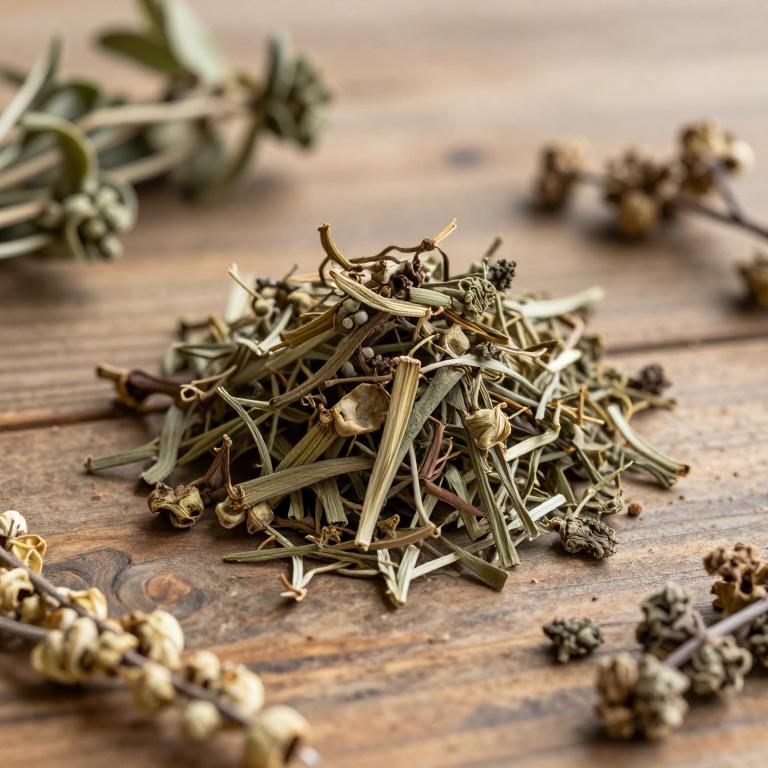
Picrorhiza kurroa, scientifically known as Picrorhiza kurroa, is a perennial medicinal herb native to the high-altitude Himalayas. Renowned in Ayurveda, it contains bioactive compounds like picroside. This potent plant is primarily valued for its hepatoprotective, cholagogue, and anti-inflammatory properties, serving as a vital remedy for liver ailments.
- Family
- Plantaginaceae
- Native range
- Asia-Tropical
- Parts used
- Root · Rhizome
- Common names
- Not available
- Scientific synonyms
- Not available
Names and Synonyms
Scientific Names
Accepted name
Picrorhiza kurrooaSources: Wikidata
Taxonomical Classification
This plant belongs to the kingdom Plantae and the phylum Streptophyta, falling under the class Equisetopsida and subclass Magnoliidae. Within the order Lamiales and the family Plantaginaeceae, it is classified under the genus Picrorhiza.
| Rank | Classification |
|---|---|
| Kingdom | Plantae |
| Phylum | Streptophyta |
| Class | Equisetopsida |
| Subclass | Magnoliidae |
| Order | Lamiales |
| Family | Plantaginaceae |
| Genus | Picrorhiza |
Sources: The World Checklist of Vascular Plants (WCVP)
Distribution
This plant is primarily found growing within the vast expanse of the Indian Subcontinent. Its natural habitat spans specific regions including the rugged landscapes of Pakistan. Furthermore, it is widely distributed across the mountainous terrain of the West Himalaya. These particular geographical areas provide the necessary environmental conditions for its survival. Consequently, its presence is closely tied to these distinct high-altitude zones.
| Region | Area |
|---|---|
| Indian Subcontinent | Pakistan |
| Indian Subcontinent | West Himalaya |
Sources: The World Checklist of Vascular Plants (WCVP)
Plant Parts
Picrorhiza kurrooa has 3 reported plant parts identified across 36 scientific publications and several other databases that are studied for medicinal purposes. The most consistently reported plant part include root, rhizome, leaf.
| Plant part | Supporting sources | Consensus |
|---|---|---|
| Root | 17 supporting sources | ★★★★★ |
| Rhizome | 14 supporting sources | ★★★★★ |
| Leaf | 5 supporting sources | ★★★☆☆ |
Root
- Journal of biosciences
- Current pharmaceutical biotechnology
- Metabolomics : Official journal of the Metabolomic Society
- Planta medica
- International archives of allergy and applied immunology
View 12 additional sources
- FEBS letters
- Planta
- Molecular biology reports
- Journal of natural products
- Immunopharmacology and immunotoxicology
- Scientific reports
- Genomics
- Protoplasma
- Critical reviews in biotechnology
- Biochemical genetics
- Journal of ethnopharmacology
- Natural product research
Rhizome
- Current pharmaceutical biotechnology
- World journal of microbiology & biotechnology
- Chemical biology & drug design
- Metabolomics : Official journal of the Metabolomic Society
- BMC complementary and alternative medicine
View 9 additional sources
- Molecular biology reports
- Planta medica
- International immunopharmacology
- Immunopharmacology and immunotoxicology
- Scientific reports
- Protoplasma
- Critical reviews in biotechnology
- Phytomedicine : international journal of phytotherapy and phytopharmacology
- Journal of ethnopharmacology
Leaf
- Metabolomics : Official journal of the Metabolomic Society
- Molecular biology reports
- Plant, cell & environment
- Scientific reports
- Critical reviews in biotechnology
Chemicals
Picrorhiza kurrooa has 54 reported phytochemicals identified across 36 scientific publications and several other databases. The most consistently reported chemicals include Picroside I, Picroside II, Kutkoside, apocynin, Picroside.
| Chemical | Supporting sources | Consensus |
|---|---|---|
| Picroside I | 19 supporting sources | ★★★★★ |
| Picroside II | 17 supporting sources | ★★★★★ |
| Kutkoside | 5 supporting sources | ★★★☆☆ |
| apocynin | 5 supporting sources | ★★★☆☆ |
| Picroside | 3 supporting sources | ★★☆☆☆ |
| Vanillic acid | 3 supporting sources | ★★☆☆☆ |
| picroliv | 3 supporting sources | ★★☆☆☆ |
| Acetovanillone | 2 supporting sources | ★☆☆☆☆ |
| Androsin | 2 supporting sources | ★☆☆☆☆ |
| Catalpol | 2 supporting sources | ★☆☆☆☆ |
Picroside I
- Dr. Duke
- Current pharmaceutical biotechnology
- Gene
- Protein and peptide letters
- Chemical biology & drug design
View 14 additional sources
- BioMed research international
- Scientific reports
- Planta
- Molecular biology reports
- Pharmacognosy research
- Phytochemical analysis : PCA
- Journal of natural medicines
- Journal of natural products
- PloS one
- Journal of proteomics
- Genomics
- Protoplasma
- Botanical studies
- Biochemical genetics
Picroside II
- Dr. Duke
- Gene
- Protein and peptide letters
- Chemical biology & drug design
- BioMed research international
View 12 additional sources
- Planta
- Molecular biology reports
- Frontiers in plant science
- Phytochemical analysis : PCA
- Journal of natural medicines
- Journal of natural products
- PloS one
- Journal of proteomics
- Genomics
- Protoplasma
- Botanical studies
- Biochemical genetics
Kutkoside
- Dr. Duke
- Current pharmaceutical biotechnology
- Molecular biology reports
- Pharmacognosy research
- Botanical studies
apocynin
- Dr. Duke
- Journal of neuroimmune pharmacology : the official journal of the Society on NeuroImmune Pharmacology
- European journal of pharmacology
- FEBS letters
- Journal of ethnopharmacology
Picroside
- Dr. Duke
- Environmental microbiome
- Functional & integrative genomics
Vanillic acid
- Dr. Duke
- Frontiers in plant science
- Zhongguo Zhong yao za zhi = Zhongguo zhongyao zazhi = China journal of Chinese materia medica
picroliv
- Current pharmaceutical biotechnology
- Immunopharmacology and immunotoxicology
- Journal of ethnopharmacology
Acetovanillone
- Food and chemical toxicology : an international journal published for the British Industrial Biological Research Association
- European journal of pharmacology
Androsin
- Dr. Duke
- International archives of allergy and applied immunology
Catalpol
- Dr. Duke
- Phytochemical analysis : PCA
Activities
Picrorhiza kurrooa has 80 reported activities identified across 36 scientific publications and several other databases. The most consistently reported activities include Hepatoprotective, Antioxidant, Antiasthmatic, Anticancer, Antihepatotoxic.
| Activity | Supporting sources | Consensus |
|---|---|---|
| Hepatoprotective | 17 supporting sources | ★★★★★ |
| Antioxidant | 4 supporting sources | ★★☆☆☆ |
| Antiasthmatic | 2 supporting sources | ★☆☆☆☆ |
| Anticancer | 2 supporting sources | ★☆☆☆☆ |
| Antihepatotoxic | 2 supporting sources | ★☆☆☆☆ |
| Chemopreventive | 2 supporting sources | ★☆☆☆☆ |
| Immunostimulant | 2 supporting sources | ★☆☆☆☆ |
| Laxative | 2 supporting sources | ★☆☆☆☆ |
| Acetylcholinergic | 1 supporting sources | ★☆☆☆☆ |
| Aldose-Reductase-Inhibitor | 1 supporting sources | ★☆☆☆☆ |
Hepatoprotective
- Dr. Duke
- Indian journal of experimental biology
- Current pharmaceutical biotechnology
- Molecular genetics and genomics : MGG
- Journal of gastroenterology and hepatology
View 12 additional sources
- Chemical biology & drug design
- Scientific reports
- Environmental microbiome
- Phytotherapy research : PTR
- Mini reviews in medicinal chemistry
- Genomics
- Protoplasma
- Botanical studies
- Alternative medicine review : a journal of clinical therapeutic
- Microbiology spectrum
- Functional & integrative genomics
- Molecules (Basel, Switzerland)
Antioxidant
- Dr. Duke
- Scientific reports
- Dose-response : a publication of International Hormesis Society
- Mini reviews in medicinal chemistry
Antiasthmatic
- Dr. Duke
- International archives of allergy and applied immunology
Anticancer
- Dr. Duke
- Mini reviews in medicinal chemistry
Antihepatotoxic
- Dr. Duke
- Journal of ethnopharmacology
Chemopreventive
- Dr. Duke
- Biomedicine & pharmacotherapy = Biomedecine & pharmacotherapie
Immunostimulant
- Dr. Duke
- Journal of ethnopharmacology
Laxative
- Dr. Duke
- Molecules (Basel, Switzerland)
Acetylcholinergic
- Dr. Duke
Aldose-Reductase-Inhibitor
- Dr. Duke
Preparations
Picrorhiza kurrooa has 34 reported preparations identified across 36 scientific publications and several other databases. The most consistently reported preparations include Picroliv, rhizome, root extracts, roots, "picrosides".
| Preparation | Supporting sources | Consensus |
|---|---|---|
| Picroliv | 5 supporting sources | ★★★☆☆ |
| Rhizome | 2 supporting sources | ★☆☆☆☆ |
| Root extracts | 2 supporting sources | ★☆☆☆☆ |
| Roots | 2 supporting sources | ★☆☆☆☆ |
| "picrosides" | 1 supporting sources | ★☆☆☆☆ |
| Extracts | 1 supporting sources | ★☆☆☆☆ |
| Igs | 1 supporting sources | ★☆☆☆☆ |
| Jwarahara kwatha choornam | 1 supporting sources | ★☆☆☆☆ |
| Livokin | 1 supporting sources | ★☆☆☆☆ |
| Livomap | 1 supporting sources | ★☆☆☆☆ |
Picroliv
- Current pharmaceutical biotechnology
- Protein and peptide letters
- BioMed research international
- Planta medica
- Immunopharmacology and immunotoxicology
Rhizome
- World journal of microbiology & biotechnology
- Planta medica
Root extracts
- Journal of biosciences
- FEBS letters
Roots
- Planta medica
- Journal of natural products
"picrosides"
- Biomedicine & pharmacotherapy = Biomedecine & pharmacotherapie
Extracts
- International journal of cosmetic science
Igs
- Phytomedicine : international journal of phytotherapy and phytopharmacology
Jwarahara kwatha choornam
- Scientific reports
Livokin
- Protein and peptide letters
Livomap
- Protein and peptide letters