Picrasma chinensis
Picrasma chinensis · Accepted scientific name
Scientific literature: Very Sparse (5 studies) · ★☆☆☆☆
Picrasma chinensis, scientifically known as Picrasma chinensis, is a medicinal plant native to East Asia, valued primarily for its intense bitterness. Renowned in traditional medicine, its bark contains potent alkaloids like quassinoids, which serve as powerful emetics, febrifuges, and anthelmintics, offering significant therapeutic potential in treating various ailments.
- Family
- Not available
- Native range
- Asia-Temperate
- Parts used
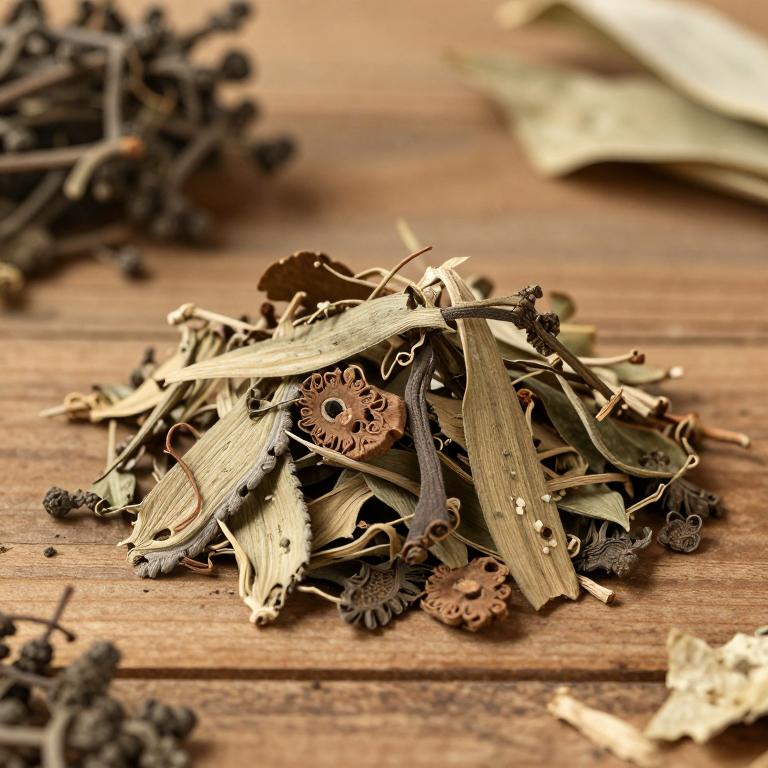
- Leaf · Stem
- Common names
- Not available
- Scientific synonyms
- Not available
Names and Synonyms
Scientific Names
Accepted name
Picrasma chinensisSources: Wikidata
Distribution
This plant is primarily found across specific regions within the diverse landscape of China. Its natural habitat includes the lush environments of China South-Central. Additionally, the species is widely distributed throughout China Southeast. The plant can also be located in the unique high-altitude terrains of Tibet. These distinct locations define the overall geographical range of Picrasma chinensis.
| Region | Area |
|---|---|
| China | China South-Central |
| China | China Southeast |
| China | Tibet |
Sources: The World Checklist of Vascular Plants (WCVP)
Botanical Identification
Ecology
The ecology of Picrasma chinensis is characterized by its specific distribution within montane forest environments, where it occupies a distinct vertical niche. It thrives across a defined altitudinal gradient, typically found at elevations ranging from a minimum of 600 m AMSL to a maximum of 1400 m AMSL. Within this habitat, the species reaches its peak density and optimal growth conditions at a mean elevation of approximately 1000 m AMSL. This elevational preference suggests a requirement for the specific climatic conditions, such as temperature ranges and moisture levels, provided by mid-altitude forest ecosystems.
- Elevational range max:
- 1400 m AMSL
- Elevational range mean:
- 1000 m AMSL
- Elevational range min:
- 600 m AMSL
Life history
The life history of Picrasma chinensis is characterized by its nature as a perennial plant, allowing it to persist through multiple growing seasons rather than completing its cycle within a single year. Throughout its developmental stages, it maintains an evergreen status, retaining its foliage consistently rather than shedding leaves seasonally. This combination of a perennial lifecycle and evergreen habit enables the species to maintain continuous vegetative presence and steady physiological activity over long durations.
- Deciduousness :
- evergreen
- Lifecycle :
- perennial
Morphology
The morphology of Picrasma chinensis is characterized by its robust growth form, primarily manifesting as a woody tree. It exhibits a significant stature, with a mean plant height reaching approximately 15 m. In terms of its structural habit, the plant is classified as a woody species, lacking non-woody or variable textures in its primary development. While it possesses a tree-like growth form, its climbing characteristics are described as self-supporting, rather than being an obligatory or facultative climber.
- Climber :
- self-supporting
- Growth form :
- tree
- Plant height mean:
- 15 m
- Woodiness :
- woody
Physiology
The physiological profile of Picrasma chinensis is characterized by its specific photosynthetic efficiency and distinct foliar morphology. The plant utilizes the C3 photosynthetic pathway, which dictates its carbon fixation processes and metabolic adaptation to its environment. Its leaves exhibit an elliptic form with finely toothed margins, lacking any specialized defensive structures such as thorns or spines. The dimensions of the foliage vary according to developmental stages and environmental conditions, with leaf lengths ranging from a minimum of 7 cm to a mean of 10 cm, reaching a maximum of 13 cm. Correspondingly, the leaf width spans from a minimum of 2.5 cm to a maximum of 5 cm, contributing to a structured surface area optimized for gas exchange and light interception within its ecological niche.
- Leaf form :
- elliptic
- Leaf length max:
- 13 cm
- Leaf length mean:
- 10 cm
- Leaf length min:
- 7 cm
- Leaf margin :
- finely toothed
- Leaf spines :
- no
- Leaf thorns :
- no
- Leaf width max:
- 5 cm
- Leaf width min:
- 2.5 cm
- Photosynthetic pathway :
- C3
Reproduction
The reproduction of Picrasma chinensis is characterized by its specific inflorescence and fruit morphology. The plant produces inflorescences that vary in length, ranging from a minimum of 0.05 m to a maximum of 0.12 m. Following pollination, the development of the fruit displays consistent dimensional traits; the fruit length typically ranges from a minimum of 1 cm to a maximum of 1.2 cm, with an average length of 1.1 cm. Similarly, the fruit width shows a narrow range, starting from a minimum of 1 cm up to a maximum of 1.2 cm, maintaining a mean width of 1.1 cm.
- Fruit length max:
- 1.2 cm
- Fruit length mean:
- 1.1 cm
- Fruit length min:
- 1 cm
- Fruit width max:
- 1.2 cm
- Fruit width mean:
- 1.1 cm
- Fruit width min:
- 1 cm
- Inflorescence length max:
- 0.12 m
- Inflorescence length min:
- 0.05 m
Sources: Global Inventory of Floras and Traits (GIFT)
Plant Parts
Picrasma chinensis has 2 reported plant parts identified across 4 scientific publications and several other databases that are studied for medicinal purposes. The most consistently reported plant part include leaf, stem.
| Plant part | Supporting sources | Consensus |
|---|---|---|
| Leaf | 2 supporting sources | ★☆☆☆☆ |
| Stem | 2 supporting sources | ★☆☆☆☆ |
Leaf
- Fitoterapia
- Organic letters
Stem
- Fitoterapia
- Organic letters
Conditions
Picrasma chinensis has 1 reported investigations on conditions identified across 4 scientific publications and several other databases. The most consistently reported conditions include Parkinson's disease.
| Condition | Supporting sources | Consensus |
|---|---|---|
| Parkinson's disease | 1 supporting sources | ★☆☆☆☆ |
Parkinson's disease
- Organic letters
Preparations
Picrasma chinensis has 1 reported preparations identified across 4 scientific publications and several other databases. The most consistently reported preparations include EtOH extract of the stems and leaves.
| Preparation | Supporting sources | Consensus |
|---|---|---|
| Etoh extract of the stems and leaves | 1 supporting sources | ★☆☆☆☆ |
Etoh extract of the stems and leaves
- Organic letters