soldier thistle
Picnomon acarna · Accepted scientific name
Scientific literature: Very Sparse (5 studies) · ★☆☆☆☆
Soldier thistle, scientifically known as Picnomon acarna, is a resilient medicinal shrub native to arid regions. Renowned for its therapeutic properties, this plant is traditionally utilized to treat skin ailments, inflammation, and digestive issues. Its unique botanical features and bioactive compounds make it a significant subject in ethnopharmacology.
- Family
- Asteraceae
- Native range
- Europe
- Parts used
- Not available
- Common names
- Soldier Thistle · Yellow-Spine Thistle
- Scientific synonyms
- Cirsium Acarna · Carlina Acarna · 5 more
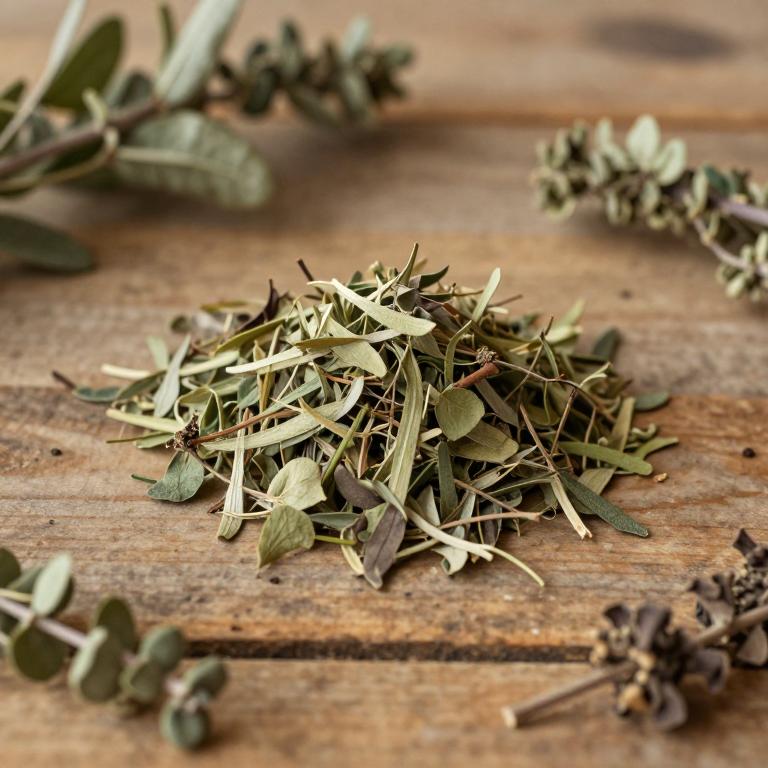
Names and Synonyms
Common Names
- soldier thistle
- Yellow-spine Thistle
Scientific Names
Accepted name
Picnomon acarnaSynonyms
- Cirsium acarna
- Carlina acarna
- Cnicus acarna
- Cirsium pisidium
- Carduus acarna
- Carthamus canescens
- Picnomon spinosum
Regional and Traditional Names
Spanish:
- Carduus acarna
- Carlina acarna
- Carthamus canescens
- Cirsium acarna
- Cirsium pisidium
- Cnicus acarna
- Azafrán descarnado
- Cardo ajonjero de Salamanca
- Cardo barbero
- Cardo bardero
- Cardo cabeza de pollo
- Cardo cucare
- Cardo rojo
- Cardoblanco
- Descarnada portuguesa
- Espino de cazar pájaros
- Azafran descarnado
- Espino de cazar pajaros
- Cabeza de pollo
- Cardo blanco
German:
- Akarna-Kratzdistel
French:
- Cirse acarne
Sources: Wikidata, Catalogue of Life
Taxonomical Classification
This plant, Picnomon acarna, belongs to the kingdom Plantae and the phylum Streptophyta. It is classified under the class Equisetopsida and the subclass Magnoliidae within the order Asterales. Finally, it is a member of the family Asteraceae and falls under the genus Picnomon.
| Rank | Classification |
|---|---|
| Kingdom | Plantae |
| Phylum | Streptophyta |
| Class | Equisetopsida |
| Subclass | Magnoliidae |
| Order | Asterales |
| Family | Asteraceae |
| Genus | Picnomon |
Sources: The World Checklist of Vascular Plants (WCVP)
Distribution
This plant exhibits a diverse geographical distribution across several regions of Europe. In Northern Europe, it can be found growing in the countries of Finland and Sweden. Its presence extends into Southwestern Europe, where it inhabits the Baleares islands. Additionally, the species is recorded within the borders of France. Finally, the distribution reaches as far as Portugal in the southwestern part of the continent.
| Region | Area |
|---|---|
| Northern Europe | Finland |
| Northern Europe | Sweden |
| Southwestern Europe | Baleares |
| Southwestern Europe | France |
| Southwestern Europe | Portugal |
| Southwestern Europe | Spain |
| Southeastern Europe | Albania |
| Southeastern Europe | Bulgaria |
| Southeastern Europe | Greece |
| Southeastern Europe | Italy |
Sources: The World Checklist of Vascular Plants (WCVP)
Botanical Identification
Ecology
The ecology of Picnomon acarna is defined by its ability to thrive across a significant altitudinal gradient, typically occupying an elevational range that extends from a minimum of 1100 m AMSL to a maximum of 2400 m AMSL. While it can be found in diverse natural settings, it is also frequently documented within garden habitats, suggesting a degree of adaptability to managed environments. Furthermore, the species possesses integrated defense mechanisms, indicating an evolutionary strategy to mitigate herbivory and environmental stressors within its ecological niche.
- Defense :
- yes
- Elevational range max:
- 2400 m AMSL
- Elevational range min:
- 1100 m AMSL
- Habitat :
- garden
Life history
The life history of Picnomon acarna is characterized by an annual lifecycle, meaning it completes its entire developmental process from germination to seed production within a single growing season. In terms of its botanical life form, the species exhibits characteristics of both a therophyte and a hemicryptophyte. As a therophyte, it typically survives the unfavorable seasons in the form of seeds, emerging only when environmental conditions are suitable for rapid growth. Additionally, its classification as a hemicryptophyte indicates that its perennating buds are located at the soil surface, protected by the substrate or leaf litter, which aids in its survival strategy within its specific ecological niche.
- Life form :
- hemicryptophyte
- Life form :
- therophyte
- Lifecycle :
- annual
Morphology
The morphology of Picnomon acarna is characterized by its growth form as a non-woody herb, which manifests as a self-supporting plant rather than a vine or liana. It maintains a relatively small stature, with a plant height ranging from a minimum of 0.15 m to a maximum of 1 m. In terms of its ecological habit, the plant is primarily terrestrial, though it can occupy aquatic or semiaquatic environments. It functions as an independent organism, lacking any parasitic tendencies, and is strictly terrestrial in its epiphytic status rather than being an obligate or facultative epiphyte.
- Aquatic :
- terrestrial
- Climber :
- self-supporting
- Epiphyte :
- terrestrial
- Growth form :
- herb
- Parasite :
- independent
- Plant height max:
- 1 m
- Plant height min:
- 0.15 m
- Woodiness :
- non-woody
Physiology
The physiology of Picnomon acarna is characterized by a specialized vegetative structure optimized for efficient photosynthesis and transpiration management within its native ecosystem. The foliage exhibits specific morphological dimensions that play a crucial role in its metabolic processes, with leaf length reaching a maximum of 17 cm. Complementing this longitudinal growth, the leaf width reaches a maximum of 3 cm, providing a surface area ratio that facilitates gas exchange while managing solar radiation absorption. This specific leaf architecture, defined by its 17 cm by 3 cm maximal dimensions, dictates the plant's hydraulic conductance and its ability to maintain turgor pressure under varying environmental conditions.
- Leaf length max:
- 17 cm
- Leaf width max:
- 3 cm
Reproduction
The reproduction of Picnomon acarna is characterized by a specific flowering period that typically begins in July and concludes in August. During this time, the plant produces violet-colored flowers that measure between 1.4 cm and 1.9 cm in length. Following pollination, the plant develops fruit in the form of an achene. These fruits are indehiscent and vary in size, with a length ranging from 0.5 cm to 0.6 cm and a width between 0.2 cm and 0.3 cm. The seeds contained within the fruit are quite small, possessing a mean mass of approximately 0.0096 g, with individual seed masses ranging from a minimum of 0.0068 g to a maximum of 0.01436 g.
- Dehiscence :
- indehiscent
- Flower colour :
- violet
- Flower length max:
- 1.9 cm
- Flower length min:
- 1.4 cm
- Flowering time :
- Jul
- Flowering time :
- Aug
- Fruit length max:
- 0.6 cm
- Fruit length min:
- 0.5 cm
- Fruit type :
- achene
- Fruit width max:
- 0.3 cm
- Fruit width min:
- 0.2 cm
- Seed mass max:
- 0.01436 g
- Seed mass mean:
- 0.0096083335 g
- Seed mass min:
- 0.0068 g
Sources: Global Inventory of Floras and Traits (GIFT)
Chemicals
Picnomon acarna has 4 reported phytochemicals identified across 0 scientific publications and several other databases. The most consistently reported chemicals include CHLOROGENIC ACID, Hyperoside, TNF alpha, hesperidin.
| Chemical | Supporting sources | Consensus |
|---|---|---|
| CHLOROGENIC ACID | 1 supporting sources | ★☆☆☆☆ |
| Hyperoside | 1 supporting sources | ★☆☆☆☆ |
| TNF alpha | 1 supporting sources | ★☆☆☆☆ |
| hesperidin | 1 supporting sources | ★☆☆☆☆ |
CHLOROGENIC ACID
- Molecules (Basel, Switzerland)
Hyperoside
- Molecules (Basel, Switzerland)
TNF alpha
- Journal of ethnopharmacology
hesperidin
- Molecules (Basel, Switzerland)
Conditions
Picnomon acarna has 1 reported investigations on conditions identified across 0 scientific publications and several other databases. The most consistently reported conditions include TNF-alpha.
| Condition | Supporting sources | Consensus |
|---|---|---|
| Tnf-alpha | 1 supporting sources | ★☆☆☆☆ |
Tnf-alpha
- Journal of ethnopharmacology
Preparations
Picnomon acarna has 3 reported preparations identified across 0 scientific publications and several other databases. The most consistently reported preparations include Soxhlet (SOE), methanolic extracts obtained by maceration (MAC), ultrasound-assisted extraction (UAE).
| Preparation | Supporting sources | Consensus |
|---|---|---|
| Soxhlet (soe) | 1 supporting sources | ★☆☆☆☆ |
| Methanolic extracts obtained by maceration (mac) | 1 supporting sources | ★☆☆☆☆ |
| Ultrasound-assisted extraction (uae) | 1 supporting sources | ★☆☆☆☆ |
Soxhlet (soe)
- Molecules (Basel, Switzerland)
Methanolic extracts obtained by maceration (mac)
- Molecules (Basel, Switzerland)
Ultrasound-assisted extraction (uae)
- Molecules (Basel, Switzerland)