Sitka spruce
Picea sitchensis · Accepted scientific name
Scientific literature: Very Sparse (1 studies) · ★☆☆☆☆
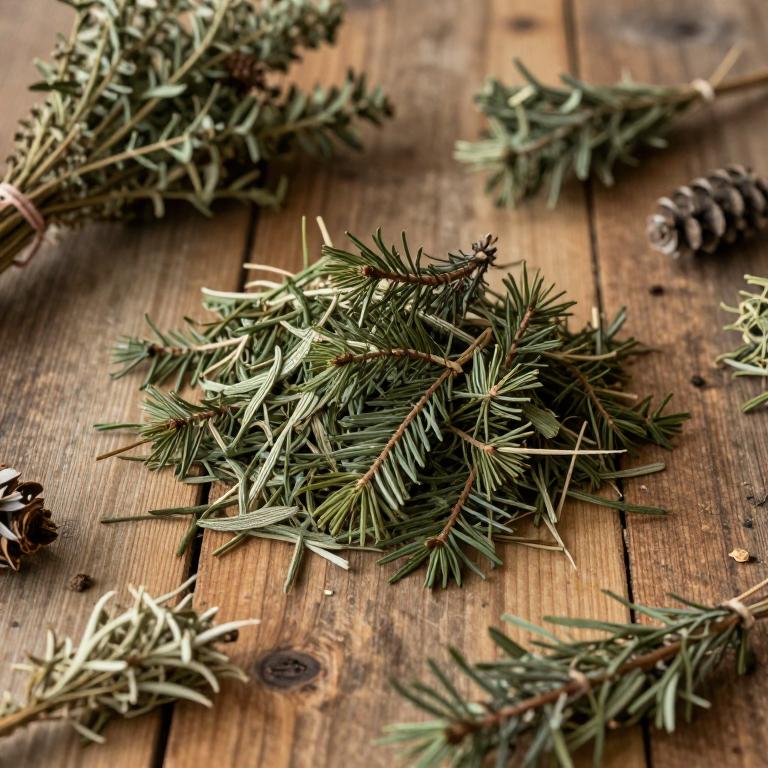
Sitka spruce, scientifically known as Picea sitchensiss, is a majestic evergreen native to the Pacific Northwest. Beyond its towering presence, this conifer holds traditional medicinal value. Its resin and needles are historically utilized for their antiseptic and vitamin-rich properties, offering natural remedies for respiratory health and skin ailments.
Names and Synonyms
Common Names
- Sitka spruce
- coast spruce
- tideland spruce
Scientific Names
Accepted name
Picea sitchensisSynonyms
- Abies sitchensis
- Tsuga sitchensis
- Picea sitchensis f. speciosa
- Pinus menziesii var. crispa
- Picea menziesii var. crispa
- Picea falcata
- Pinus menziesii
- Abies trigona
- Abies merkiana
- Abies falcata
- Pinus sitchensis
- Sequoia rafinesquei
Regional and Traditional Names
Spanish:
- Picea de Sitka
- Pícea de Sitka
German:
- Sitka-Fichte
- Sitkafichte
- Sitkafichte
- Sitka-Fichte
French:
- épinette de Sitka
- Épicéa de Sitka
- épicéa de Sitka
- épinette de Sitka
Sources: Wikidata, Catalogue of Life
Taxonomical Classification
This plant belongs to the kingdom Plantae and is classified under the phylum Streptophyta within the class Equisetopsida. It is further organized into the subclass Pinidae and the order Pinales, falling under the family Pinaceae. Ultimately, its taxonomic identity is defined by its placement in the genus Picea.
| Rank | Classification |
|---|---|
| Kingdom | Plantae |
| Phylum | Streptophyta |
| Class | Equisetopsida |
| Subclass | Pinidae |
| Order | Pinales |
| Family | Pinaceae |
| Genus | Picea |
Sources: The World Checklist of Vascular Plants (WCVP)
Distribution
This plant exhibits a specific geographical range located across several regions of Northern Europe. Its presence can be identified within the coastal areas of Denmark. Furthermore, the species is found inhabiting the islands of Føroya. It also maintains a distribution that extends into the landscapes of Great Britain and Iceland. Finally, the plant's range includes the territory of Ireland.
| Region | Area |
|---|---|
| Northern Europe | Denmark |
| Northern Europe | Føroyar |
| Northern Europe | Great Britain |
| Northern Europe | Iceland |
| Northern Europe | Ireland |
| Northern Europe | Norway |
| Middle Europe | Austria |
| Middle Europe | Belgium |
| Middle Europe | Czechia-Slovakia |
| Middle Europe | Germany |
Sources: The World Checklist of Vascular Plants (WCVP)
Botanical Identification
Ecology
The ecology of Picea sitchensis is characterized by its preference for lowland environments, where it thrives in a variety of moisture-rich landscapes. This species is frequently found in coastal regions and alluvial plains, often colonizing damp, nutrient-dense soils that are subject to high levels of maritime influence. Its distribution in these lowland areas allows it to exploit the stable temperature regimes and high humidity levels typical of such terrains. By occupying these low-elevation niches, the plant can establish extensive root systems in moist substrates, facilitating its growth and dominance within the forest canopy.
- Habitat :
- Lowland
Genetics
The genetics of Picea sitchensis are characterized by a stable diploid genome, as evidenced by its ploidy level of 2. This fundamental chromosomal state serves as the baseline for its complex genetic architecture, which governs the development of its large-scale structural features and its physiological responses to diverse environmental stressors. As a diploid organism, the species maintains a standard inheritance pattern of homologous chromosomes, providing a predictable framework for genetic recombination during meiosis. This genomic stability is critical for the maintenance of its diverse allelic variations, which contribute to the plant's evolutionary adaptability and the production of specific secondary metabolites utilized in medicinal applications.
- Ploidy :
- 2
Life history
The life history of Picea sitchensis is characterized by its nature as a perennial organism, allowing it to establish long-term dominance within its ecosystem. As a phanerophyte, it maintains its photosynthetic tissues on elevated structures, specifically through its woody branches and height, which fall under the classification of both phanerophyte and nanophanerophyte depending on the developmental stage and environmental constraints. The plant maintains an evergreen deciduousness, meaning it retains its needle-like foliage throughout the year, providing continuous photosynthetic capability across multiple seasons.
- Deciduousness :
- evergreen
- Life form :
- phanerophyte
- Lifecycle :
- perennial
Morphology
The morphology of Picea sitchensis is characterized by its stature as a large, woody tree with a growth form that is strictly self-supporting rather than climbing. It is a terrestrial species that functions as an independent organism, lacking parasitic or epiphytic tendencies. In terms of dimension, the plant exhibits significant vertical development, with a documented mean height of 60.5 m and a maximum recorded height reaching up to 40 m (noting specific variations in height data provided). As a woody perennial, its structural integrity is defined by its robust, tree-like habit.
- Aquatic :
- terrestrial
- Climber :
- self-supporting
- Epiphyte :
- terrestrial
- Growth form :
- tree
- Parasite :
- independent
- Plant height max:
- 40 m
- Plant height mean:
- 60.5 m
- Woodiness :
- woody
Physiology
The physiology of Picea sitchensis is characterized by a C3 photosynthetic pathway, which is typical for many coniferous species adapted to temperate climates. Its vegetative structure features relatively small leaves with a mean size of 0.181 cm² and a maximum leaf length of 2 cm. The plant exhibits a mean Specific Leaf Area (SLA) of 63 cm²/g, reflecting its leaf density and resource allocation strategies. In terms of nutritional strategies, it is a non-carnivorous organism and does not possess the physiological mechanisms required to function as a nitrogen fixer.
- Carnivory :
- non-carnivorous
- Leaf length max:
- 2 cm
- Leaf size mean:
- 0.181 cm²
- Nitrogen fixer :
- no
- Photosynthetic pathway :
- C3
- Specific Leaf Area (SLA) mean:
- 63 cm²/g
Reproduction
The reproduction of Picea sitchensis is characterized by a sexual process that is monoecious in nature, while asexual reproduction is noted as absent. The flowering cycle is relatively concentrated, with the flowering period beginning and ending in May. As an abiotic pollination strategy, the plant relies on wind as its primary pollination syndrome to facilitate fertilization. Following pollination, the development of the fruit results in structures that have a mean length of 4 cm and a mean width of 3 cm. The resulting seeds are quite small, with a mean mass of approximately 0.0022671875 g, ranging from a minimum of 0.001544 g to a maximum of 0.00343 g. For the spread of its offspring, the species utilizes an anemochorous dispersal syndrome, meaning the seeds are dispersed by the wind.
- Dispersal syndrome :
- anemochorous
- Flowering time :
- May
- Fruit length mean:
- 4 cm
- Fruit width mean:
- 3 cm
- Pollination syndrome :
- wind
- Pollination syndrome :
- abiotic
- Reproduction asexual :
- absent
- Reproduction sexual :
- monoecious
- Seed mass max:
- 0.00343 g
- Seed mass mean:
- 0.0022671875 g
- Seed mass min:
- 0.001544 g
Sources: Global Inventory of Floras and Traits (GIFT)
Chemicals
Picea sitchensis has 1 reported phytochemicals identified across 0 scientific publications and several other databases. The most consistently reported chemicals include DEHYDROABIETIC ACID.
| Chemical | Supporting sources | Consensus |
|---|---|---|
| DEHYDROABIETIC ACID | 1 supporting sources | ★☆☆☆☆ |
DEHYDROABIETIC ACID
- Molecules (Basel, Switzerland)